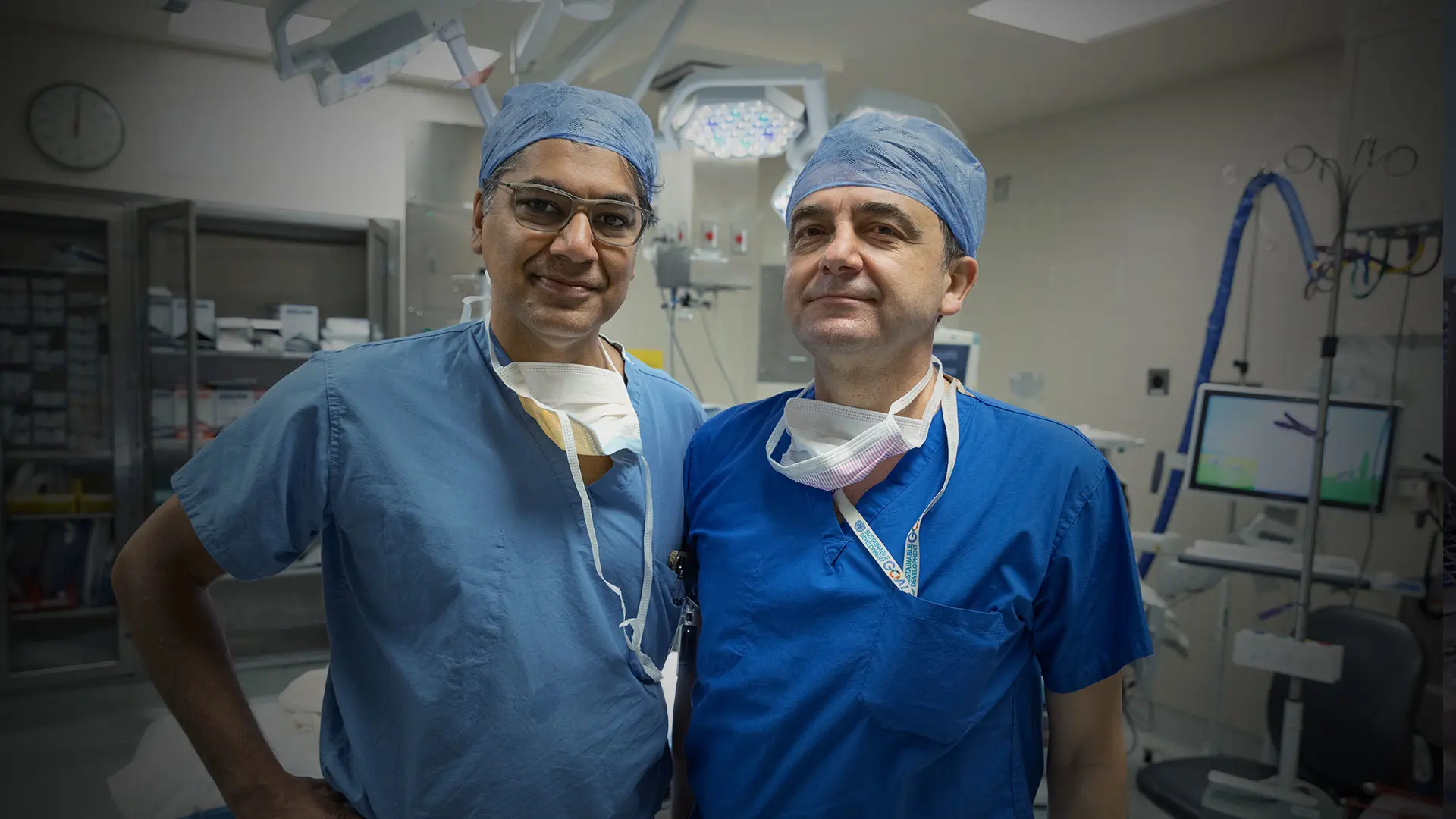
On Tuesday, September 23, 2025, surgeons at Mount Sinai’s Department of Urology achieved a major milestone: They completed their 1,000th gender-affirming surgery.
This momentous occasion is one that surgeon Rajveer S. Purohit, MD, MPH, takes pride in not just because it confirms Mount Sinai’s leadership in the field, but also because it occurred just a year and a half after he and his colleague Miroslav L. Djordjevic, MD, performed their 500th gender-affirming surgery.
“This year alone, we are scheduled to perform more than 300 surgeries,” says Dr. Purohit, Director of Reconstructive Urology at The Mount Sinai Hospital. “We have patients being referred to us from across the country or reaching out to us based on our results. I think it is impressive both because we were able to build the nation’s leading gender-affirming surgery program from nothing in just seven years and because it is led by urologists.”
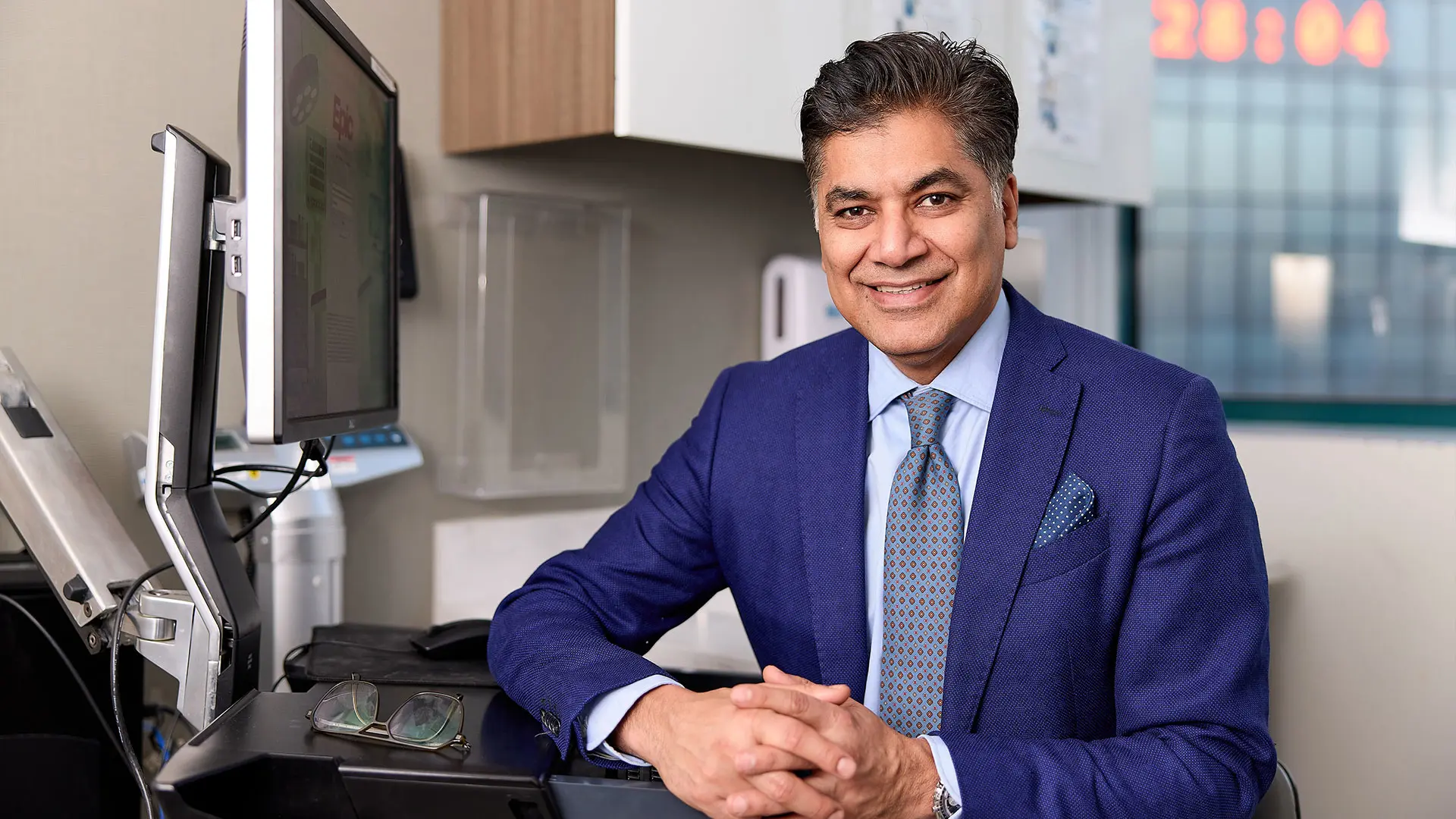
Rajveer S. Purohit, MD, MPH, Director of Reconstructive Urology at The Mount Sinai Hospital
Through these surgeries, Drs. Purohit and Djordjevic have gained insights that are enabling them to refine the phalloplasty procedures they have adopted or pioneered and offer more informed recommendations to patients based on their goals for aesthetics and function. For example, Dr. Djordjevic had enhanced his approach to musculocutaneous latissimus dorsi phalloplasty, a technique he introduced 25 years ago and began offering at Mount Sinai in 2021. He believes it offers patients better outcomes than a radial forearm free flap phalloplasty because it uses muscle tissue to construct the phallus.
“We typically achieve a length of 5.5 to 6 inches for the phallus, and that is permanent, whereas the radial free flap is prone to shrinkage and deformity,” says Dr. Djordjevic, who is also Professor of Urology at the Icahn School of Medicine at Mount Sinai. “It also allows for good volume, good prothesis, and good penetrative intercourse with sensitivity and a normal orgasm because we often incorporate the clitoris into the base.”
Traditionally, the main drawback of this procedure has been a lack of tactile sensation due to the use of muscle tissue. Dr. Djordjevic believes it may be possible to address this through transplantation of the sural nerve from the leg and joining it to the clitoral nerve. He says this idea was based on a suggestion from Ash Tewari, MBBS, MCh, FRCS (Hon.), Dsc (Hon.).Professor and Chair, Milton and Carroll Petrie Department of Urology, and Surgeon-in-Chief of the Tisch Cancer Hospital at The Mount Sinai Hospital, for improving outcomes among patients who have undergone prostatectomy. Dr. Djordjevic has completed cadaveric studies of the procedure and is consenting 11 volunteers in Serbia for sural transplantation.
“This is a human experimental study that will not pose any complication for our candidates,” Dr. Djordjevic says. “I expect to know within the next six to nine months how well it works and, based on that, implement it at Mount Sinai.” Dr. Djordjevic, an internationally renowned surgeon and a leading authority on surgery for transgender individuals, is also a Professor of Urology and Surgery at the School of Medicine at the University of Belgrade in Serbia.
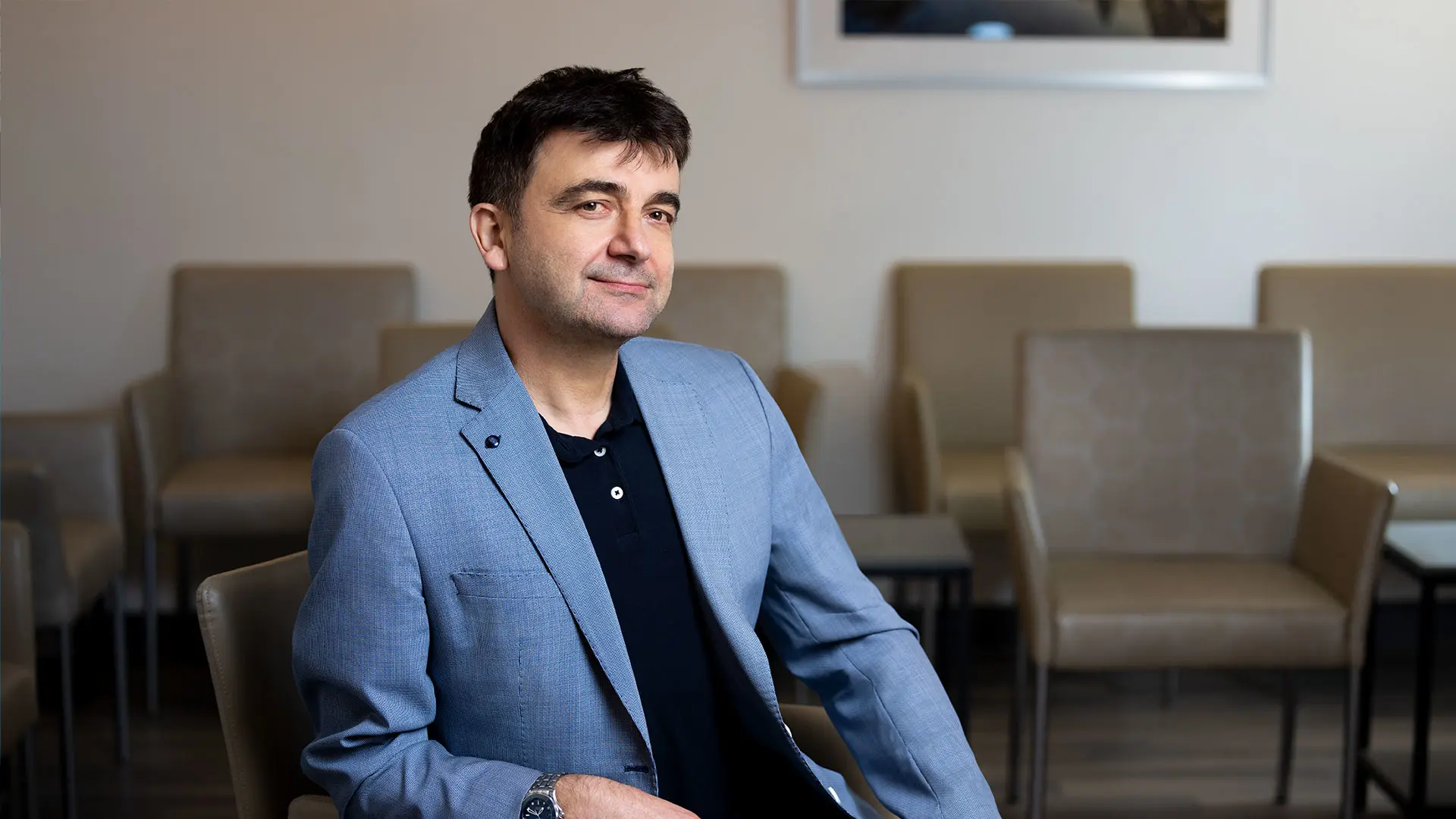
Miroslav L. Djordjevic, MD, Professor of Urology at the Icahn School of Medicine at Mount Sinai
Meanwhile, Dr. Purohit has been achieving positive outcomes for patients with abdominal phalloplasty, a shaft-only genital surgery that uses skin and adipose tissue as a local flap. It has several advantages over free flap and rotational flap procedures, such as less visible scarring and enhanced phallic length and width. It is also associated with less morbidity and fewer complications. But one of the biggest advantages is it does not involve microvascular anastomosis, which means it can be performed by most reconstructive urologists.
“This is a nice, straightforward procedure that easily could be popularized and thus expand access to care for transgender men who do not want or cannot find someone to perform a flap-related phalloplasty,” Dr. Purohit says.
In a retrospective study of 63 patients who underwent the procedure between January 2017 and August 2024, he found that 14 (22.2 percent) reported moderate and 43 (68.3 percent) reported complete tactile sensitivity. Patient satisfaction rates were also notable, with 20 (31.7 percent) indicating they were satisfied and 28 (44.4 percent) indicating they were very satisfied. The median penis length was 13 centimeters, and the average girth was 12 centimeters. There were no instances of Clavien Dindo Grade IV complications and no total flap loss reported. The findings were shared at the American Urological Association’s 2025 annual meeting.
“There are other centers that have started to use our technique,” Dr. Purohit says. “That is partly due to the fellows we have trained, so it is an approach we are popularizing nationwide.”
Dr. Purohit adds that they continue to enhance the abdominal phalloplasty by offering a radial artery free flap urethroplasty. He has also developed a new technique utilizing umbilical transposition, which results in a much smaller donor scar site—something that appeals to patients. Through these refinements, and through adoption of new techniques, Dr. Purohit anticipates the volume of men and women seeking gender-affirming surgery at Mount Sinai will continue to rise significantly, meaning that he and Dr. Djordjevic could reach a new milestone soon.
“It is just the two of us performing these surgeries,” Dr. Purohit says. “Our goal is to increase our efficiency so we are able to keep pace with demand.”