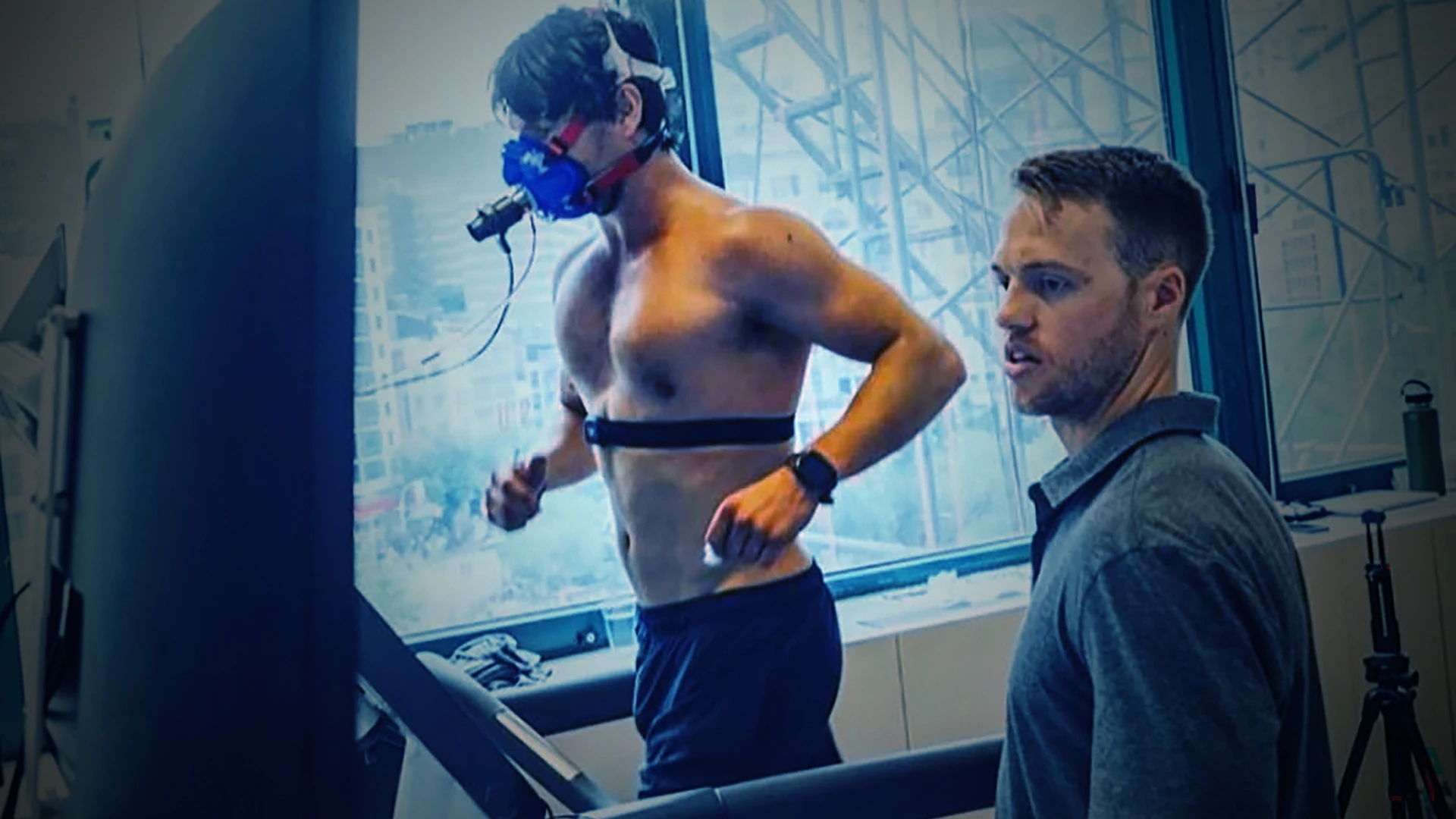
For years, athletes wishing to understand how to unlock their physical potential and perform at optimal levels have turned to the Performance360 (P360) program offered by the Department of Rehabilitation and Human Performance at Mount Sinai. This unique program develops holistic performance enhancement strategies that incorporate physical, nutritional, mental, and medical elements.
After more than a decade of collecting data and understanding what works for the program, the Department has set its sights on taking P360 to the next stage—using its optimizing strategies to help people age healthfully and promote longevity.
“Our goal is to use our tried-and-tested methods to help people improve the overall performance of their day-to-day lives, while also supporting a thriving innovation program that rigorously validates new and emerging longevity interventions,” says Joseph E. Herrera, DO, Chair of the Department of Rehabilitation Medicine, and Lucy G. Moses Professorship in Rehabilitation Medicine. “This, in turn, leads to better quality of life in our clients and a program that grows and learns in real time.”
Understanding Performance360
Launched in 2017, the P360 program grew out of the Department’s work with athletes, helping them boost performance, prevent injuries, and reduce recovery times. With its proactive, comprehensive approach to performance enhancement being applicable broadly, the program has become highly sought after by various entities, including professional sports organizations—the National Basketball Association, National Football League, and the International Olympic Committee—as well as Fortune 500 companies and the military.
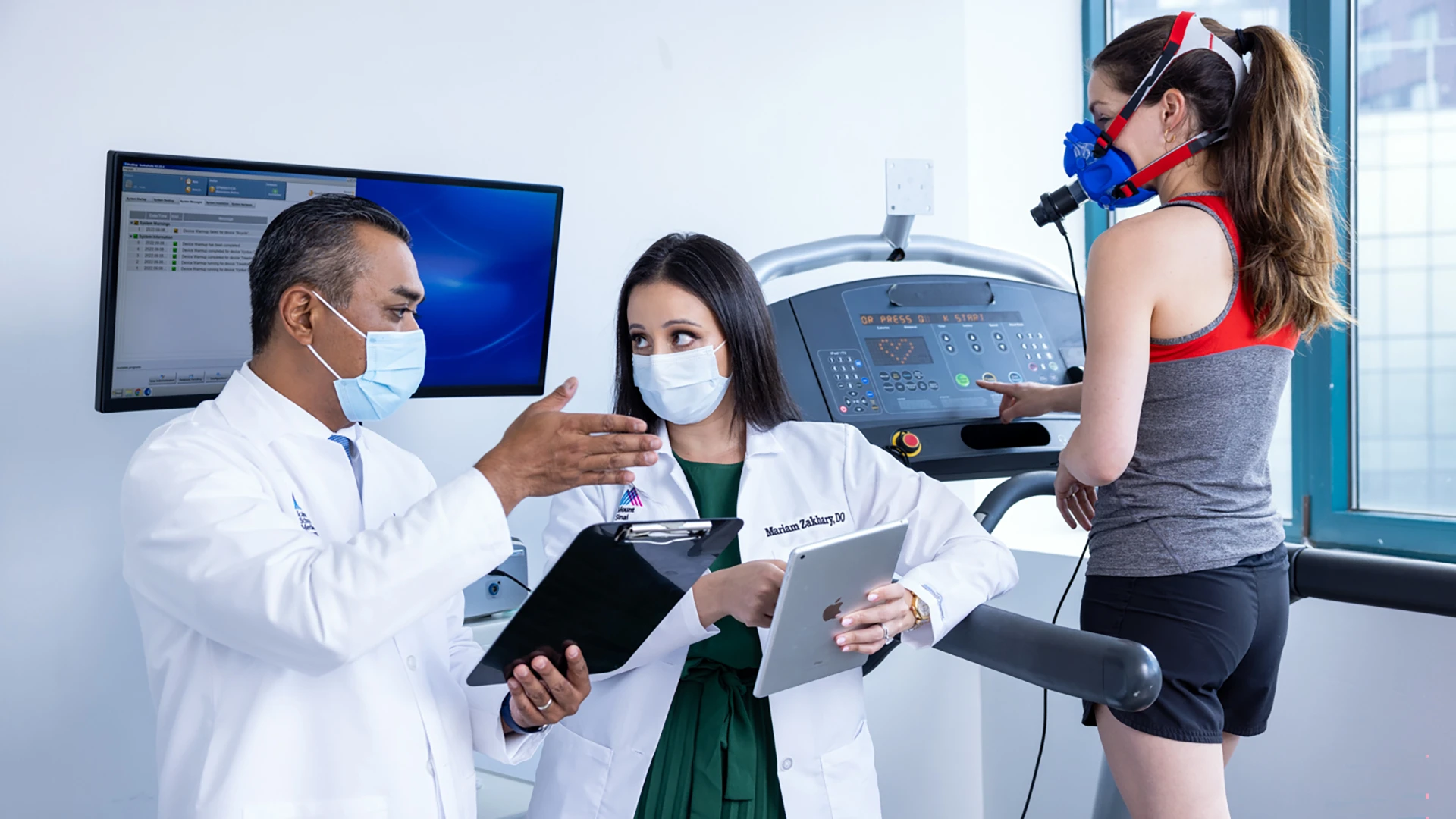
The Department of Rehabilitation and Human Performance at Mount Sinai has been working with athletes to help them achieve optimal performance via the Performance360 program that leverages biomarker and performance testing, such as the VO2 max test being demonstrated in this image. The team includes many physicians, including Joseph E. Herrera, DO, Chair of the Department of Rehabilitation and Human Performance (left), and Mariam Zakhary, DO, Medical Director Downtown for Rehabilitation and Human Performance (center). As the program grew and found success, the Department is exploring applying its learnings toward healthful aging.
“A high performer is a high performer regardless of what field they are in. We thought, ‘Athletes have access to performance coaches and tools to monitor their metrics. Why not offer that to a broader population?’” says Dr. Herrera. “That was the birth of Performance360.”
Each P360 plan starts with an exam phase that includes bloodwork and extensive biomarker and performance testing. Individuals are assessed for VO2 max, the maximum amount of oxygen muscles can utilize during exercise; lactate threshold testing for blood lactate levels at which performance diminishes; bone density and body composition scans; and neuropsychological testing. In some cases, Dr. Herrera and his colleagues will order an electrocardiogram or echocardiogram for more insights on observed performance deficits.
The program has also developed its own assessment tools to gain further insights on participants. One such tool, the Sway App, is used for concussion assessments by identifying signs of imbalance or delayed reaction.
“That app is publicly available, beyond just for P360 participants,” Dr. Herrera points out. “We do that so we are not gatekeeping any technologies that may be useful for assessing individuals.”
Applying Strategies for Healthful Aging
The Department soft launched the healthy aging and longevity aspect of P360 in October 2024, applying similar holistic assessments to develop strategies and plans.
Individuals who are pushed to optimize physical, mental, and social health levels are likely to encounter fewer health issues later in life, and as a result, perhaps live longer. Dr. Herrera believes this boundary-pushing approach distinguishes P360 from other executive health programs that focus on mediating risk.
P360's vision for healthful aging is to optimize physical, mental, and social levels.
An individual gets a customized plan and works with a care team of specialists and coaches.
Each plan is goal-specific and data-driven. Education is built into the training sessions.
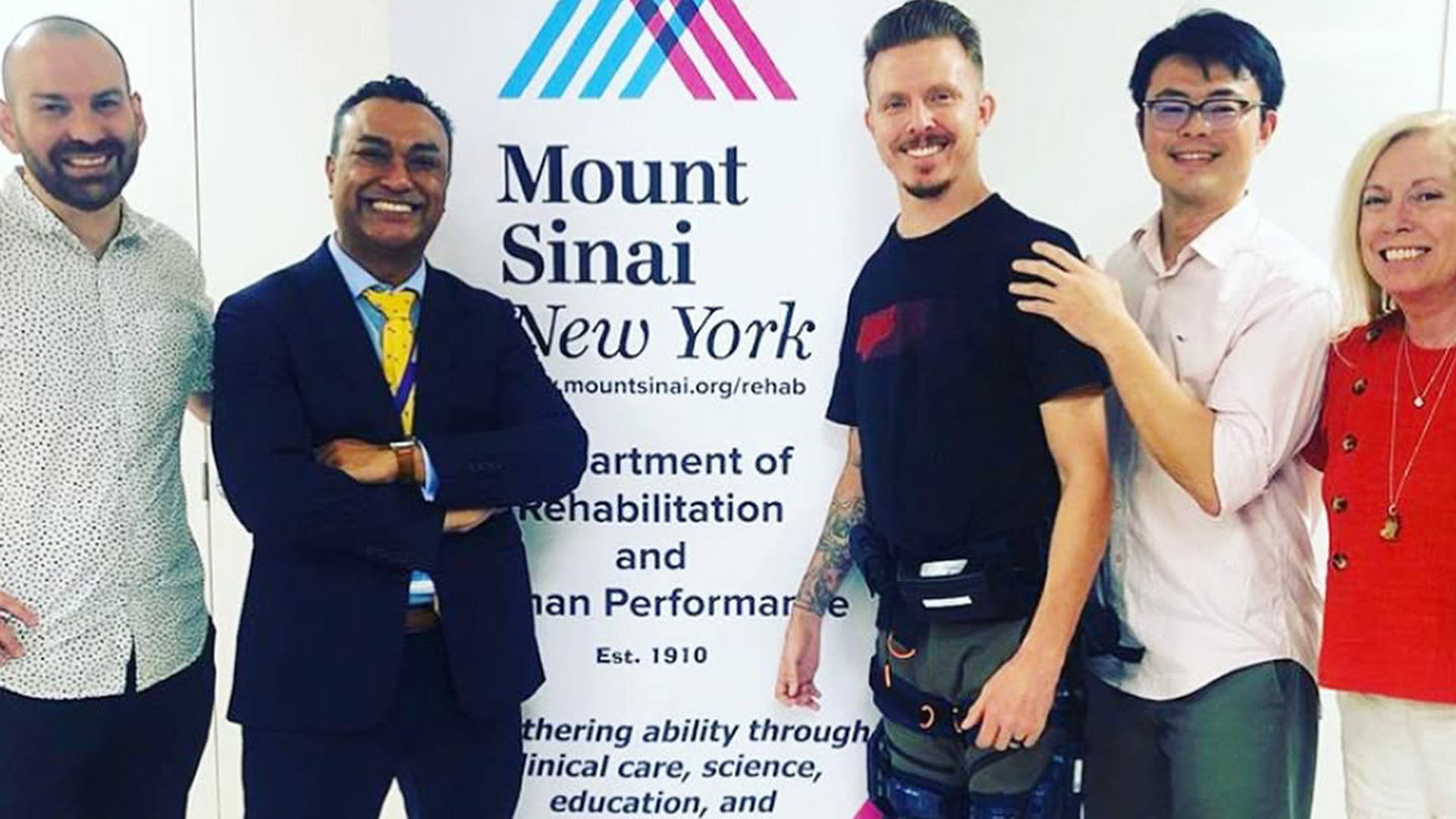
An individual works with a multidisciplinary team, which includes physicians, mental and physical strengthening coaches, nutritionists, and physical therapists, to develop a customized performance plan for aging.
Each plan is goal-specific and data-driven, incorporating interventions that could be medical, including high-dose vitamin D and hormone therapies; or physio/psychological, such as mental, physical, or spiritual strengthening coaching. Education is built into the program’s training sessions to help participants stay motivated.
“For example, it can be tough for someone who has been sedentary for years to start being active on their own,” says Dr. Herrera. “Our physical strength coaches inspire participants and create schedules so they can make that a habit.”
The program has leveraged wearable technology, such as wrist actigraphy and continuous glucose monitors, and uses follow-up consultations to monitor progress.
“The glucose monitors, in particular, have been really good in helping people change their eating habits because they can see how high and low blood sugar levels affect them cognitively,” says Dr. Herrera.
Given the nascence of the P360 healthful aging program, and the individualistic nature of the plans, it has been challenging to standardize the outcome data to gauge success. However, word of mouth from participants has resulted in a waitlist of roughly six months—an early indicator of the program’s success.
The Department seeks ways to enhance its capabilities through technology and innovation, such as the markerless motion capture technology used by David Putrino, PhD, Director of Rehabilitation Innovation, Mount Sinai Health System, to track biomechanics, which can be applied toward healthful aging in Performance360. The clip showcases a test with the Brooklynettes dance team in 2019.
Inspired by the momentum, Dr. Herrera has thoughts on expanding the program to meet the increased demand. The Department is looking at relocating the program to a larger space, adding more programming, and incorporating more cutting-edge technology, including hyperbaric chambers and motion capture systems.
Additionally, Dr. Herrera is in discussions with colleagues from the Mount Sinai Health System about launching a healthful aging initiative inspired by P360’s methodology to benefit the general community.
“We want to put more people on the path to living healthier, sharper, longer lives,” says Dr. Herrera. “The more we can scale up, the more we can achieve that goal.”
Featured
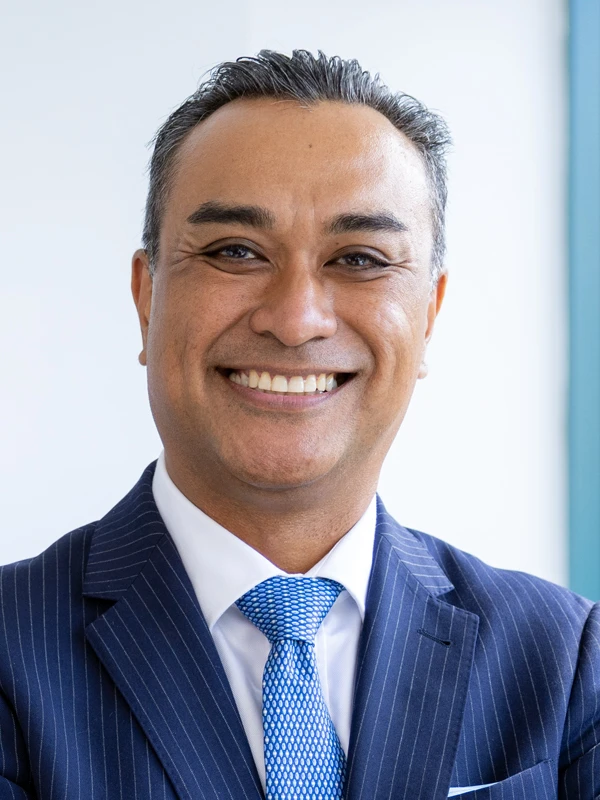
Joseph E. Herrera, DO, FAAPMR
Chair, Rehabilitation and Human Performance; Lucy G. Moses Professor of Rehabilitation Medicine