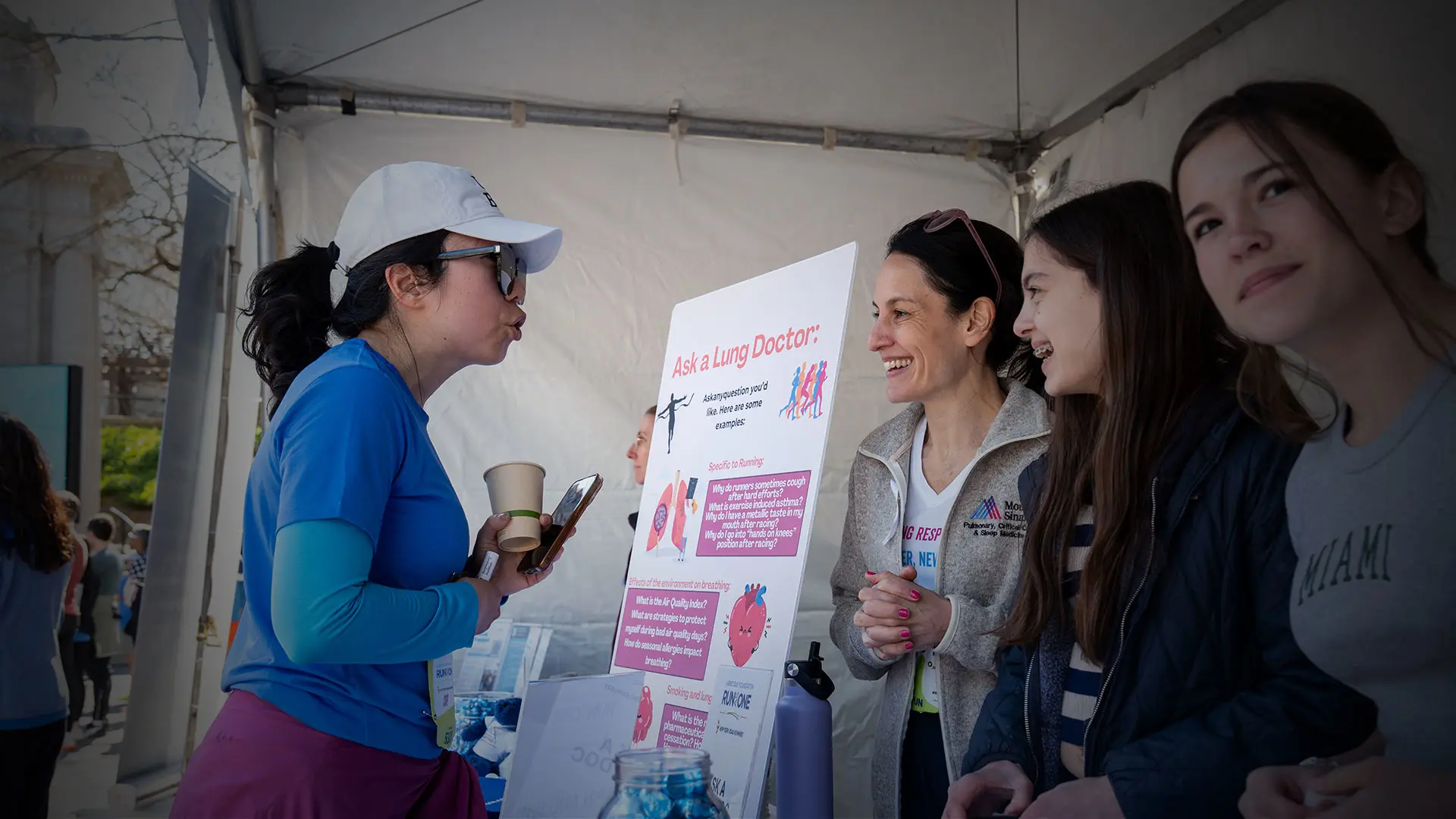
Every April, Barbara Mann, MD, and several colleagues from the Mount Sinai Respiratory Institute lace up for the Run as One 4M Presented by JPMorgan Chase, a four-mile run that raises funding for, and awareness about, lung cancer.
Although she and her teammates have consistently notched the fastest race times among participating health care centers over the years, Dr. Mann says the main reason for taking part is to engage people about lung health.
“I think we are catching people who otherwise might not think about this topic,” says Dr. Mann, Associate Professor of Medicine (Pulmonary, Critical Care and Sleep Medicine) at the Icahn School of Medicine at Mount Sinai.
“For example, there are health-conscious people taking part in this event who might have a feeling of invincibility. There are also young runners who aren’t at personal risk but may have family members who are, and they want to talk about it. That’s why we continue to participate.”
Organized by the New York Road Runners (NYRR), the event honors the memory of Thomas G. Labrecque, a former Chase Manhattan Bank chief executive officer and nonsmoker who died of lung cancer in 2000 at age 62. Dr. Mann says the association between smoking and lung cancer is so strong that many nonsmokers are not aware they are at risk of developing the disease.
“Unlike breast or colon cancers, the big question everyone asks about people with lung cancer is, ‘Did they smoke?’” Dr. Mann says. “That is a problem because 60 percent of cases involve individuals who have never smoked or who stopped smoking. By participating in the event, Mount Sinai is helping to raise awareness about risk and the benefits of screening.”
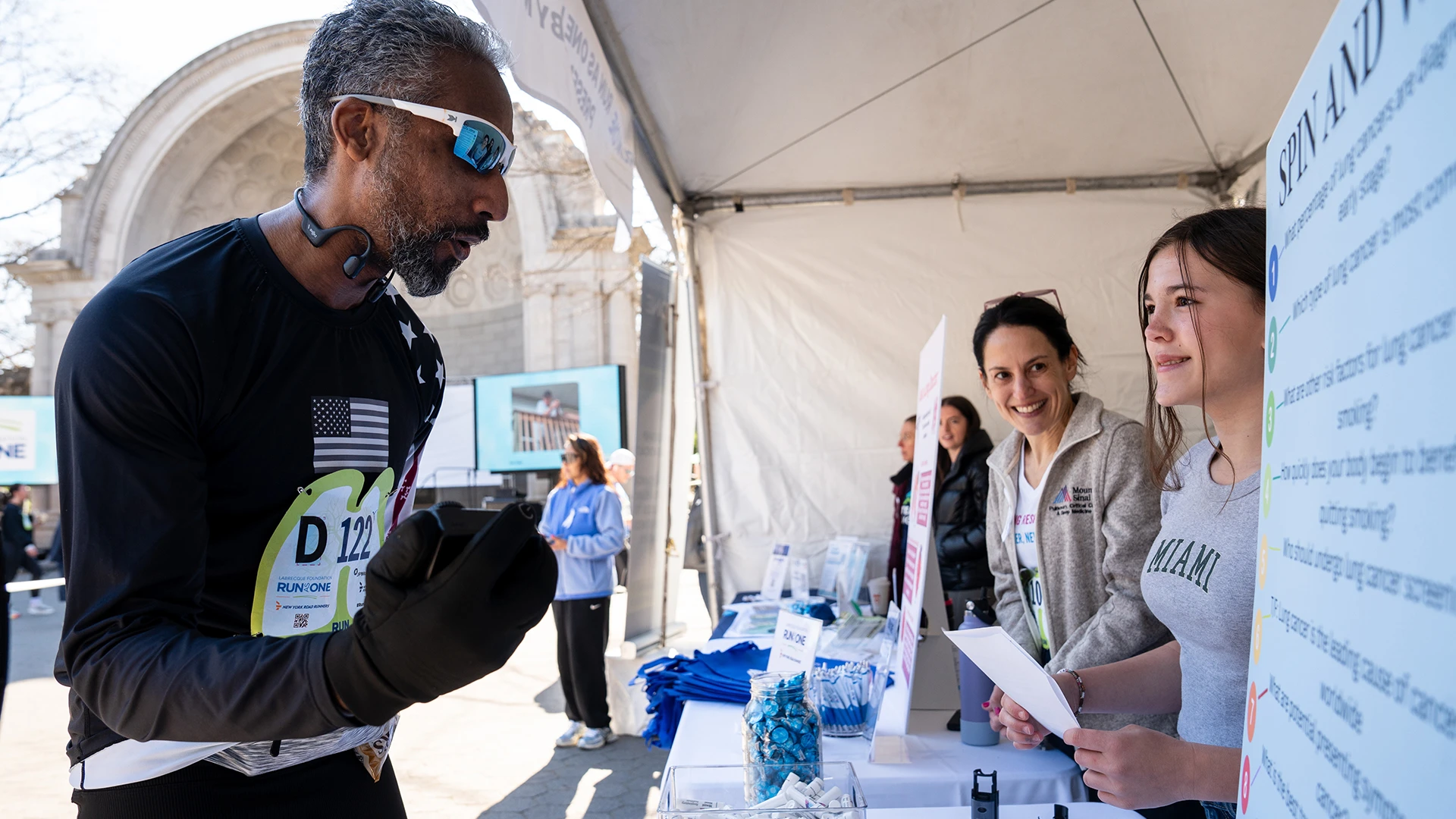
Mount Sinai pulmonologists use the New York Road Runners' Run as One event as an opportunity to educate people about never-smoking lung cancer.
Mount Sinai Respiratory Institute physicians and staff have been taking part in Run as One since 2017, both as runners and as lung cancer experts at the event’s health village. Dr. Mann got the ball rolling after running the race in 2016—one of several NYRR events she entered that year to gain guaranteed entry to the New York City Marathon. Inspired by the experience, and seeing strong turnout from other health centers, she approached the Labrecque Foundation and Charles A. Powell, MD, MBA, the Florette and Ernst Rosenfeld and Joseph Solomon Professor of Medicine at the Icahn School of Medicine at Mount Sinai and Chief of Pulmonary, Critical Care and Sleep Medicine for the Mount Sinai Health System, about getting involved.
“Dr. Powell told me to go for it,” Dr. Mann recalls. “That speaks to our commitment to be involved in the community in ways that go beyond doctor-patient interactions.”
For Dr. Mann, Run as One is a welcome opportunity to engage more individuals on the importance of lung health. This effort is more than an extension of her work at Mount Sinai; it is a way to honor her mother.
“She died of lung cancer in 2023,” says Dr. Mann. “This was always an important event for me, but it has become even more so since then.”
The event is equally important for Dr. Mann’s colleagues, with the number of participants growing each year. This year, 20 Mount Sinai Respiratory Institute physicians, fellows, attendings, and staff took part in Run as One on Sunday, April 12, in Central Park. The team finished first among participating health care centers and was recognized with a donation from the Labrecque Foundation. The team also answered questions about lung health at the event’s health village. Thanks to assistance from a consultant hired by the Labrecque Foundation, Dr. Mann and her colleagues offered several interactive activities to engage participants. They included a prize wheel, marathon-themed pulmonology trivia, and a lung cancer-related selfie opportunity.
“These activities provide another way for us to start conversations about something that has a certain degree of stigma attached to it,” Dr. Mann says. “Even at the end of the race, being there in our race bibs and not in our white coats, we are more approachable and can start by chatting about the race. Then, we can segue into a conversation about lung health and lung cancer.”
The more approachable, the better. For Dr. Mann, every connection is a chance to make a difference—to encourage someone to schedule regular screening and reduce their risk of developing or dying from the disease, like Mr. Labrecque and her mother.
“They have a huge screen at the event that displays pictures of people who have passed away from lung cancer, and my mother was on that screen last year,” Dr. Mann says. “Anything I can do to prevent even another picture from being added to that display is important.”
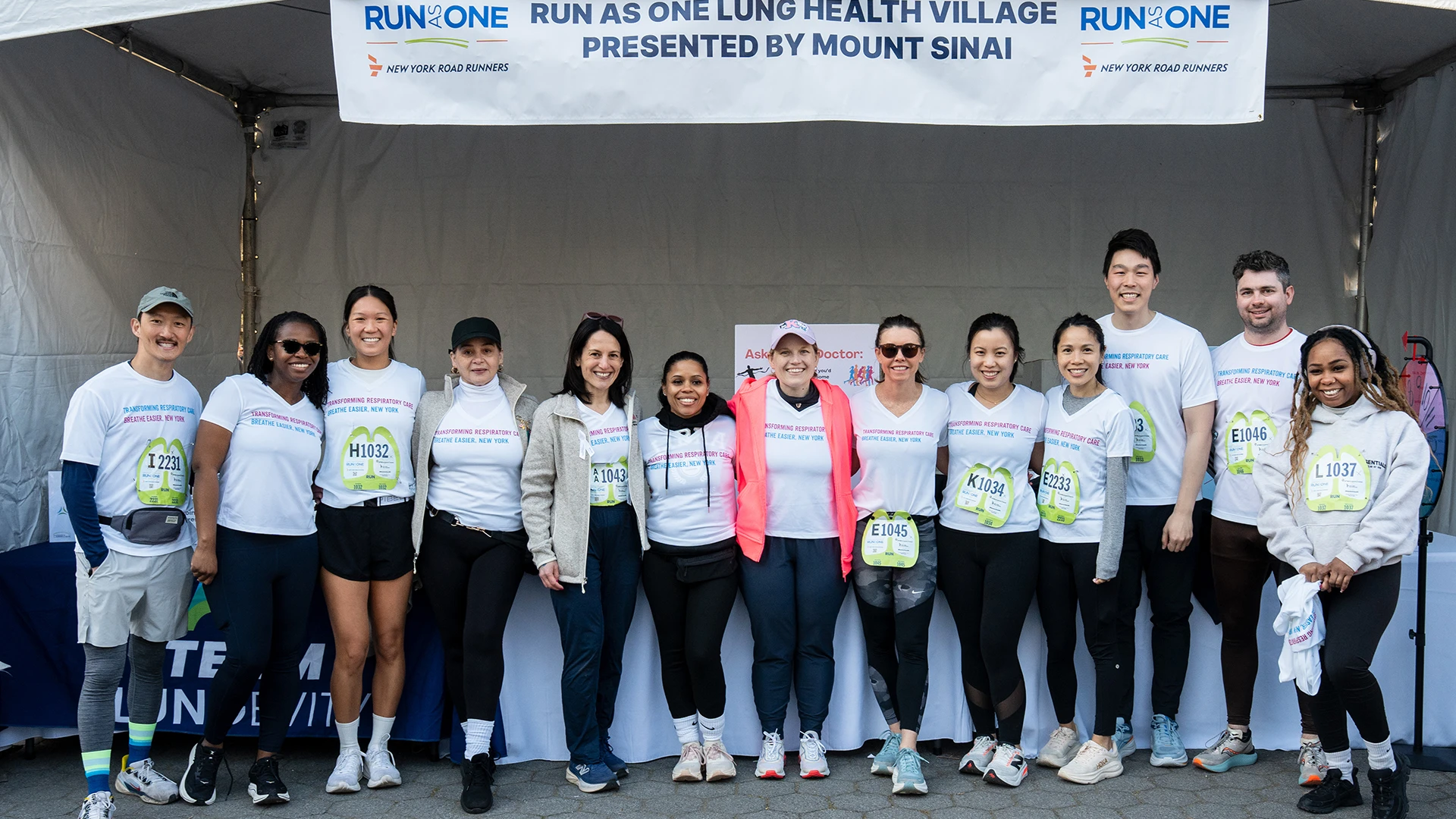
Dr. Mann, fifth from left, and her teammates finished first among participating health centers in the Run as One event.