
When a routine prenatal ultrasound in 2024 revealed that pediatric patient Isaac, then a fetus, had bilateral severe hydronephrosis, the clinical team at Mount Sinai recognized this was more than the usual single-sided scenario. The ultrasound showed fluid accumulation in both kidneys, an early indicator of potential urinary tract obstruction.
“Detecting obstruction prenatally allows us to prepare and intervene in a way that preserves long-term kidney health,” says Jeffrey Stock, MD, Chief of Pediatric Urology, Mount Sinai Kravis Children’s Hospital, and Professor, Pediatric Urology, Icahn School of Medicine at Mount Sinai. “These early findings guide our timing and coordination after birth.”
In the weeks that followed, a multidisciplinary group comprising maternal-fetal medicine, pediatric urology, radiology, and pediatric nephrology developed a detailed perinatal plan.
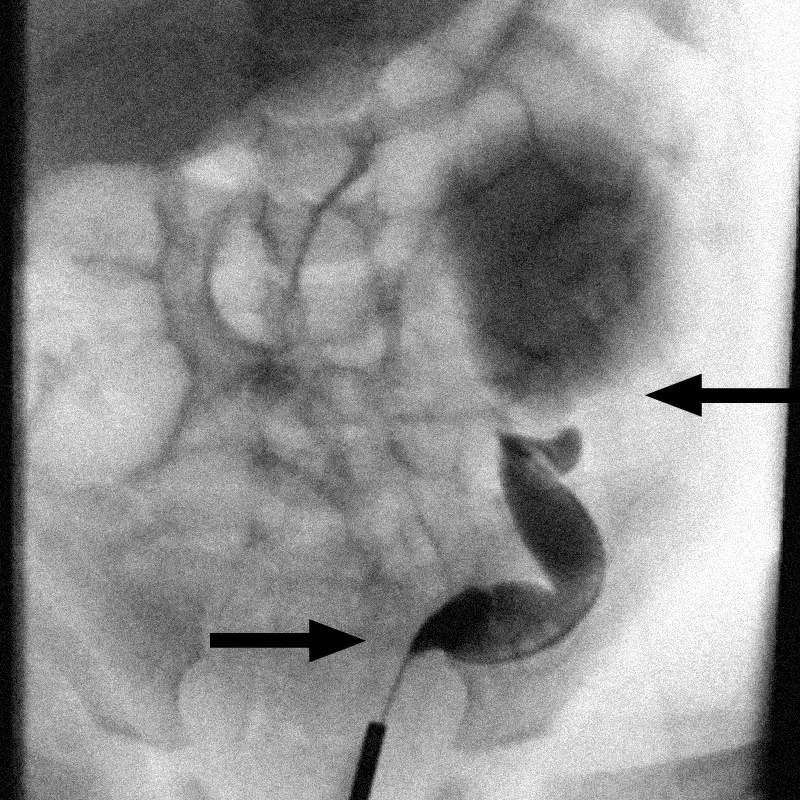
Contrast-enhanced imaging reveals fluid buildup and bilateral ureteral obstruction in the kidneys.

Isaac at one year old, healthy and happy, demonstrating unobstructed drainage and preserved bilateral renal function.
After Isaac was born that July, doctors from Pediatric Nephrology and Pediatric Urology met to discuss his options and started him on early prophylactic antibiotics. When Isaac was three months old, they brought him in for X-rays and confirmed his bilateral severe hydronephrosis, or double obstruction of the ureters at the level of the bladder and kidney.
Because of the complexity and Isaac’s small size as an infant, the team proceeded with a staged reconstructive approach, addressing one ureter at a time to minimize risk and support recovery. Radiology provided anatomical mapping, and nephrology monitored renal function to ensure preservation of parenchyma, or functional tissue of the kidneys.
Today, at one year old, Isaac is thriving, and postoperative imaging demonstrates unobstructed drainage and preserved bilateral renal function.
“It is without hesitation that we feel Isaac has received genuine care from many members of his Pediatric Urology and Nephrology teams,” Isaac’s parents shared. “From the very beginning, even before Isaac was born, Dr. Stock has been present in Isaac’s life. He shared his cell number, came down to ultrasound visits, and answered calls after surgery. As parents, we felt seen, heard, and cared for every step of the way.”
Isaac continues to be followed by the pediatric urology and pediatric nephrology teams for long-term surveillance, and his story stands as a testament to the power of early prenatal detection, surgical precision, and family-centered care—hallmarks of Mount Sinai’s integrated approach to complex congenital anomalies.
“This case illustrates how early diagnosis and multidisciplinary planning translate directly into renal preservation,” says Dr. Stock. “It’s a model for coordinated pediatric urologic care.”
Featured

Jeffrey A. Stock, MD, FACS, FAAP
Chief of Pediatric Urology, Mount Sinai Kravis Children’s Hospital, and Professor, Pediatric Urology