But it was through the Neurology Residency Program at the Icahn School of Medicine at Mount Sinai (Mount Sinai West) that he carved out a unique training pathway combining neurology with interventional pain medicine.
“When I started in neurology, I really appreciated how the nervous system connects to the pain system, yet there is a paucity of neurologists in the pain world,” says Dr. Burshtein, who was appointed Co-Chief Resident of the Neurology program in 2025. “The Mount Sinai residency program creates the space to explore what you’re interested in.”
A Rich Training Ground for Neurology
After graduating from medical school with distinction in research, Dr. Burshtein found the Mount Sinai residency program a perfect fit. With the Mount Sinai Health System’s large and diverse patient population and the chance to treat complex cases, he knew the program would offer an unparalleled training ground for learning about the breadth and depth of neurology.
“The program includes rotations in more niche subfields, such as neuro-ophthalmology and neuroimmunology, while also providing plenty of elective time to pursue one’s interests— including in outpatient settings,” he says. “Most residency programs in neurology are very inpatient-focused, but neurology is primarily an outpatient specialty. Having those electives helps residents better prepare for their future careers.”
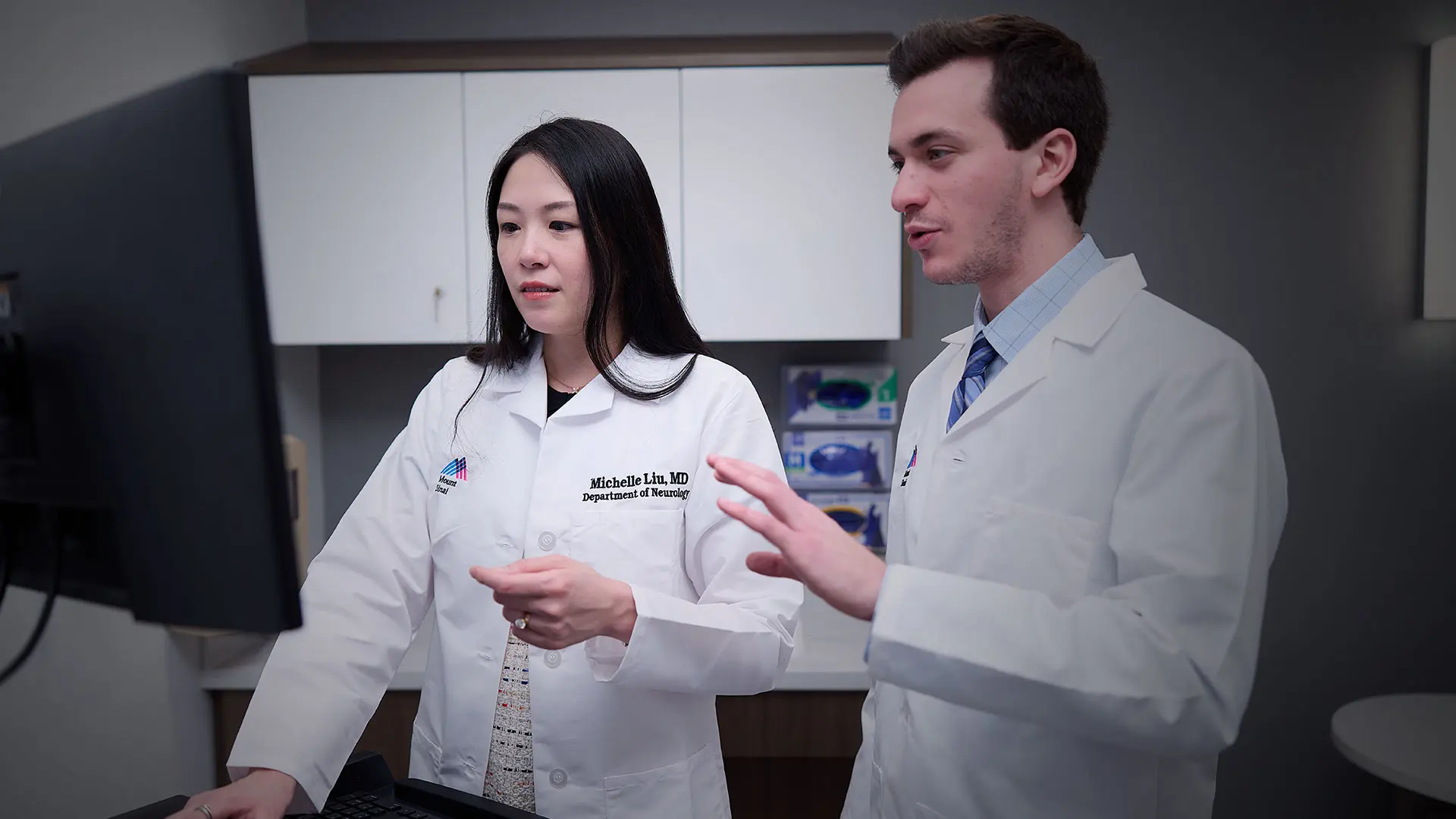
From his first meeting with Vicki Shanker, MD, Associate Professor of Neurology and Program Director of Neurology Residency, Dr. Burshtein says he felt encouraged and supported to pursue training and research opportunities that aligned with his interests and skills. Dr. Shanker also helped connect him to other faculty, including Michelle Liu, MD, Assistant Professor of Neurology and Anesthesiology at the Icahn School of Medicine. As one of the relatively few physicians board certified in both neurology and pain medicine, Dr. Liu proved to be the perfect mentor.
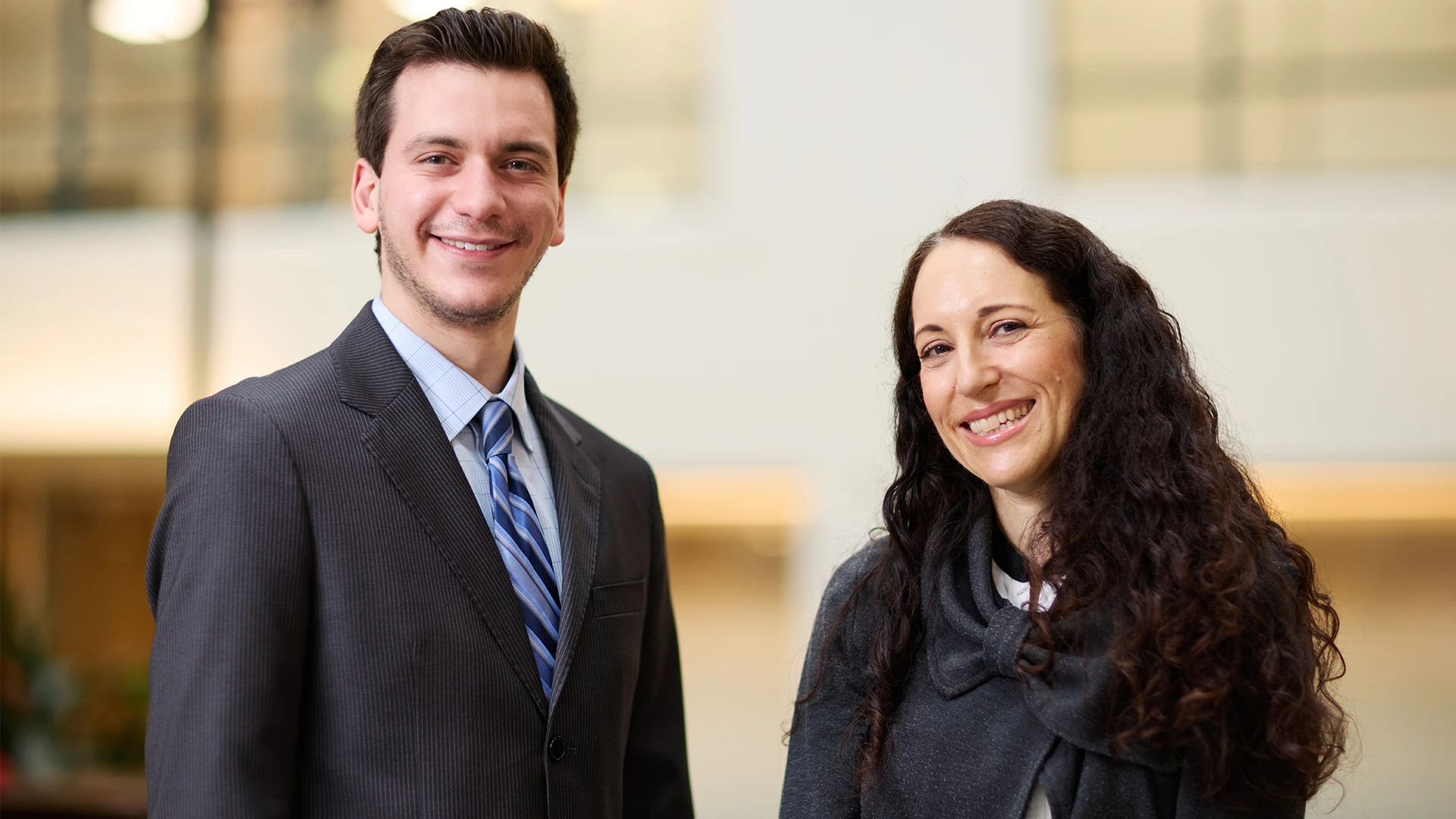
Aaron Burshtein, MD, with Vicki Shanker, MD
During his third year, Dr. Burshtein also completed a rotation with Jung H. Kim, MD, an anesthesiologist at Mount Sinai West who specializes in pain management. Through that connection, he expanded his research on a variety of pain topics and gained valuable experience in interventional pain medicine. The training allows him to perform some interventional procedures that neurologists traditionally refer to other specialists, such as cervical neck injections that can benefit patients with refractory chronic migraines who have cervical and upper back tension. “It’s a great marriage of skills that allows me to treat patients more comprehensively,” he says.
Excellence in Research and Clinical Care
Dr. Burshtein’s residency experience provided ample opportunities to expand his research portfolio. To date, he has more than 40 publications covering a range of topics in neurology as well as pain. He has presented at four national pain conferences, earning second place for the research he presented at the Eastern Pain Association Conference in 2024. That project, done in collaboration with Dr. Kim, involved a case report of a patient with refractory migraines treated with a stellate ganglion block—an injection of anesthetic into the stellate ganglion, a collection of nerves in the neck. “There is no existing literature on using stellate ganglion blocks for migraines, so it was gratifying to make people aware that this can be used to help patients with treatment-resistant migraine,” he says.
In addition to research on headaches and stroke, Dr. Burshtein has explored other pain medicine topics. In one project, he studied pain management approaches for hidradenitis suppurativa, a dermatologic condition that causes painful skin abscesses. He is also interested in improving patient care and has explored factors associated with patient no- show rates in an academic pain management practice.
“It’s the people around you who really influence the type of physician you become—and at Mount Sinai, they are second to none.”
— Co-Chief Neurology Resident Aaron Burshtein, MD
As he grows his practice, Dr. Burshtein plans to continue his research efforts. “I enjoy identifying a question that’s never been answered and taking the research from point A to point Z,” he says. “I always want to continue to evolve as a physician, and the way you do that is by asking questions.”
His commitment to learning and challenging himself to grow has earned him a host of accolades. He was awarded the Futures in Neurologic Research Scholarship by the American Academy of Neurology in 2025 and was elected to the Alpha Omega National Medical Honor Society the same year.
“The Mount Sinai West Neurology Residency Program is built on individualized support, helping residents explore their interests and develop focused clinical, scholarly, and leadership pathways through early mentorship and opportunity,” says Dr. Shanker. “Dr. Burshtein exemplifies this model. He is a true scholar who thinks deeply about his patients and consistently asks insightful clinical questions that advance learning for those around him.”
After completing his residency, Dr. Burshtein will begin a pain medicine fellowship at NewYork-Presbyterian/Columbia University Irving Medical Center. He says he feels exceptionally prepared following his training at Mount Sinai.
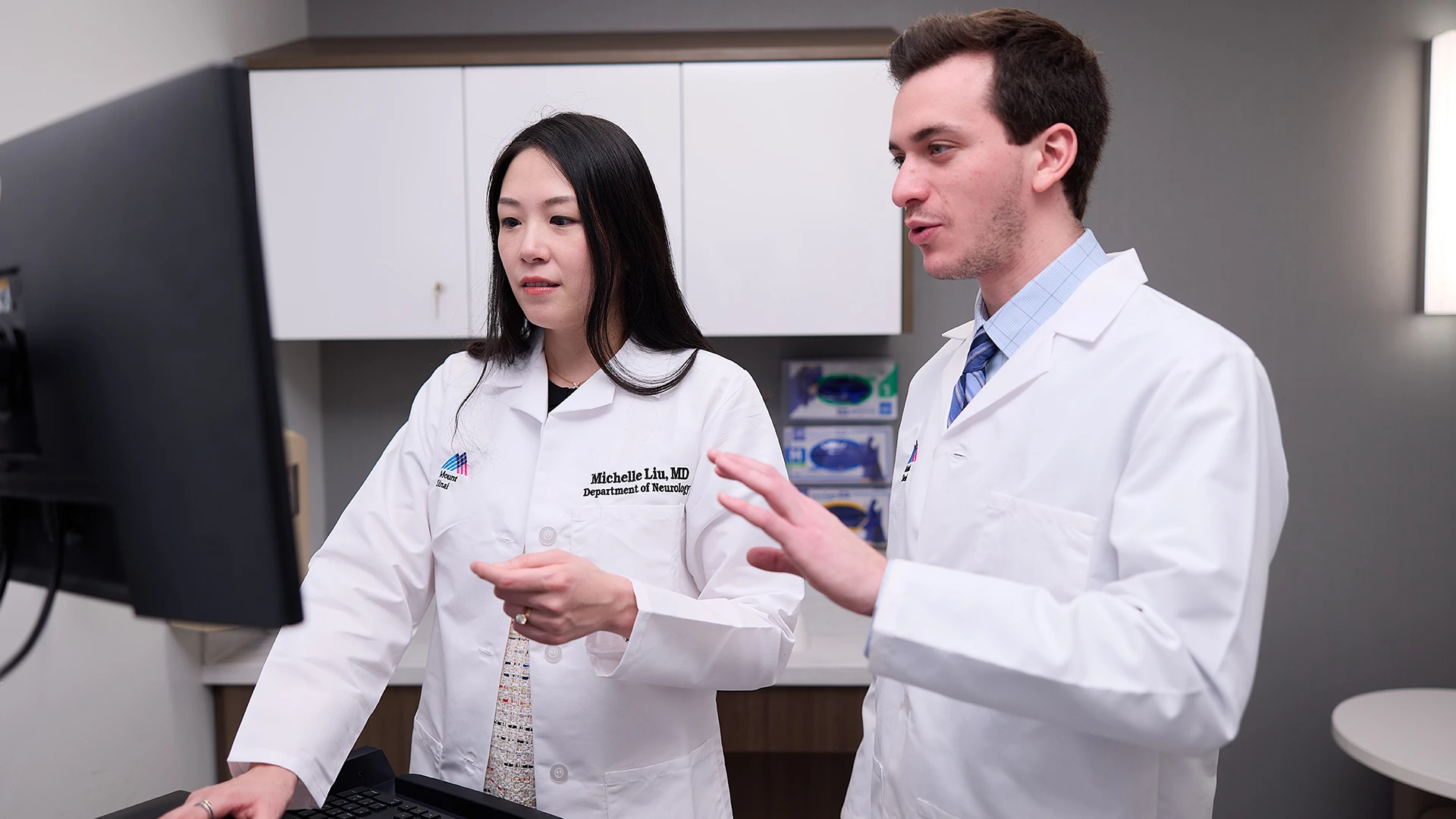
Michelle Liu, MD, with Aaron Burshtein, MD
“It was rewarding to watch Dr. Burshtein’s curiosity evolve into genuine commitment as he gained exposure to the full scope of the field, from nuanced history-taking and focused physical examination to longitudinal treatment planning and interventional decision-making,” says Dr. Liu. “His engagement became increasingly self-directed; he sought additional learning opportunities, asked sharper questions, and took the initiative to launch several projects that reflected both intellectual investment and follow-through. Although Pain Medicine is a less traditional direction within neurology training, our residency’s meaningful exposure to pain management creates a real on-ramp for residents to test and pursue these niche pathways with structure and mentorship.”
Says Dr. Burshtein: “Residents learn similar content in other programs: We read the same textbooks and the same articles. But it’s the people around you who really influence the type of physician you become—and at Mount Sinai, they are second to none. Dr. Shanker and program leadership are phenomenal in providing mentorship and individualized support, letting you take ownership of patient care even as you continue to build your knowledge. Whether you’re pursuing research or gaining clinical experience in complex cases, Mount Sinai has it all, and you don’t have to go looking for outside resources to find it.”