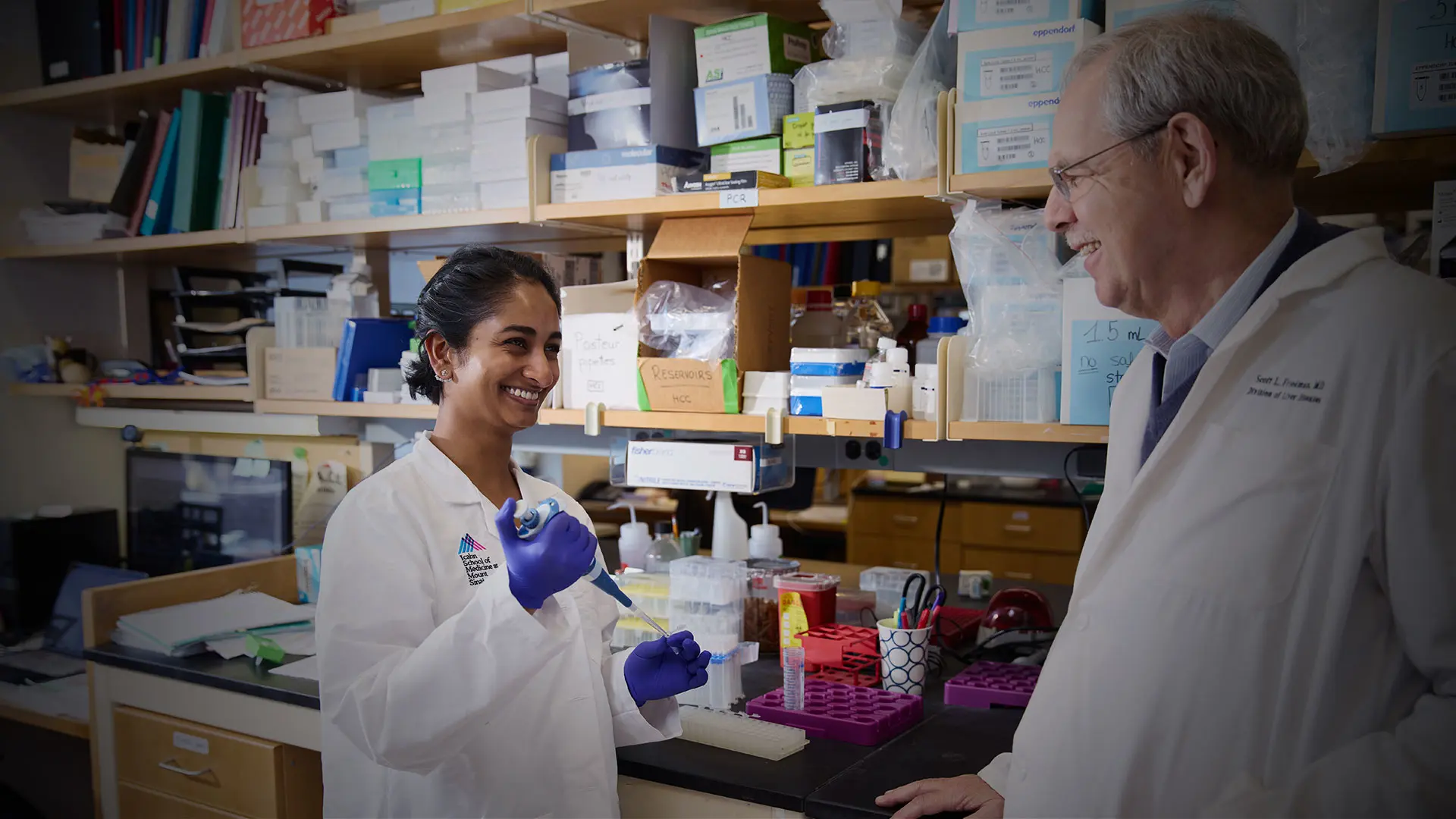
As CAR-T cell therapy was proving life-changing and curative for growing numbers of patients with difficult tumors, Scott L. Friedman, MD, lost no time recognizing the potential of this novel cell reprogramming technology to also dramatically change the field of chronic liver disease.
Dr. Friedman, the pioneering head of liver disease research at Mount Sinai, led a new study in Science Translational Medicine. Based on tests with animal models, the results underscore the promise of this approach and its potential implications down the road for the millions of people worldwide with metabolic dysfunction-associated steatohepatitis, or MASH, as well as other causes of liver fibrosis.
“As a world leader in fibrosis therapies, we’re constantly leveraging new technologies for liver disease, and CAR-T cell therapy is distinct from anything else we’ve tried,” says Dr. Friedman, Dean for Collaborative Research and Partnerships, Director of the Institute for Liver Research (soon to be the Center for Liver Research) at the Icahn School of Medicine at Mount Sinai, and senior author of the study. “CAR-T is already well established for cancer treatment, and extending it to noncancerous conditions such as liver fibrosis has enormous potential and could open an important new chapter in a field in urgent need of new approaches.”
The study represents a close collaboration between Mount Sinai and the Perelman School of Medicine at the University of Pennsylvania. Penn Medicine was a trailblazer in CAR-T development, its work leading to the first approved application by the Food and Drug Administration in 2017, and continuing with next-generation CAR-T cell drugs for cancers as well as noncancerous conditions. When Dr. Friedman reached out to Jonathan Epstein, MD, Dean of the Perelman School of Medicine, following that approval, a partnership was formed to use Penn Medicine’s CAR-T platform to find a way to prevent, or at least reduce, scarring of the liver. This research would build on familiar turf for Dr. Friedman: he had been among the first to isolate and characterize the hepatic stellate cell as the key cell type responsible for scar production in liver disease.
The combined investigation was designed to break ground in another critical way. This would be the first time that in vivo CAR-T cell therapy would be deployed against hepatic fibrosis. The previous technique consisted of extracting T lymphocytes and genetically altering them in the laboratory to display a chimeric antigen receptor (CAR) on their surface. This receptor is primed to recognize and attack a specific target—in this case, the fibroblast-activating protein (FAP) alpha on the surface of fibrogenic hepatic stellate cells. The altered T cells are then returned to the body.
Training the body's immune system to go after fibrogenic hepatic stellate cells
The new in vivo approach, developed by Dr. Epstein and his team and applied to liver fibrosis by Dr. Friedman’s laboratory, modifies the T lymphocytes directly inside the bodies of rodents, thus avoiding the costs and complexities of isolating, purifying, and engineering cells, which would be beyond the capabilities of all but the largest hospital systems.
To accomplish this feat, researchers used a strategy akin to the one adopted for messenger RNA (mRNA) vaccines targeting COVID-19. They packaged copies of an mRNA that encodes the chimeric antigen receptor targeting FAP inside tiny fat droplets (lipid nanoparticles), which were injected into a vein in the rodents’ tails. The nanoparticles were coated with specific antibodies that could be readily detected by the body’s T lymphocytes.
The effectiveness of this in vivo CAR-T approach for reducing fibrosis soon became clear to researchers.
“We observed that within 30 days, rodents treated with nanoparticles containing the mRNA directed to FAP showed an approximately 30 percent reduction in the amount of fibrosis, compared to the control groups,” notes Chittampalli Yashaswini, MD, PhD, who was lead author of the study. “What was even more surprising to us were the other therapeutic benefits that accompanied that reduction. It was impressive to see that the gene signatures of hepatocytes in treated mice resembled those of healthy, non-MASH hepatocytes. The treatment also reduced lymphocyte exhaustion and helped to restore the layer of endothelial cells lining the inside of the liver’s blood vessels, which are damaged in fibrosis.”
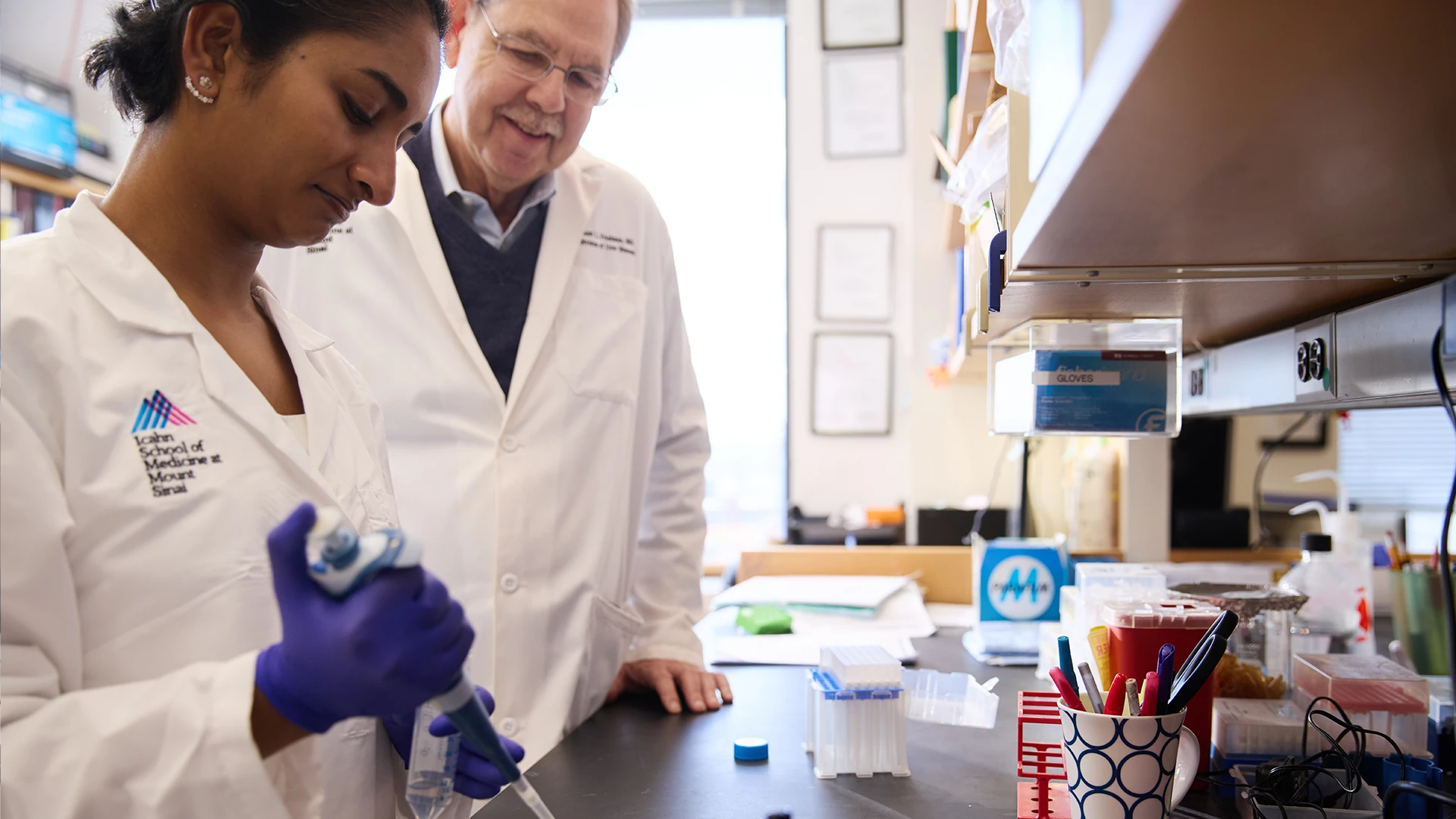
Dr. Yashaswini and Dr. Friedman were surprised to see that the therapy not only reduced fibrosis, but also produced other benefits.
Another key finding is that the CAR-T cells remained in the body only for the time necessary to fulfill their role in reducing liver scarring. “The limited duration of the treatment is extremely important because, unlike with cancer, these cells are only needed for a short period, reducing the risk of long-term toxicity,” explains Bruno Cogliati, DVM, PhD, co-author of the study and a visiting researcher from the School of Veterinary Medicine and Animal Science at the University of São Paulo, Brazil. “What we still need to determine before moving on to human trials, however, is the appropriate dosage and number of applications necessary to treat different degrees of fibrosis.”
Dr. Cogliati, who brings a unique set of skills as a veterinarian, pathologist, and PhD scientist to this project, will continue his related research over the next year at Mount Sinai exploring hot fibrosis versus cold fibrosis, and how a better understanding of that differentiation could potentially result in more targeted therapies and better outcomes for people with liver fibrosis. Hot fibrosis is characterized by active immune and inflammatory cell infiltration within scar-forming cells, while cold fibrosis reflects very little immune cell activity. In parallel with the notion of hot and cold tumors in oncology, hot fibrosis could be more responsive to treatment by virtue of its proliferation of immune cells.
Additional work on CAR-T will also continue apace within the Mount Sinai Center for Liver Research.
“CAR-T cell therapy is exploding across so many fields of disease with results never before envisioned,” emphasizes Dr. Friedman. “We’re excited by the fact that the program we’ve validated in our lab for using this technology to deplete fibrogenic cells by targeting a protein on the surface of fibrogenic stellate cells could now be applied, at least in principle, to any patient with fibrosis of the liver from virtually any cause.”