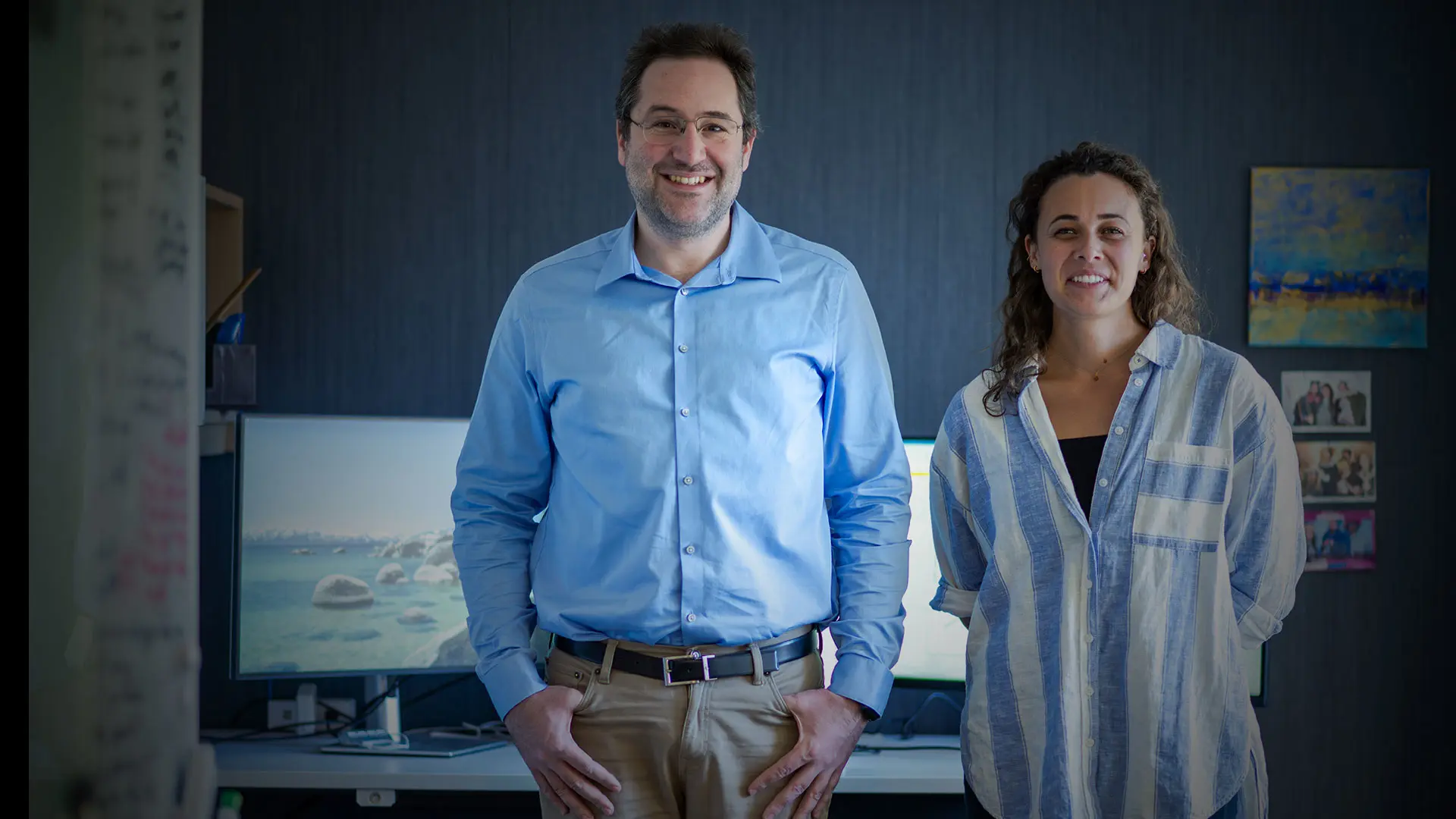
Dr. Lund was born at The Mount Sinai Hospital—and years later, she returned to her Mount Sinai roots. While she was an undergraduate in cognitive science at the University of California, Berkeley, she researched schizophrenia as a participant in a summer undergraduate research program at the Icahn School of Medicine at Mount Sinai. “I just fell in love with Mount Sinai: the community, the collaboration, and the chance to do research at the forefront of neuroscience,” she recalls.
That culture of collaboration, along with Mount Sinai’s renowned research programs, drew her back for her PhD. “I’m passionate about research that challenges how we define and treat disease and translates those insights into better care. Mount Sinai stands out for its clinician-scientist collaborations that support that work,” says Dr. Lund, who graduated in 2025 with a PhD in Neuroscience and is now a postdoctoral fellow at the Icahn School of Medicine in the Windreich Department of Artificial Intelligence and Human Health.
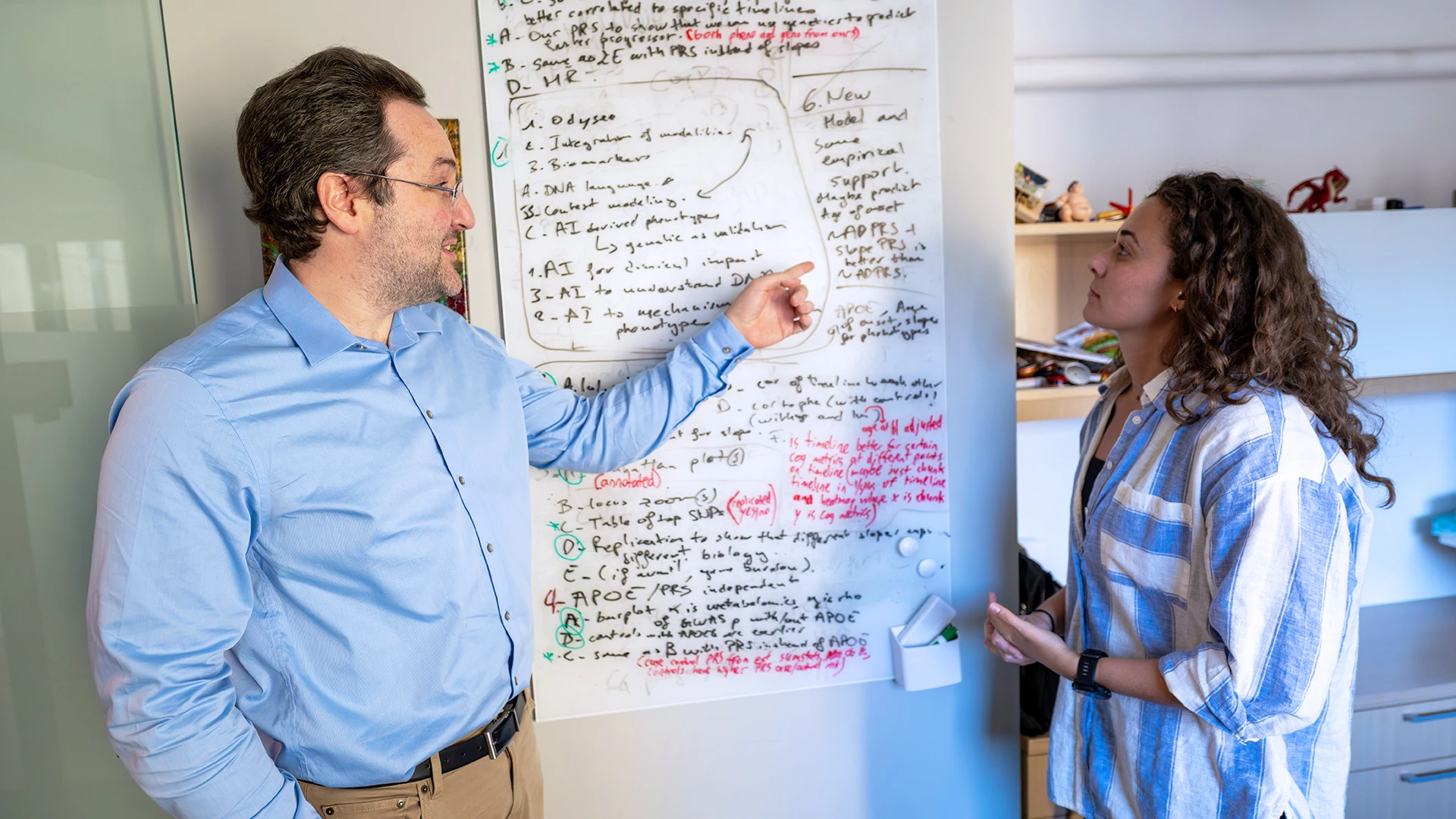
Noam Beckmann, PhD, with Anina N. Lund, PhD
As a graduate student, she worked in the labs of three faculty members: Noam Beckmann, PhD, Assistant Professor of Medicine (Data Driven & Digital Medicine), and Artificial Intelligence and Human Health; Alexander Charney, MD, PhD, Professor of Psychiatry, Artificial Intelligence and Human Health, Neurosurgery, Neuroscience, and Genetics and Genomic Sciences, and Director of The Charles Bronfman Institute for Personalized Medicine; and esteemed neuroscientist Eric J. Nestler, MD, PhD, now the Anne and Joel Ehrenkranz Dean of the Icahn School of Medicine and Executive Vice President and Chief Scientific Officer for the Mount Sinai Health System.
“What stood out most about Dr. Lund as a student was that her creativity and ambition were matched by exceptional grit, discipline, and follow-through," says Dr. Beckmann. "These qualities position her to make a lasting impact as a scientist.”
Researching the Living Brain
Dr. Lund’s doctoral research focused on cellular senescence, a biological process in which cells enter permanent cell cycle arrest—alive but no longer dividing. Cellular senescence has been linked to aging and neurodegenerative diseases, but it was unclear how it relates to structural changes in the brain.
The researchers first developed a new method to define senescent cells in human brain tissue. Then they drew on the rich dataset from the Living Brain Project to explore the link between senescence-related gene expression and brain structure.
To learn more, Dr. Lund turned to data from the Living Brain Project, which is co-led by Dr. Charney and Brian H. Kopell, MD, Professor of Neurosurgery, Neurology, Neuroscience, and Psychiatry, and Director of the Center for Neuromodulation. Through the Living Brain Project, Mount Sinai researchers have developed a method to safely biopsy a small volume of brain tissue from a region of the prefrontal cortex in patients undergoing elective deep brain stimulation surgery for conditions such as Parkinson’s disease. Those samples are processed to provide detailed information about gene expression and protein expression. The dataset also includes neuroimaging for each participant, allowing scientists to explore brain structure, as well. “It’s a unique resource that allows us to integrate multiple data modalities within the same individuals, opening up new ways to study the brain,” says Dr. Lund.
To begin this work, the researchers first developed a new method to define senescent cells in human brain tissue. Then they drew on the rich dataset from the Living Brain Project to explore the link between senescence-related gene expression and brain structure. “Until now, no one has examined this connection, both because the data simply weren’t available and because defining senescence from this kind of data has been challenging,” Dr. Lund says.
The team found that cellular senescence plays different roles in brain structure depending on the cell type and stage of life. Senescence activity in microglia was linked to larger brain volumes. Senescence activity in excitatory neurons, by contrast, was associated with smaller brain volumes—a pattern that emerged both in aging and developing brains. “We’re seeing that senescence plays a role in brain structure at both early and later stages of life,” Dr. Lund says. Their findings, published in Cell in January 2026, were the first to directly link senescence-related molecular networks in living human brain tissue to measurable differences in brain structure within the same individuals. (See press release.)
The Next Generation of Science—and Scientists
More research is needed to untangle the mysteries of senescent cells, in both early brain development and in aging brains. But the findings highlight senescence as a process that deserves closer scrutiny, Dr. Lund says. “Identifying senescence both early and later in life suggests it may have different roles at different stages of life, but we don’t yet understand what drives those changes,” she adds. “If we could better characterize that, we could potentially modulate senescence in ways that delay the onset of neurodegenerative conditions such as Alzheimer’s or Parkinson’s disease.”
“I’ve been blown away by how much the principal investigators here invest in mentorship. It’s clear they really care about their trainees, helping us reach our goals and shaping the next generation of scientists.”
— Anina Lund, PhD
Now, as a postdoctoral fellow in Dr. Beckmann’s lab, she has turned her attention to a new set of questions, pivoting to studying how Parkinson’s disease progresses over time, using a new method that leverages latent temporal components in longitudinal data to define and characterize disease progression.
Becoming even more adept at working with longitudinal data is a new opportunity that only adds to the exceptional experience she had as a graduate student. “I’ve been blown away by how much the principal investigators here invest in mentorship,” she says. “It’s clear they really care about their trainees, helping us reach our goals and shaping the next generation of scientists.”
Learn more about the Living Brain Project in this episode of The Vitals, where host Leslie C. Schlachter, PA-C, sits down with Dr. Charney and Dr. Kopell to discuss one of the most ambitious neuroscience efforts underway at the Mount Sinai Health System.