
Since its founding in 2005, the National Palliative Care Research Center became one of the most influential drivers of palliative care’s national expansion. Watch the video to learn more.
Over the past two decades, palliative care has moved from the margins of medicine to one of its fastest-growing and most necessary disciplines. The National Palliative Care Research Center (NPCRC) has been one of the central forces driving the field’s exponential growth by building the evidence base, scientific workforce, and national research infrastructure that palliative care needed to stand alongside other major medical specialties.
In the early 1990s and early 2000s, clinicians routinely witnessed profound suffering—whether during the AIDS crisis, in emergency departments, or in the care of older adults with advanced illness—but lacked the training and evidence to respond. Pain, depression, demoralization, and difficult decisions were widespread, yet no specialty claimed responsibility for the whole person.
R. Sean Morrison, MD, saw that gap and recognized that without rigorous research, palliative care would remain underdeveloped, undervalued, and structurally invisible.
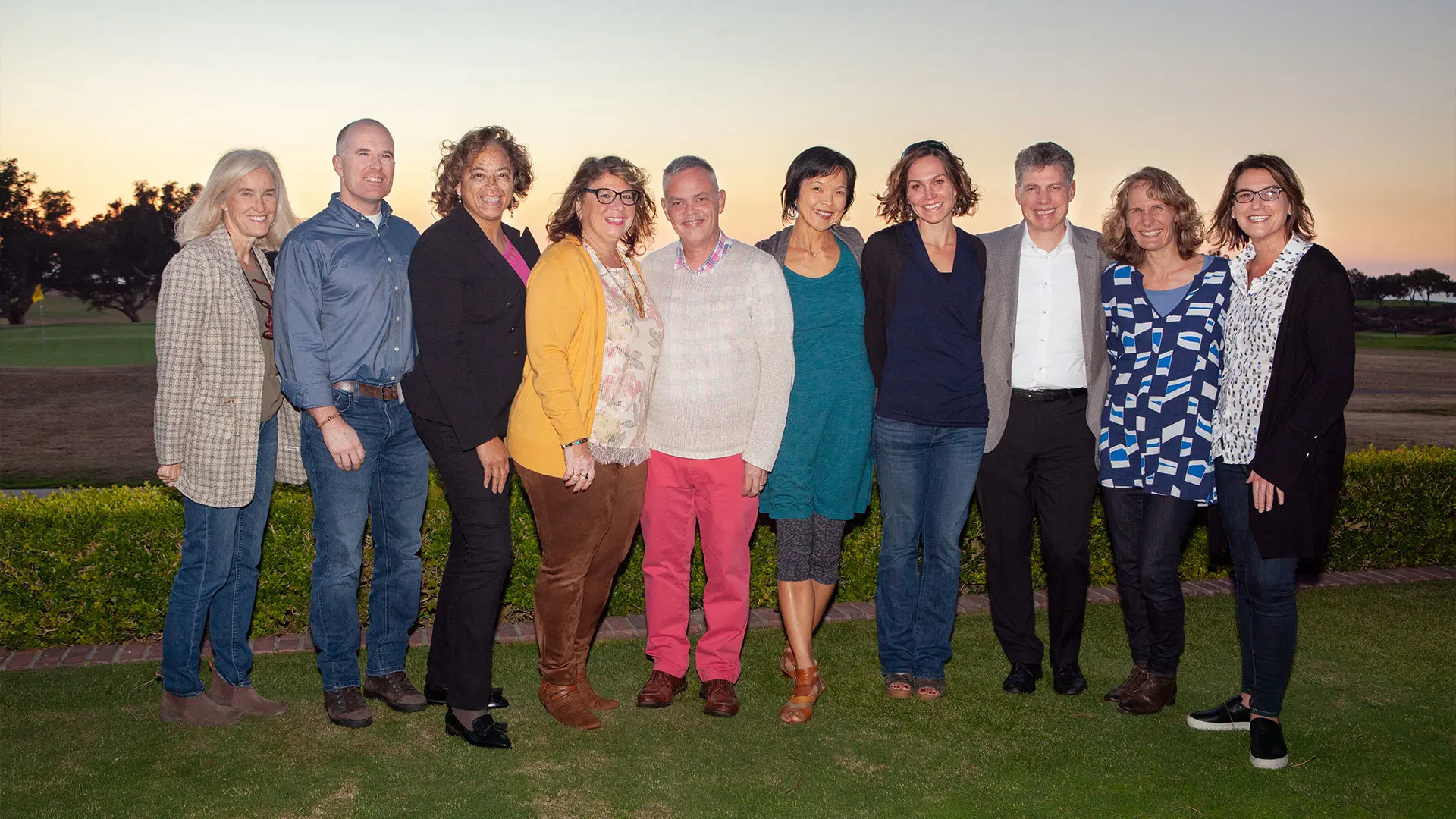
NPCRC-funded researchers at the annual Kathleen M. Foley Palliative Care Retreat and Research Symposium in La Jolla, California, in 2018.

In 2025, the researchers gathered in Banff, Alberta.
With support from the Kornfeld Foundation, Dr. Morrison and the Brookdale Department of Geriatrics and Palliative Medicine established NPCRC in 2005. NPCRC, which resided within the Brookdale Department’s Patty and Jay Baker Palliative Care Center, was created to build a scientific workforce capable of creating the evidence base needed to legitimize palliative care in organized medicine.
Since then, NPCRC became one of the most influential drivers of palliative care’s national expansion. It has launched the careers of 121 investigators across 47 institutions and 23 states. More than 90 percent of scholars went on to secure more than $500 million in subsequent federal and foundation grants, expanding the field’s size, reach, and academic footprint. NPCRC reshaped the field by ensuring its scholars would succeed. It provided mentorship and training so the probability of their success became remarkably high.
Just as important, NPCRC created the community that held the field together as it grew.
The Kathleen M. Foley Research Retreat became the annual gathering place for early-stage and senior investigators from multiple disciplines. The retreats drew more than 1,200 participants across 18 annual meetings. Researchers who once felt isolated found a professional home, a scientific network, and a shared purpose. Many credit NPCRC with sustaining their careers during the toughest moments—grant rejections, nighttime revisions, and the steep climb toward National Institutes of Health (NIH) funding.
NPCRC also drove national visibility and legitimacy for the field. It helped shape the focus of the NIH and the Patient-Centered Outcomes Research Institute, supported federal legislation, influenced National Quality Forum initiatives, and stimulated the creation of the first national palliative care research meeting. These efforts positioned palliative care not as a niche service, but as a scientifically grounded specialty essential to high-quality care.
In October 2025, NPCRC closed its doors, having completed its mission. In partnership with the Patient Quality of Life Coalition, NPCRC secured funding to create a NIH-funded program to replace NPCRC’s work. The new ASCENT (Advancing the Science of Palliative Care Research Across the Lifespan) Consortium is a five-year, $64 million NIH initiative that will be led by Melissa Aldridge, PhD, MBA, Professor and Vice Chair for Research at the Brookdale Department, and four other palliative care scientists at the University of Colorado Denver, New York University, Duke University, and the Children’s Hospital of Philadelphia.
“Thanks to our advocacy efforts and the support of NIH, we will continue NPCRC’s important work through ASCENT, including the training and development of a new generation of scientists nationwide,” says Dr. Morrison, Ellen and Howard C. Katz Chair of the Brookdale Department. “Through research, we’ve been able to show how and why palliative care makes a difference—and that’s how we change systems and improve patient care.”