As evidence has emerged over the past decade linking the human microbiome to exciting new strategies for fighting drug-resistant disease, interest in live biotherapeutic products (LBPs) has grown apace. But if the promise is great, the road to integrating LBPs—living microorganisms such as bacteria and yeasts that are found in the guts of healthy people—into the pharmacologic mainstream is anything but easy or certain given the demand for absolute safety, consistency, and stability of the final product.
A new study from the labs of two Mount Sinai researchers—who since 2014 have extensively studied these novel biological agents and their vast potential to treat, prevent, or even cure human disease—could give the LBP movement a huge lift. The researchers have developed and clinically tested a safe and effective way to grow carefully curated human-grade microbes in the laboratory, cost-effectively manufacture them, and engraft them into the guts of recipients for maximum durability and therapeutic benefit. The target for these organisms in this phase 1b study was Clostridioides difficile (C. diff) infection, which the Centers for Disease Control and Prevention has classified as a top microbial threat to human health.
“We selected for our C. diff study a consortium of the 15 best microbes we had previously cultured in our lab to see how well they would engraft to the colon of humans with the infection, and how long they would stick around without relapsing to deliver the best results,” says Jeremiah Faith, PhD, Associate Professor of Genetics and Genomic Sciences, Medicine (Clinical Immunology), and Immunology and Immunotherapy at the Icahn School of Medicine at Mount Sinai, and a co-author of the study, published in Nature Medicine. “We’re quite pleased with the outcomes. At least 12 of the 15 microbes we studied remained for about six months, and a good overall safety profile was achieved.”
Live Biotherapeutical Products vs. Fecal Microbiota Transplant
The trial, which included low-dose and high-dose arms for both FMT and LBP, represents the first head-to-head comparison of laboratory-grown LBPs with fecal microbiota transplant (FMT), a procedure that involves transferring minimally processed and random fecal matter from a healthy donor to the gastrointestinal tract of an unhealthy recipient in hopes of restoring balance to the gut microbiota. The early phase outcomes of the 18-patient study were similar for both processes: C. diff was prevented eight weeks after dosing in seven of the nine LBP patients, and in eight of the nine FMT patients. This allowed the team to conclude that in vitro manufactured bacteria (i.e., LBPs) have similar efficacy and engraftment capabilities as microbes derived from the native human colon (i.e., FMT). The primary outcome of safety showed no treatment-related adverse events in either the LBP or FMT group.
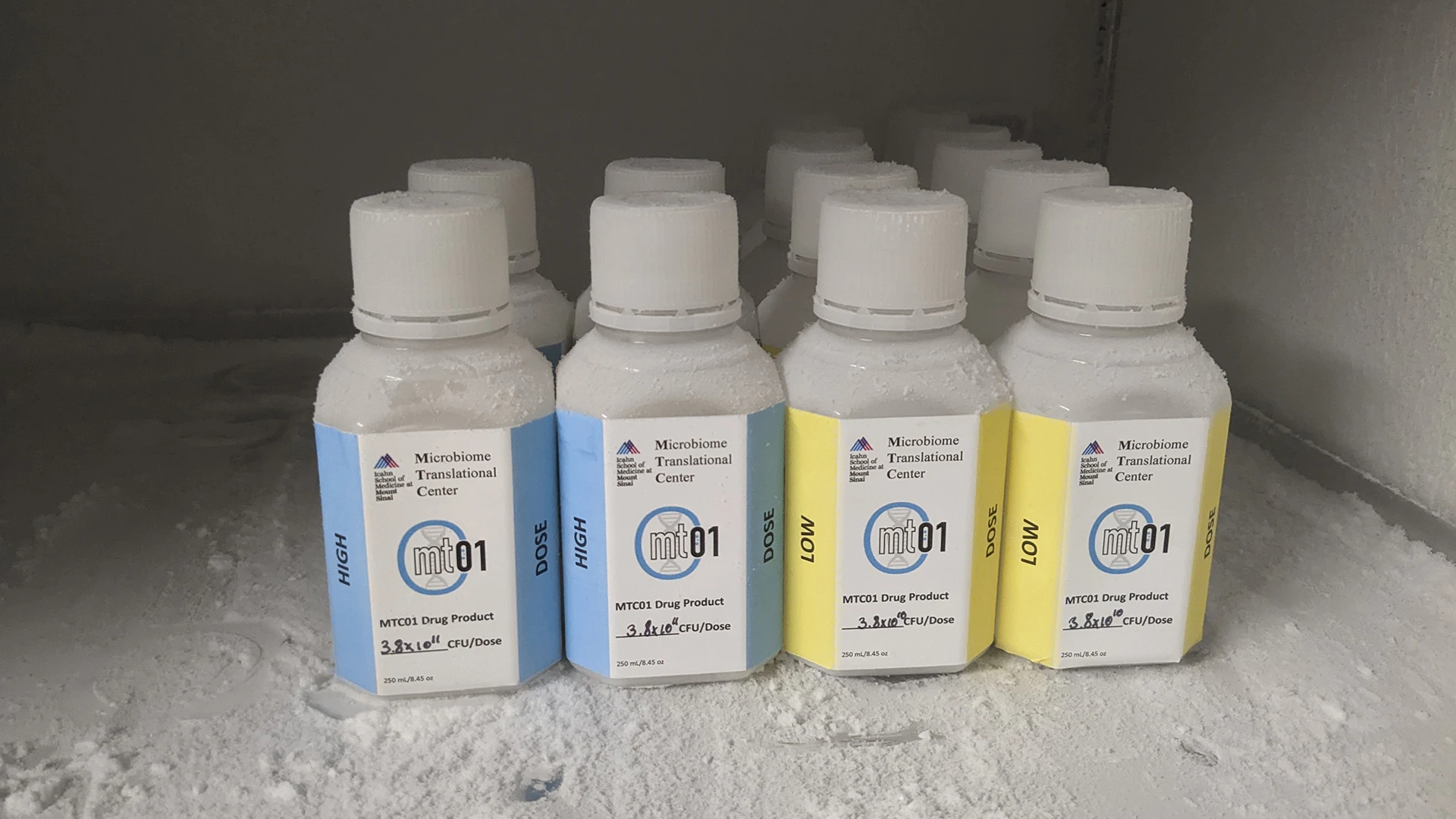
Mount Sinai scientists conducted a clinical trial assessing the effectiveness of live biotherapeutic products—curated human-grade microbes grown in the laboratory—as an improvement on traditional fecal microbiota transplants.
Just as importantly, Mount Sinai scientists believe they have now developed and validated a unique cost- and space-efficient platform for manufacturing human-grade LBPs for clinical trials. This is a goal that has eluded the industry in the past, and one that could benefit not just them but the broad scientific community.
“To maximize community access and therapeutic potential of the microbiome for human health, we’ve shared our regulatory documentation and protocols as a blueprint for other manufacturing efforts,” notes Ari Grinspan, MD, Associate Professor of Medicine (Gastroenterology) and senior author of the study. “That platform introduces the concept of sterilizable anaerobic chambers and batch fermentation as an alternative to space-intensive clean rooms and costly bioreactors.”
The journey for Drs. Faith and Grinspan began with their groundbreaking work more than a decade ago on fecal microbiota transplant. The limitations of this approach, however, soon became clear to them: the composition of FMT (bacteria, fungi, viruses, and metabolites) was highly variable, undefined, and unscalable for production purposes. So their attention gravitated to live biotherapeutic products, whose in vitro development from well-characterized bacterial strains selected for their specific therapeutic effect seemed to offer a clear advantage over FMT in terms of batch-to-batch consistency through a tightly controlled manufacturing process. Lukas Bethlehem, PhD, a former postdoctoral fellow at Mount Sinai, established the manufacturing platform and demonstrated its utility by generating the LBP drug batches for the trial.
In November 2022 and April 2023, the U.S. Food and Drug Administration granted its first approvals for a pair of stool-derived therapeutics for treating C. diff, an infection that often follows antibiotic use and is believed responsible for roughly 30,000 deaths each year in the United States alone. They are Rebyota, a rectal suspension, and Vowst, an oral capsule. Researchers are now exploring LBPs for a host of other conditions, including cancer, metabolic disorders, and inflammatory bowel disease (IBD), to reduce gut inflammation and repair the intestinal wall.
“We’re investigating new ways to treat IBD outside the inflammatory cascade, knowing that the best drug now available is only 60 percent effective,” emphasizes Dr. Grinspan. “That’s why modulating the microbiome is so attractive to us. Our work in this area hasn’t borne fruit yet, but we’re hoping that live biotherapeutic products in combination with anti-inflammatory agents might be the most promising pathway to treating a remarkably complex condition.”
New Treatment Approach for Pouchitis
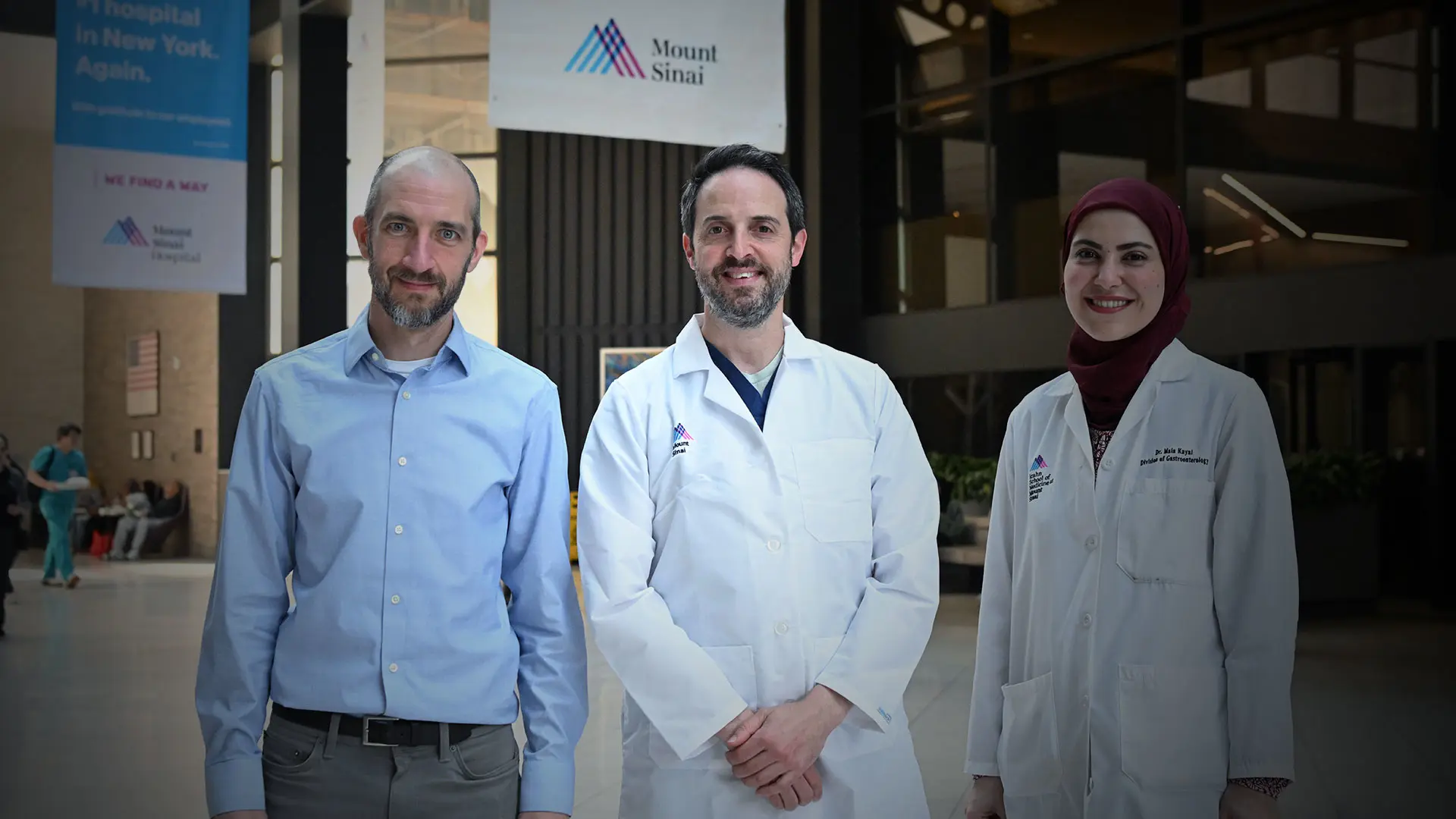
Another application in their crosshairs is the use of FMT (with plans to shift to LBP as studies progress) in IBD patients with pouchitis, a chronic microbiome-centered complication of J-pouch surgery (proctocolectomy with ileal pouch-anal anastomosis). Here, Drs. Faith and Grinspan are partnering with Maia Kayal, MD, a Mount Sinai gastroenterologist who heads up the J-pouch program for medically refractory ulcerative colitis at the Susan and Leonard Feinstein IBD Clinical Center.
Specifically, the collaborators have begun recruiting for a 16-patient study to determine if a fecal microbiota transplant from a healthy J-pouch donor can reduce symptoms and improve endoscopic outcomes in a patient with pouchitis. “We’re extremely excited about this project,” declares Dr. Kayal. “It could be the first nonbiologic option for patients with chronic pouchitis, or as an adjunctive therapy for patients who are on biologics but are still having symptoms. If all goes well, FMT has the potential to be a replacement for antibiotics, which we commonly use now for people with pouchitis.”
Building on their role as innovators in this evolving field, Drs. Grinspan and Faith hope to soon start clinical trials on the first oral version of an LBP. Production of the tiny white capsules central to that effort was recently completed by postdoctoral fellow Monika Choudhary, PhD, and scientists are now ready to proceed with a study designed to determine the suitability of the oral approach as a way to simplify delivery of live biotherapeutic products to patients.
“The science has lagged far behind the clinical use of microbiome products, and we’re now trying to catch up,” acknowledges Dr. Grinspan. “We’ve already shown that moving away from FMT to a more defined consortium of bacteria will be far less expensive, safer, and easier to administer to patients because we’re no longer relying on donor stools. That progress has positioned us to now tackle other disease states with LBPs where modulating or manipulating the microbiome could potentially result in exciting and previously unachievable outcomes in patients.”
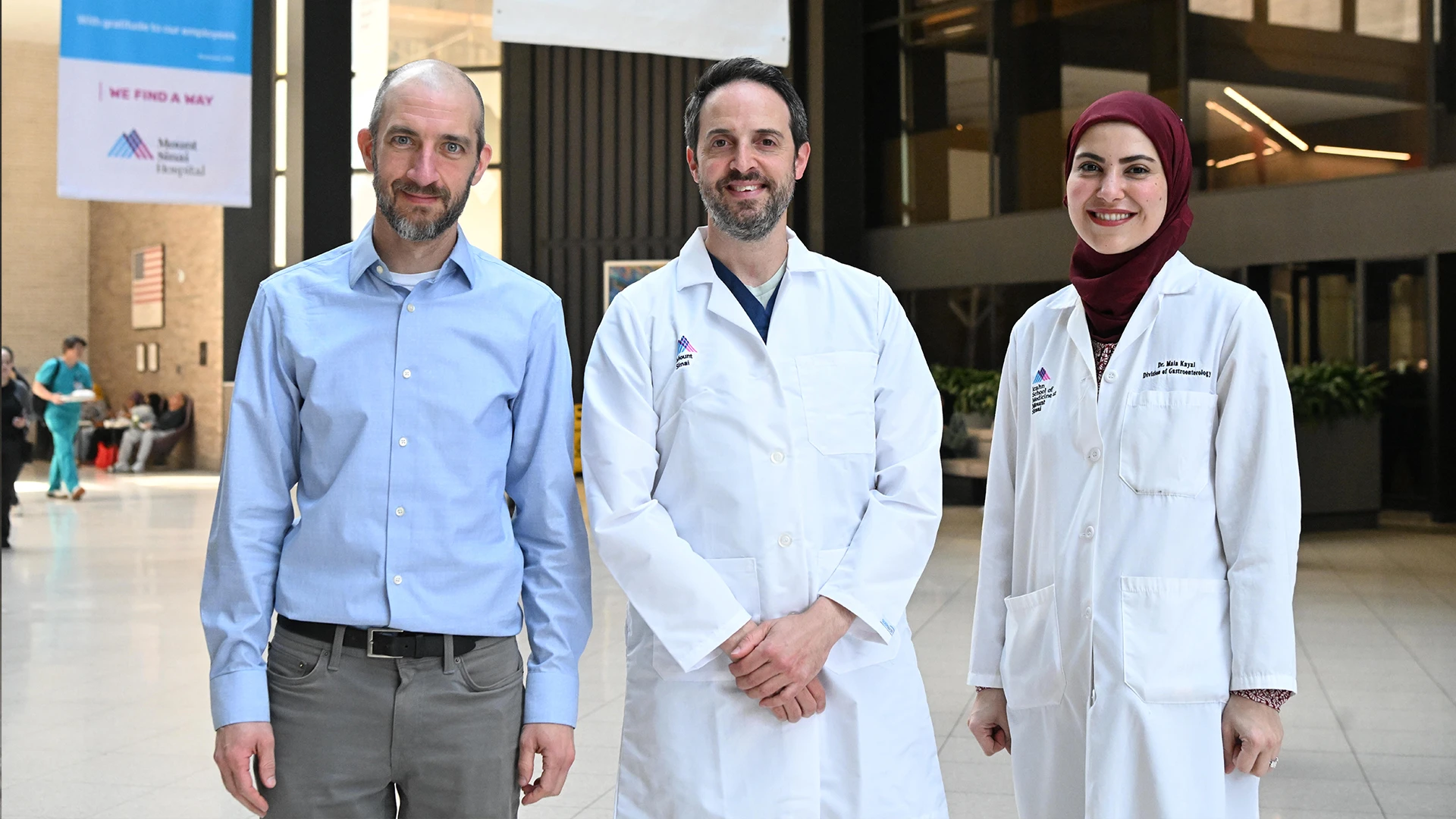
Drs. Faith, left, and Grinspan are collaborating with Dr. Kayal to develop a live biological therapy for pouchitis.