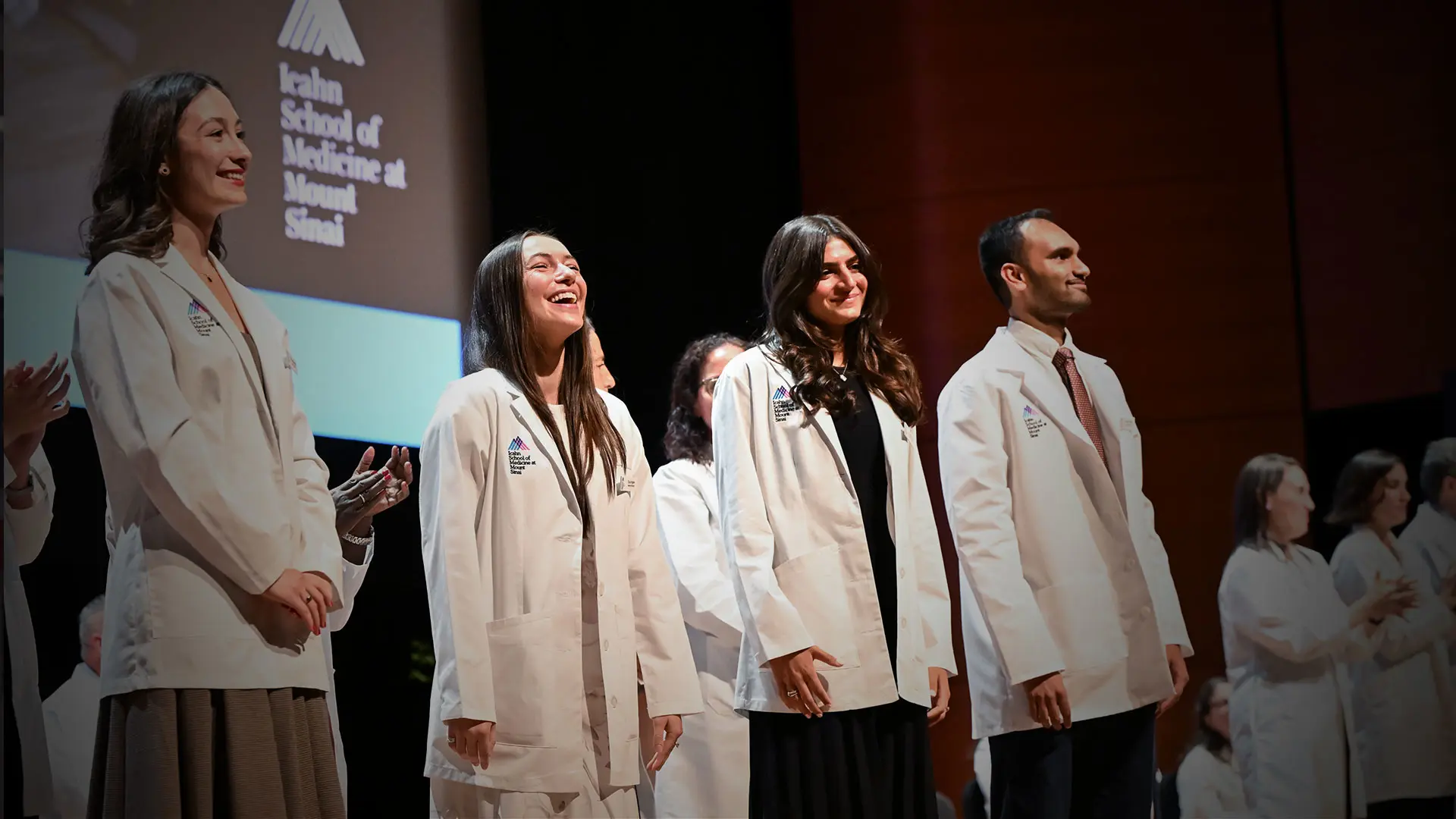
The year 2025 marked a defining milestone for the Department of Medical Education with the further advancement of the new ASCEND Curriculum—one of the most ambitious curricular transformations in Mount Sinai’s history. ASCEND required extensive collaboration across departments, rigorous governance, and sustained faculty leadership, demonstrating the Icahn School of Medicine’s capacity to lead large-scale educational change with clarity, rigor, and purpose. Phase 2, which extends this integrative approach into the core clinical clerkships, is being implemented in 2026.
The Graduate School of Biomedical Sciences demonstrated strong momentum this year in educational innovation, interdisciplinary training, and institutional leadership, and revitalized several master’s programs by introducing specialized tracks, concentrations aligned with diverse career pathways and evolving workforce demands, and online programs that expand its national and global reach.
A major institutional landmark for 2025 was the establishment of the Department of Graduate Education, a new academic entity providing centralized oversight of graduate teaching, accreditation, faculty development, and strategic graduate program growth. The first of its kind nationally, the Department formalizes Mount Sinai’s commitment to faculty-centered excellence in graduate education while complementing the Graduate School of Biomedical Sciences’ strong focus on the student experience. The Department is led by Marta Filizola, PhD, Dean, Graduate School of Biomedical Sciences, the Sharon & Frederick A. Klingenstein/Nathan G. Kase, MD Professor of Pharmacological Sciences, Professor of Neuroscience, and Professor of Artificial Intelligence and Human Health, as Founding Chair.
The Medical Scientist Training Program (MD-PhD) demonstrated strong outcomes across training, scholarship, and national visibility while continuing to modernize its curriculum and advise infrastructure in 2025. The program is now undertaking earlier clinical exposure for students, more flexible transitions, and stronger alignment between clinical training and dissertation research. In 2026, the MD-PhD program will further strengthen early research readiness, mentoring oversight, quantitative and computational training, and longitudinal advising to support timely progression and continued leadership in physician-scientist training.
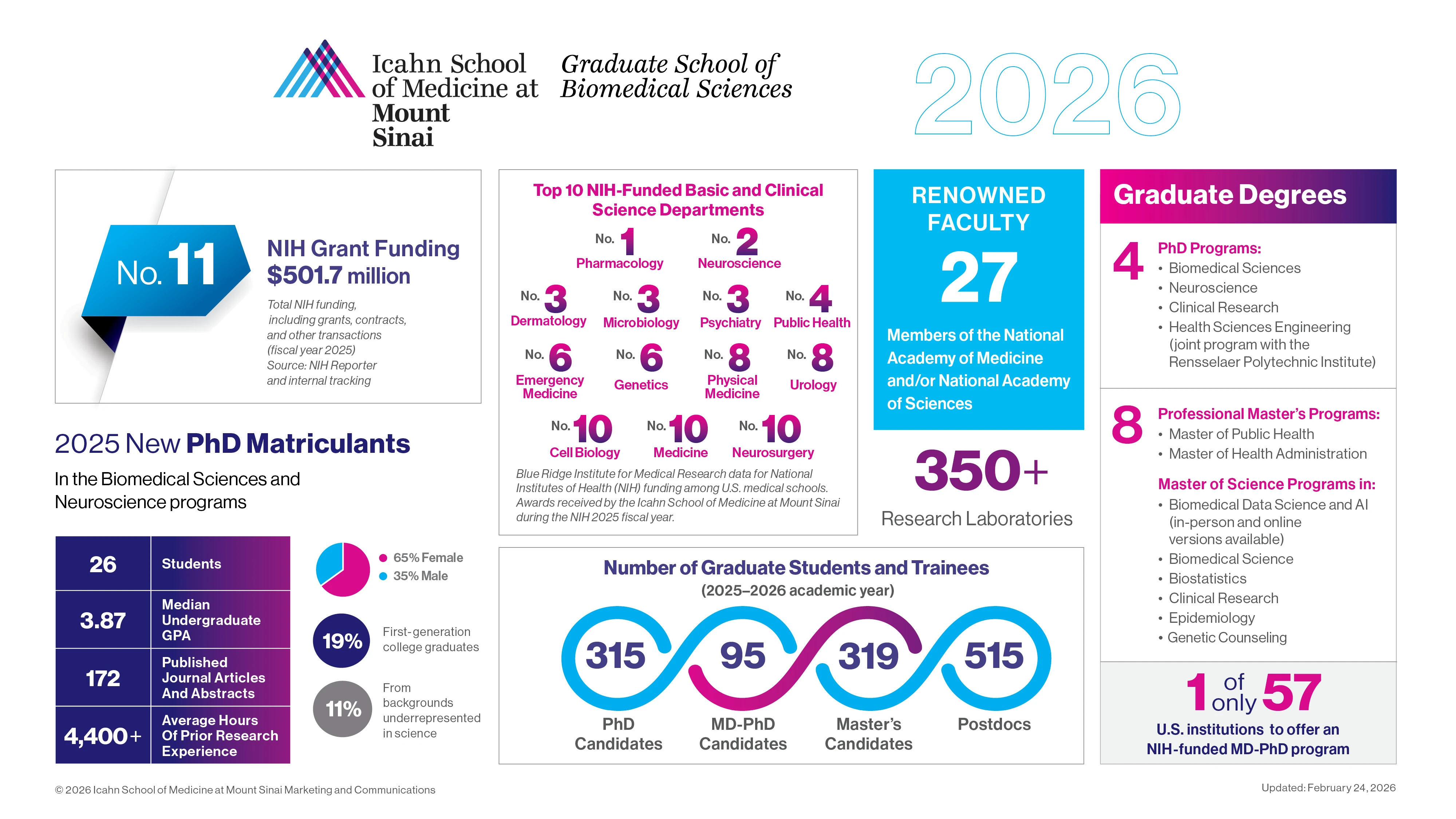
Modernizing our master’s programs across public health is a high priority. We launched our HyFlex platform to offer students the ability to engage in person or online, and we plan to foster joint degrees by recruiting medical students, clinical residents and fellows, and others to our public health master’s programs. We also plan to submit an application to the New York State Department of Education to gain approval to offer a new PhD program in Environmental Health and Exposomics—the study of how environmental exposures across the lifespan influence health and disease.
To support ASCEND and the Graduate School of Biomedical Sciences’ initiatives, Mount Sinai reimagined the physical environments in which learning occurs to realize a modern teaching and learning ecosystem that emphasizes small, interdisciplinary groups, technology-enabled collaboration, and emerging tools that enhance clinical reasoning and scientific inquiry. A 25,000-square-foot renovation of teaching and learning spaces across the 12th and 13th Floors of the Annenberg Building is now underway, with work scheduled for completion by the summer of 2026.
1,000
scholarly contributions from Mount Sinai residents and fellows
published in peer-reviewed journals
Mount Sinai stands as the largest individual sponsor of graduate medical education in the United States by resident-fellow count, with all programs fully accredited. We established several new programs in 2025, and 17 of our residency programs are ranked among the top 25 nationally by Doximity. Residents and fellows at Mount Sinai published close to 1,000 scholarly contributions in peer-reviewed journals, while Mount Sinai’s dedication to the development of physician leaders contributed to national recognition for John Andrilli, MD, Program Director, Internal Medicine Residency Program, Mount Sinai Morningside and Mount Sinai West. Dr. Andrilli is the sixth Mount Sinai program director to receive the Accreditation Council for Graduate Medical Education’s Parker J. Palmer Courage to Teach Award, a prestigious clinical educators’ honor. He is also an Associate Professor of Medical Education, and Medicine (General Internal Medicine), at the Icahn School of Medicine.
17
residency programs ranked among the top 25 nationally by Doximity
The Mount Sinai Phillips School of Nursing continues to grow: enrollment increased across our several nursing degree programs, and we welcomed seven new faculty. Importantly, we completed a significant effort to align curricula for our baccalaureate programs with the competency-based education model developed by the American Association of Colleges of Nursing. This shift better prepares nursing students for practice after graduation. We also anticipate obtaining approval from New York State for a new Master of Science program for family nurse practitioners in 2026.
An inaugural AI education symposium in 2025 convened faculty across schools and disciplines to share expertise and best practices and marked an important step in embracing the transformative role of AI across education in biomedicine and health care.
40,000
graduates, postdoctoral trainees, and faculty
To strengthen connections across our family of nearly 40,000 graduates, postdoctoral trainees, and faculty, we are creating Mount Sinai Alumni, which combines the former Mount Sinai Alumni Association and the Alumni Advisory Council. Mount Sinai Alumni represents graduates of our medical, graduate, and nursing school programs, former postdoctoral fellows, and former clinical residents and fellows across all hospitals that constitute the Mount Sinai Health System, as well as former faculty. In the coming months, we will share more about alumni resources and ways to stay connected, get involved, and give back.
Education Technology
Mount Sinai received national recognition from CBS News as the first medical school and graduate school to provide all students with secure, HIPAA-compliant access to ChatGPT.Edu—a noncommercial, institutionally configured platform developed for higher education. Building on this foundation, we expanded access to additional generative AI capabilities, such as Google Gemini and Google Notebook LM, for faculty, students, and postgraduate trainees. These tools support teaching, learning, collaboration, and research while operating entirely within Mount Sinai’s secure environment.
We initiated a major modernization of our academic support infrastructure with the selection of Ellucian Colleague as the next-generation student information system. The platform offers flexibility, interoperability, alignment with best practices in higher education, and the ability to support evolving academic and research needs, including emerging uses of artificial intelligence. Ellucian Colleague will enable future integration and growth across all of Mount Sinai’s educational efforts.
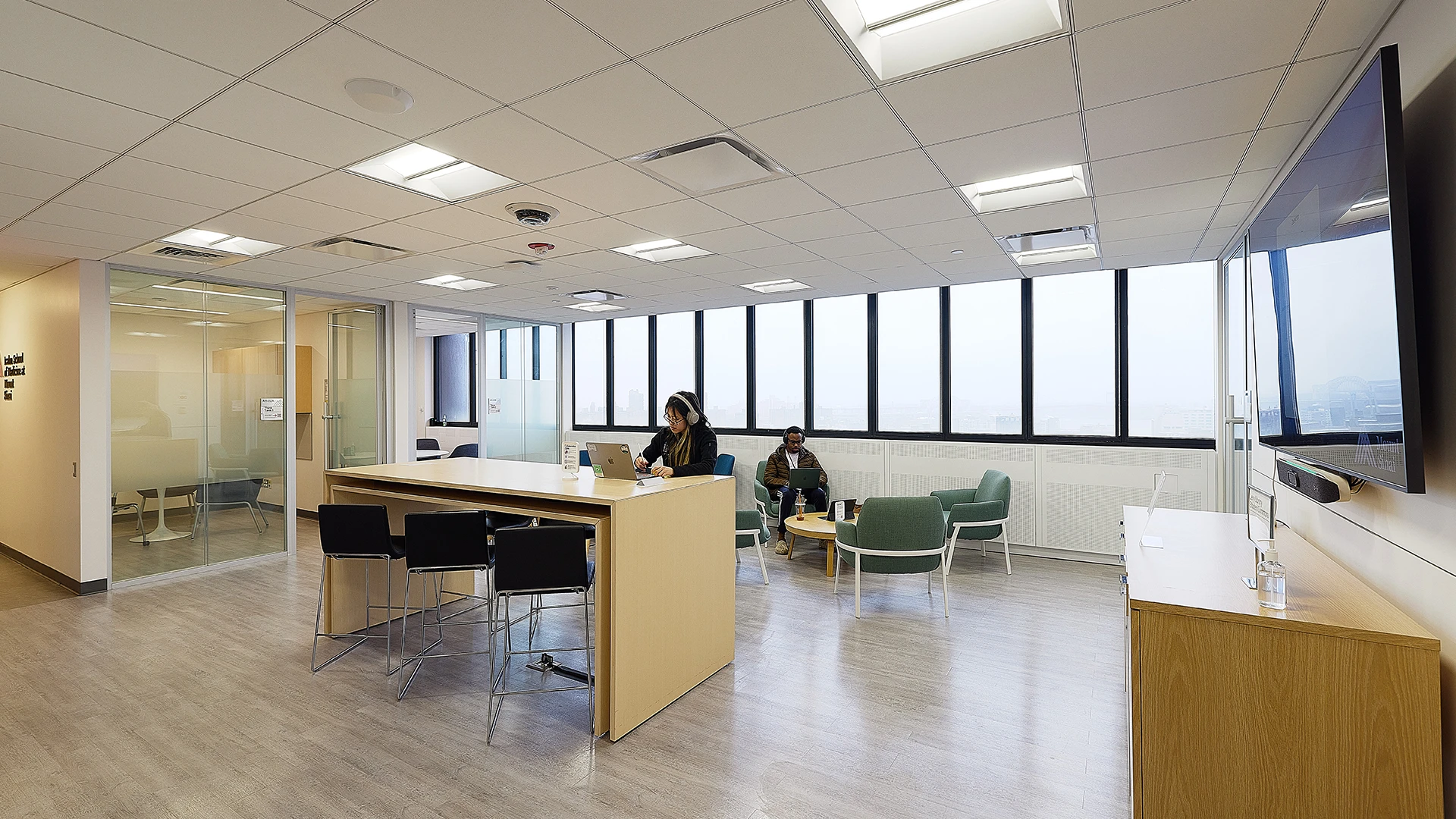
Levy Library Student Commons
In parallel, Mount Sinai created a new student-focused space with the opening of the Levy Library Student Commons on the 11th Floor of the Annenberg Building. Designed to support individual study, as well as collaboration, the space provides flexibility and reflects our ongoing commitment to thoughtfully designing learning environments that support scholarly success and student well-being.
In Our Nursing Students' Own Words
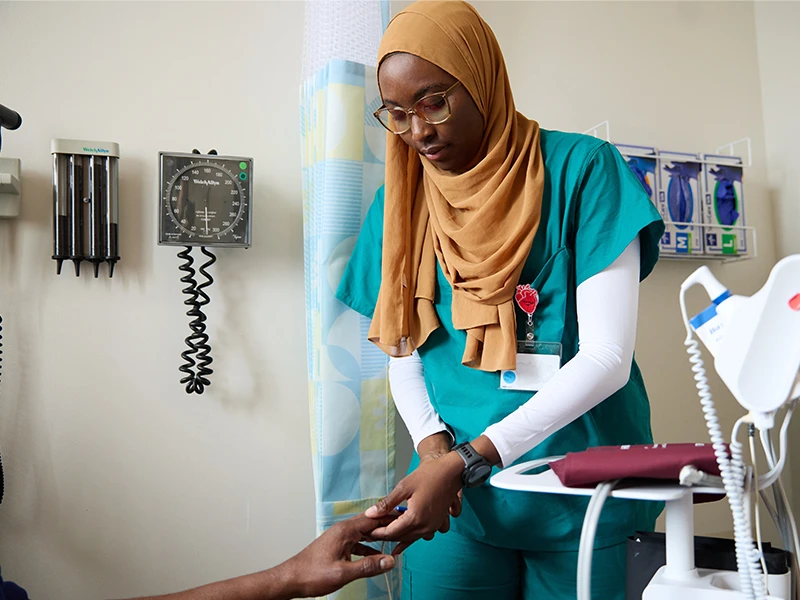
Fatoumata Wague
What experience in 2025 most shaped your growth as a future nurse?
“In my third semester at the Mount Sinai Phillips School of Nursing, I had my labor and delivery, postpartum, and neonatal intensive care (NICU) clinical rotation at The Mount Sinai Hospital. In working closely with NICU nurses, I learned how to balance technical precision with family-centered care. Meanwhile, postpartum and labor and delivery exposed me to supporting new parents during critical life transitions. Overall, this experience has shaped my clinical judgment and expanded my ability to provide effective nursing care across the spectrum of maternal-infant health.”
–Fatoumata Wague
BSN Student
In Our Trainees’ Own Words
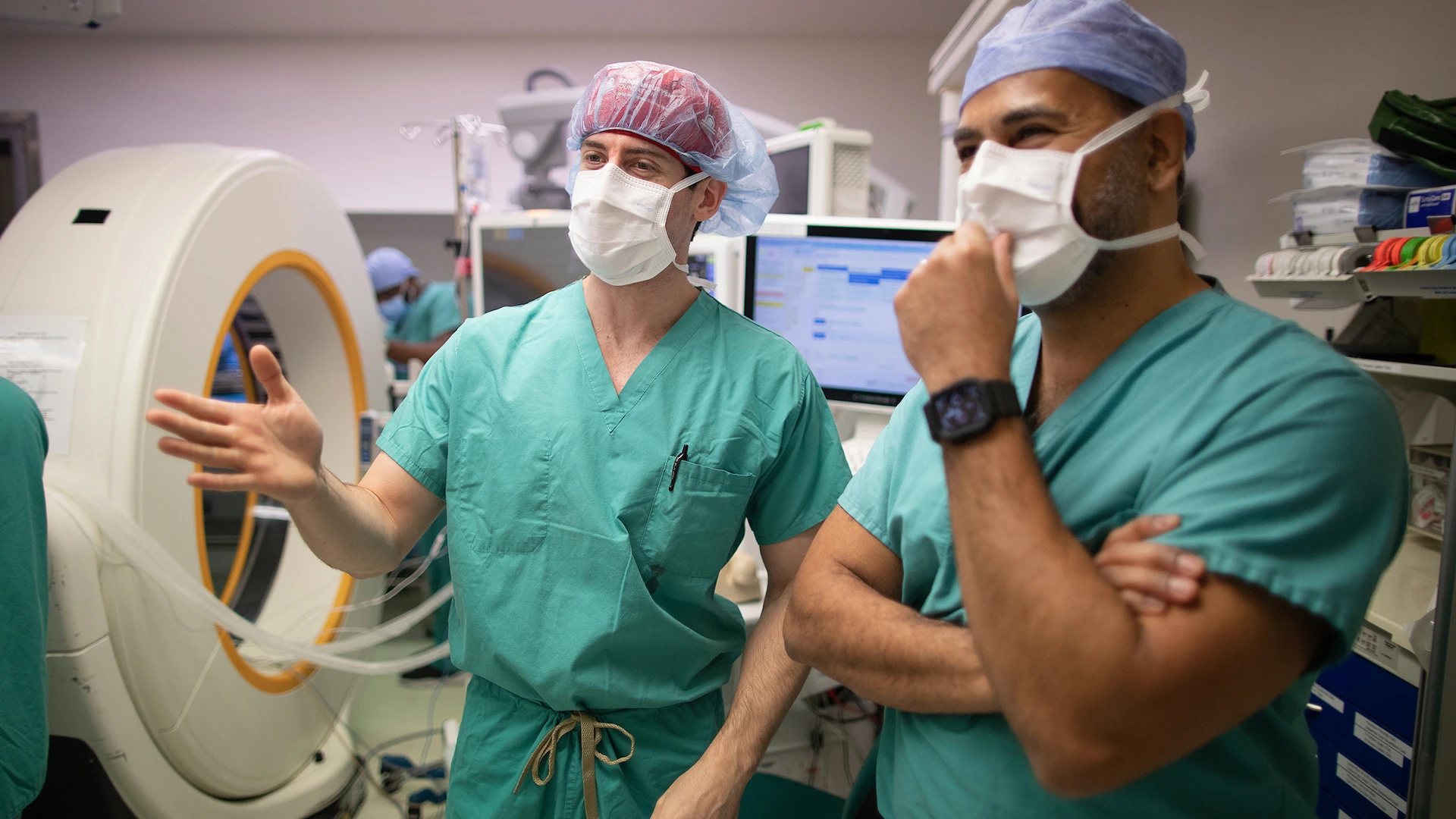
Alexander Schüpper, MD, left, with mentor Raj Shrivastava, MD
What experience in 2025 most shaped your growth as a physician or scientist?
“During my final year of residency at Mount Sinai, my program allowed me to complete an enfolded fellowship in pediatric spinal deformity surgery at Shriners Children's Philadelphia. This experience expanded the fantastic spine surgery training I have received at Mount Sinai and has shaped my career to take care of both pediatric and adult patients with spinal deformity conditions.”
–Alexander Schüpper, MD
Chief Resident, The Mount Sinai Hospital