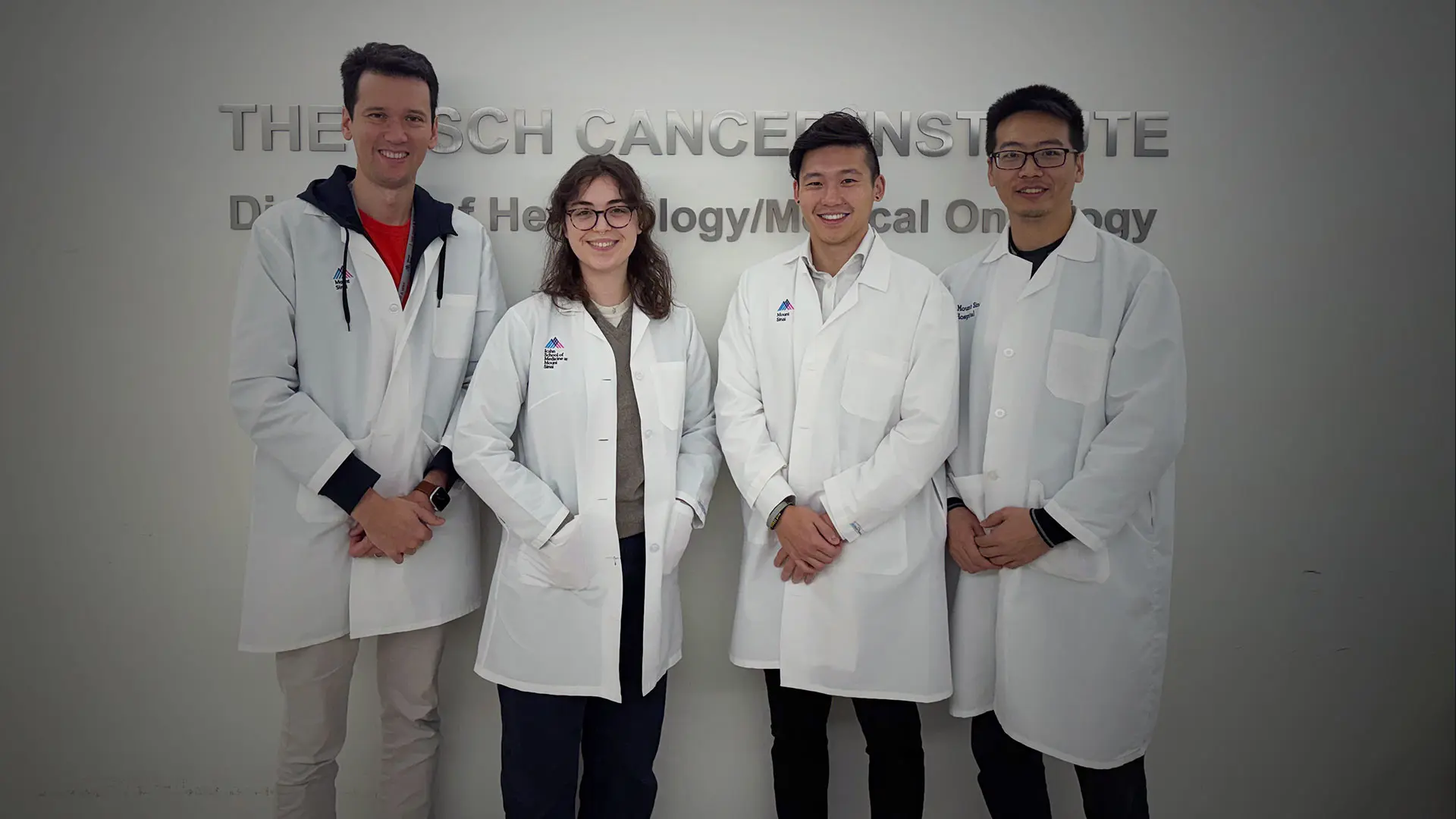
A team of researchers at the Icahn School of Medicine at Mount Sinai has uncovered why children with the same leukemia-causing gene mutation can have dramatically different outcomes: it depends on when in development the mutation first occurs.
The study, led by Elvin Wagenblast, PhD, Assistant Professor, Oncological Sciences, and Pediatrics, Hematology-Oncology, Icahn School of Medicine at Mount Sinai, was published in Cancer Discovery, a journal of the American Association for Cancer Research. It shows that leukemia beginning before birth is often more aggressive, grows faster, and is harder to treat. This adds a missing dimension to precision medicine for childhood leukemia.
Dr. Wagenblast and his team at the Wagenblast Lab set out to answer a central question about how a normal blood stem cell can become cancerous. They applied cutting-edge CRISPR/Cas9 genome-editing approaches in human primary blood stem cells to model different developmental stages of acute myeloid leukemia (AML), one of the most aggressive types of blood cancer.
Using CRISPR technology, the team induced the NUP98–NSD1 fusion oncoprotein, a cancer-promoting protein created when two genes abnormally fuse, into human blood stem cells from multiple developmental stages, ranging from prenatal and postnatal periods, adolescence, and adulthood. This approach created the first humanized experimental model that tracks how the same mutation behaves differently depending on when it arises in life.
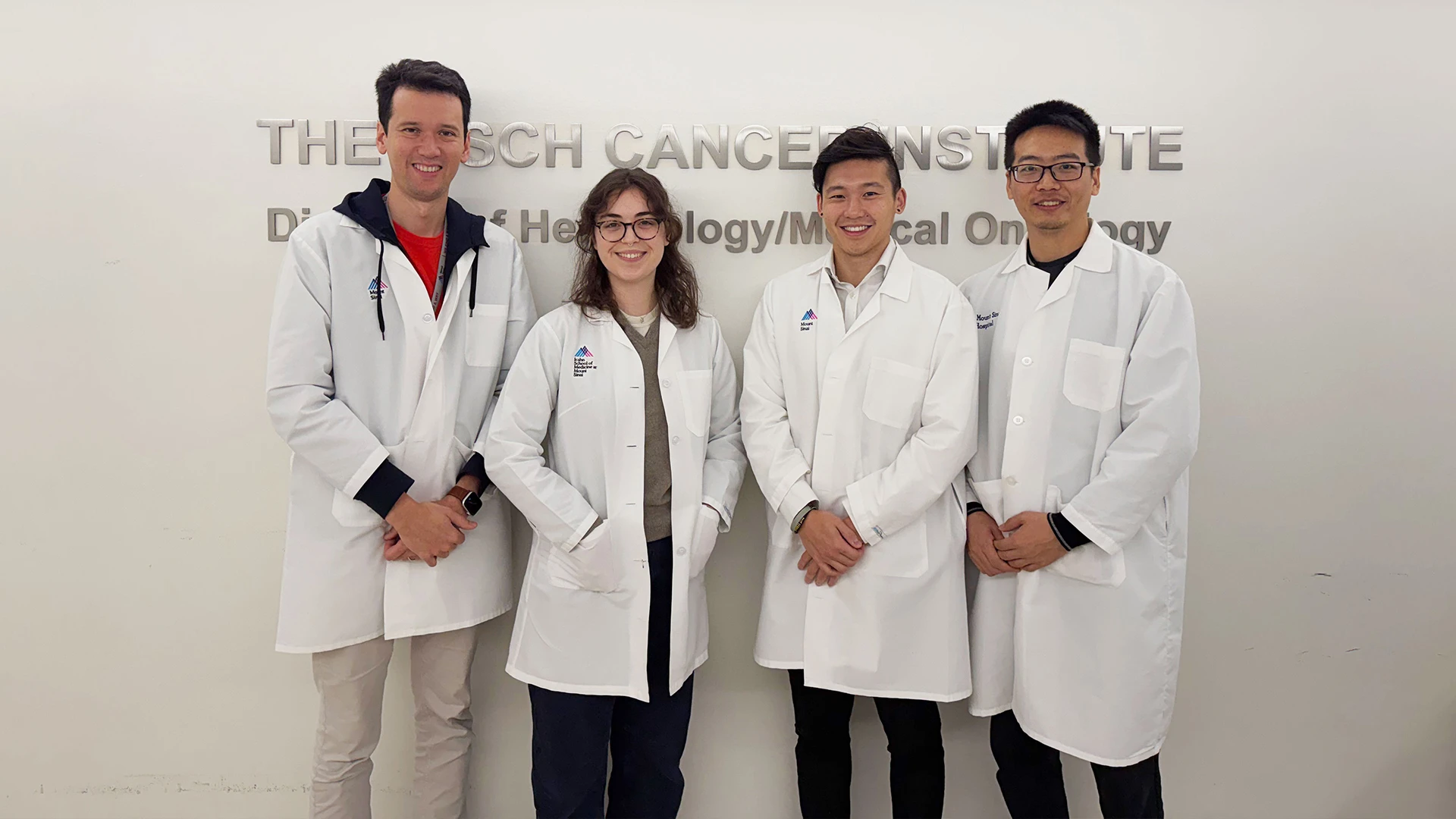
From left: Elvin Wagenblast, PhD (Principal Investigator), Isabella Martinez (Associate Researcher), Clifford Chao, MD, and Ke Wang, PhD (Postdoctoral Researcher)
The results were striking: stem cells produced during prenatal development transformed easily into leukemia, creating a highly aggressive and more primitive form of leukemia. Stem cells produced postnatally became increasingly resistant to transformation and required additional mutations to become cancerous. Prenatal-origin leukemia stem cells, which are abnormal blood stem cells that arise before birth and can cause certain childhood leukemias, were more dormant (quiescent) and relied heavily on certain energy sources specific to the cancer state, which were not seen in the leukemias that originated later in life. Although these prenatal leukemia stem cells were more dormant, this quiescent state makes them harder to eliminate with standard treatments, helping explain why prenatal-origin leukemias behave more aggressively, despite identical genetics.
By analyzing single-cell gene expression data from their models, the investigators identified a prenatal gene signature that predicts whether a child’s leukemia likely began before birth. In patients, this signature is strongly correlated with significantly worse clinical outcomes.
“This work tells us that age matters at the cellular level,” says Dr. Wagenblast. “The same mutation behaves very differently depending on when it happens. Understanding this gives us a new way to identify the highest-risk patients and to tailor therapies that go beyond standard genetic classifications.”
The team’s work was presented at the 2025 Children’s Oncology Group Meeting within the Myeloid Diseases Committee General Session by Clifford Chao, MD, a Pediatric Hematology-Oncology Fellow and member of the research team. Mount Sinai’s fellowship program prioritizes research opportunities for fellows, allowing them to explore areas of interest and advance innovation early in their careers. During residency, Dr. Chao cared for his first patient with AML, a transformative experience that led him to join Dr. Wagenblast’s lab.
The team tested therapies against the most aggressive leukemia stem cells and discovered that these cells were especially vulnerable to venetoclax, a U.S. Food and Drug Administration-approved drug already used in the clinic. Venetoclax-based combinations, including with standard chemotherapy, significantly reduced aggressiveness in the experimental models.
“These findings give clinicians mechanistic support to use venetoclax combinations in NUP98-rearranged acute myeloid leukemia, particularly in younger patients whose disease likely started before birth,” says Dr. Wagenblast.
Understanding when leukemia begins may help doctors choose more effective therapies earlier, reducing trial-and-error approaches and preventing resistance and relapse later on.
Conceptually, the study shifts how scientists understand childhood cancer. The developmental timing of the first mutation is not a minor detail. It fundamentally shapes disease biology, treatment resistance, and relapse risk.
The research opens the door to new diagnostic tools that can identify prenatal-origin leukemias, venetoclax-based combination therapies that more precisely target vulnerable leukemia stem cells, and clinical trials that incorporate developmental timing into risk assessment.
Next, the team plans to develop therapies that more directly target the metabolic program unique to prenatal-origin leukemias, with the goal of selectively eliminating leukemia stem cells while sparing healthy blood stem cells.
“This research exemplifies Mount Sinai’s commitment to fostering multidisciplinary, fellow-driven innovation,” says Oren Becher, MD, Chief of the Jack Martin Fund Division of Pediatric Hematology-Oncology in the Jack and Lucy Clark Department of Pediatrics at the Icahn School of Medicine at Mount Sinai and Mount Sinai Kravis Children’s Hospital. “We are bringing together experts in hematology, oncology, stem cell biology, and genetics to transform the future of pediatric cancer care.”
The study was conducted in collaboration with Fred Hutchinson Cancer Center, Children’s Hospital of Philadelphia, and Cincinnati Children’s Hospital, with funding from the National Institutes of Health and private foundations.
Featured
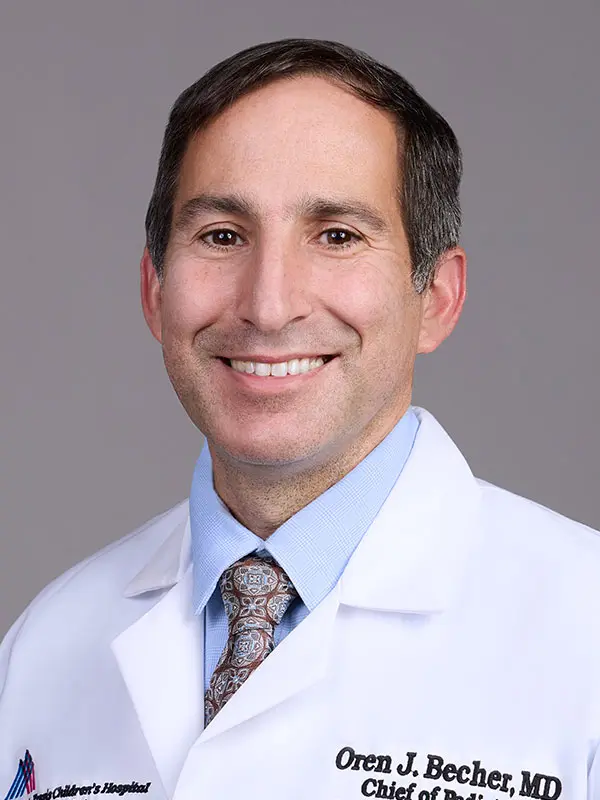
Oren Becher, MD
Chief of the Jack Martin Fund Division of Pediatric Hematology-Oncology, Jack and Lucy Clark Department of Pediatrics, Icahn School of Medicine and Mount Sinai Kravis Children’s Hospital
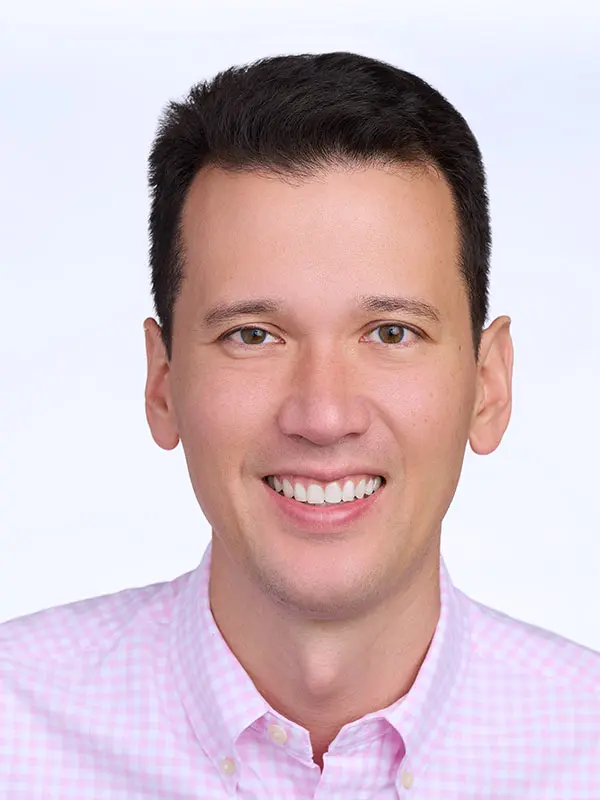
Elvin Wagenblast, PhD
Assistant Professor, Oncological Sciences, and Pediatrics, Hematology-Oncology

Clifford Chao, MD
Pediatric Hematology-Oncology Fellow