The National Institutes of Health (NIH) awarded a five-year, $10.8 million grant to create the New York Regional Diabetes Research Center (NYR-DRC), a newly expanded center co-led by the Icahn School of Medicine at Mount Sinai, Albert Einstein College of Medicine, and Weill Cornell Medicine. The center will focus on discovering scientific knowledge and translating it into improved care for people with diabetes and related metabolic diseases.
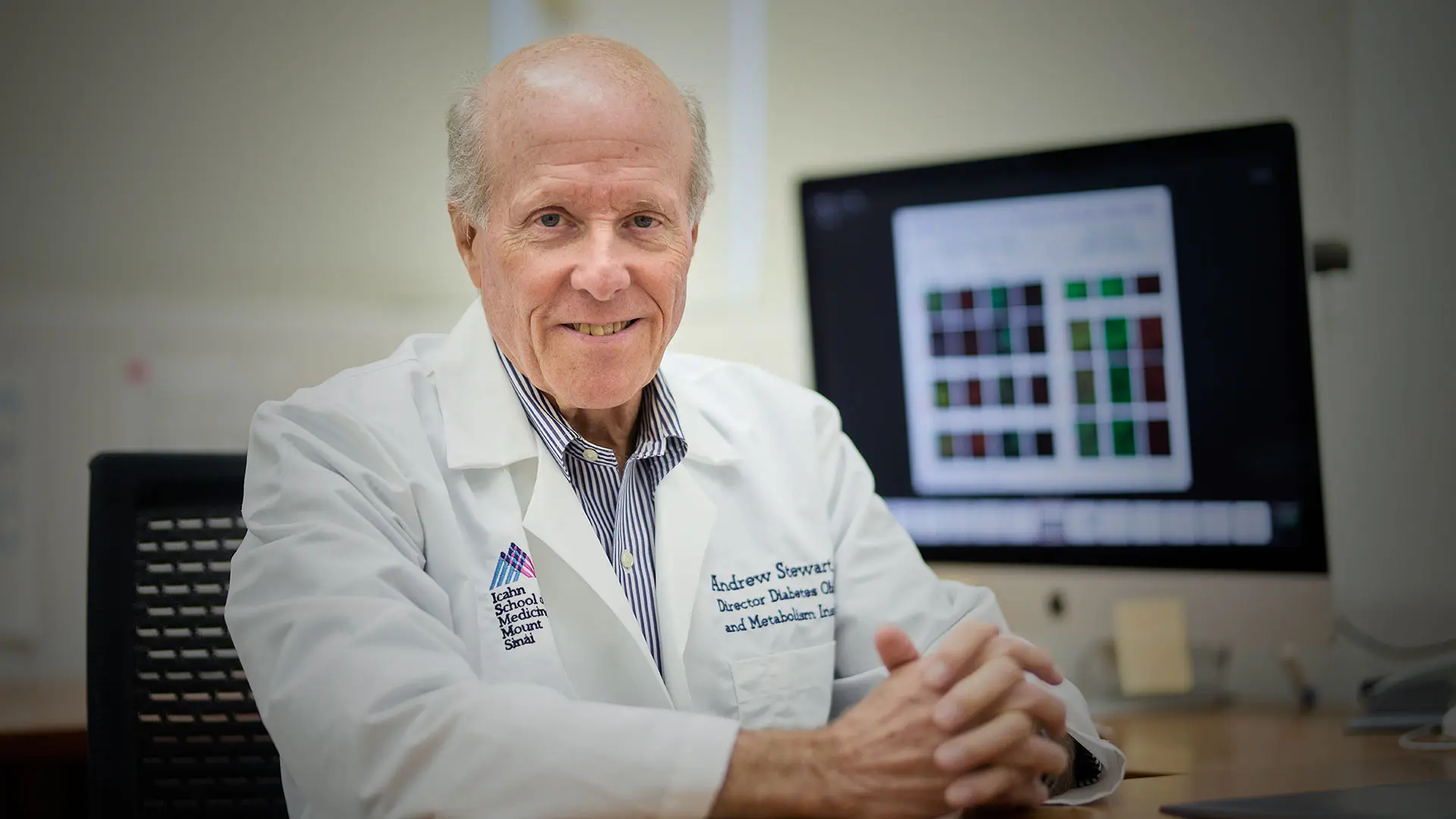
“This expanded regional collaboration marks an exciting step forward in accelerating diabetes research and innovation,” says Andrew F. Stewart, MD, Director of the Diabetes, Obesity, and Metabolism Institute at the Icahn School of Medicine. “By combining the complementary strengths of three world-leading institutions, we can more effectively translate fundamental discoveries in beta cell biology and regenerative medicine into new therapies that have the potential to transform the lives of people living with diabetes.” Dr. Stewart is also the Irene and Dr. Arthur M. Fishberg Professor of Medicine at the Icahn School of Medicine.
“This center promises to strengthen our ongoing efforts to develop novel therapies to prevent the onset of type 1 diabetes, restore beta cell function and insulin secretion in both type 1 and 2 diabetes, and prevent and treat diabetic complications,” says Jeffrey Pessin, PhD, the Judy R. and Alfred A. Rosenberg Professorial Chair in Diabetes Research at Einstein, Director of NYR-DRC, and principal investigator on the grant.
Einstein established its first diabetes center nearly 50 years ago, in 1976, in response to the increasing prevalence of type 1 and type 2 diabetes cases in the Bronx and surrounding areas. In 2015, Einstein partnered with the Icahn School of Medicine at Mount Sinai to create the Einstein-Mount Sinai Diabetes Research Center, greatly increasing the center’s ability to support research studies and services. This new grant includes Weill Cornell Medicine as a third partner and has been renamed to reflect its regional reach. This new effort will further expand the scope and size of the center, growing to more than 140 scientists and clinicians, and establish a regional hub dedicated to diabetes research, education, and training.
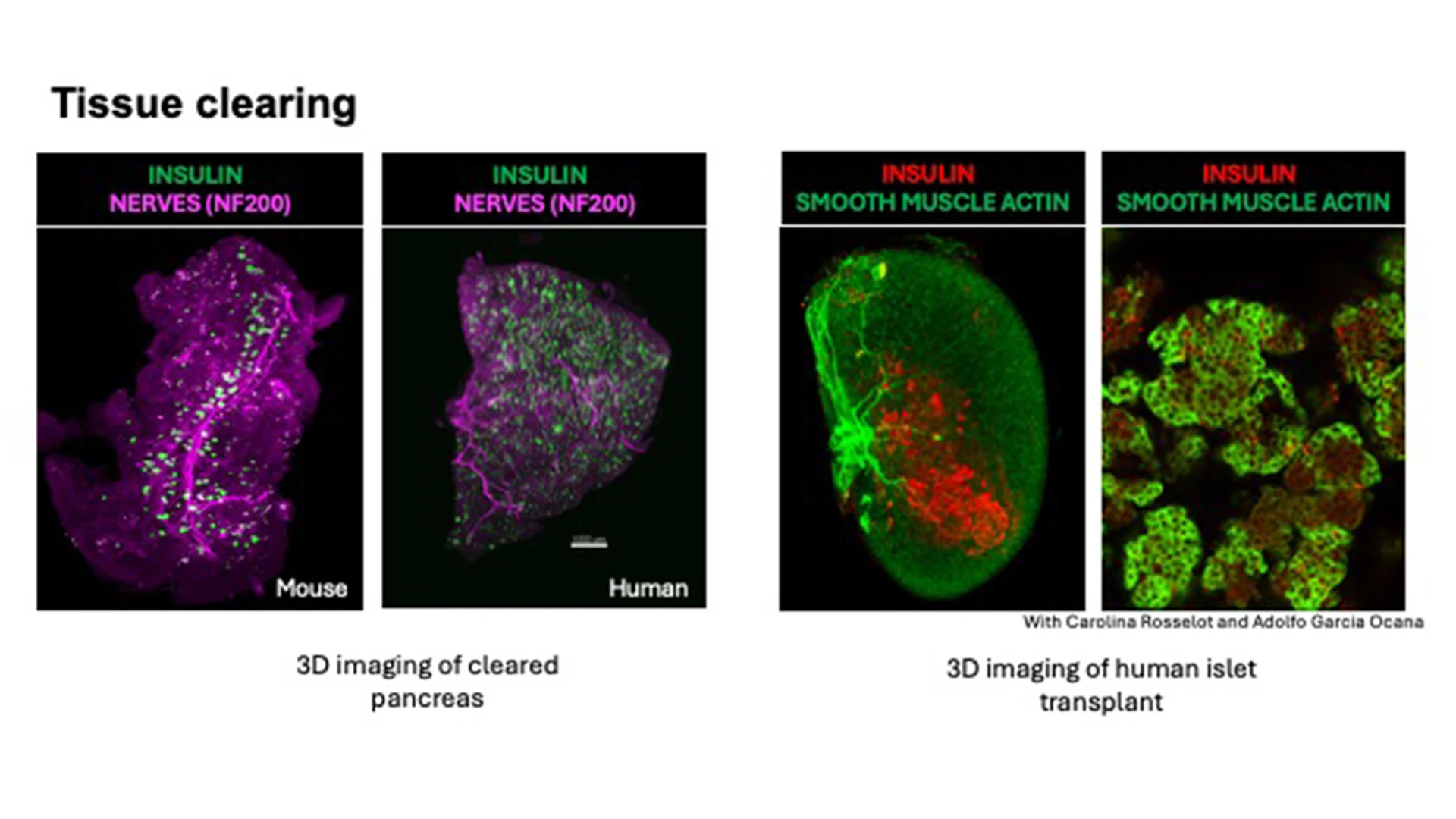
3D imaging of a cleared mouse pancreas, left, and a human pancreas, produced by the Human Islet and Adenovirus Core.
The strengthened NYR-DRC also includes members at Cornell University, NYU Langone Medical Center, Stony Brook University, New York Medical College, and Rutgers University. Together, they hold more than $100 million in grant funding.
The center will work to attract, mentor, and retain research investigators; foster collaborations locally and regionally; and reduce the time it takes to move scientific findings from the laboratory to the bedside. It will also provide state-of-the-art core services focusing on animal physiology, stable isotope and metabolomics, human islet cells and adenoviruses, human therapeutic organoids, and translational research.
“At Mount Sinai, we happen to be particularly good at working with human islets and viruses to turn on genes and take out genes,” Dr. Stewart says. “So, our Human Islet and Adenovirus Core offers a number of services that are valuable to other investigators, not just in New York, but around the country.” Co-Directors of the core are Sarah Stanley, MBBCh, PhD, Associate Professor of Medicine (Endocrinology, Diabetes and Bone Disease), and Neuroscience, and Donald K. Scott, PhD, Professor of Medicine (Endocrinology, Diabetes and Bone Disease) at the Icahn School of Medicine.
An administrative core of NYR-DRC will continue to support a pilot and feasibility studies program aimed at helping several different types of diabetes center members: junior investigators who want to shift from mentor-based research to independent careers, center members wishing to explore a new area of research substantially different from their current work, established faculty in other areas who wish to switch to diabetes research, and faculty investigators developing new techniques and technologies that will enhance research progress.
The grant (P30DK020541), titled “New York Regional Center for Diabetes Translation Research,” was awarded by the National Institute of Diabetes and Digestive and Kidney Diseases.
Featured
Andrew F. Stewart, MD
Professor of Medicine (Endocrinology, Diabetes and Bone Disease) and Director of the Diabetes, Obesity and Metabolism Institute

Sarah Stanley, MBBCh, PhD
Associate Professor of Medicine (Endocrinology, Diabetes and Bone Disease)