The outstanding faculty in the Division of Endocrinology, Diabetes and Bone Disease continue to make advances in translational research and clinical care.
In a year of transition, Andrea Dunaif, MD, stepped down as chief of the division. She will continue to play a key role in the division, leading her groundbreaking research and mentorship of trainees. We are all grateful for her guidance and leadership in the study of PCOS, including a high-impact study that provided the first direct evidence that inherited DNA changes can cause the hormone imbalance at the core of PCOS.
The National Institutes of Health awarded a five-year, $10.8 million to create the New York Regional Diabetes Research Center, a newly expanded center co-led by Andrew F. Stewart, MD, and team, along with physicians and scientists of Albert Einstein College of Medicine and Weill Cornell Medicine.
Furthering Dr. Stewart’s trailblazing investigation of beta cell regeneration, Liora S. Katz, PhD, and Donald K. Scott, PhD, discovered a novel therapeutic strategy to protect insulin-producing beta cells from the damaging effects of glucolipotoxicity—a major contributor to the progression of type 2 diabetes.
In more advances in research, a team led by Terry F. Davies, MD, with co-investigators Rauf Latif, PhD, and Mihaly Mezei, PhD, described for the first time the close biological bond between two receptors known to factor in the remodeling of tissues in thyroid eye disease. And Sarah Stanley, MBBCh, PhD, co-led a study in an animal model that discovered a potential link between stress and type 2 diabetes, describing the connection between the medial amygdala in the brain and liver glucose production.
Joshua Safer, MD, with Daniel Slack, MD, led a comprehensive study, finding that testosterone may serve as a more reliable marker than estradiol for monitoring the effectiveness of feminizing gender-affirming hormone therapy.
Program Directors Alice C. Levine, MD, and Michael A. Via, MD, MD, continued to lead the largest Endocrinology fellowship in the United States, preparing future leaders in our field—including nine who have joined our faculty in recent years.
I am happy to report that the clinical research program at the Mount Sinai Diabetes Center continues in further supporting pregnant women with diabetes. We are investigating for the first time a commercial insulin pump closed-loop system to improve glycemic control for pregnant people with type 1 and type 2 diabetes. Two other large multisite studies will enable a better understanding of the most appropriate pregnancy-specific glucose sensor targets for people with type 1 and gestational diabetes to optimize maternal and fetal outcomes. Additional trials evaluating the benefits of GLP1 receptor agonists and new technologies for people with diabetes, as well as trials evaluating regulatory T cells as a potential therapy to reverse type 1 diabetes are soon to open or ongoing.
The Mount Sinai Hospital was nationally ranked by U.S. News & World Report® in 2025-2026 for Diabetes and Endocrinology. I am grateful and honored to have the privilege of working with our dedicated physicians, scientists, and educators. I invite you to learn more about the Division’s clinical and research initiatives in the following articles.
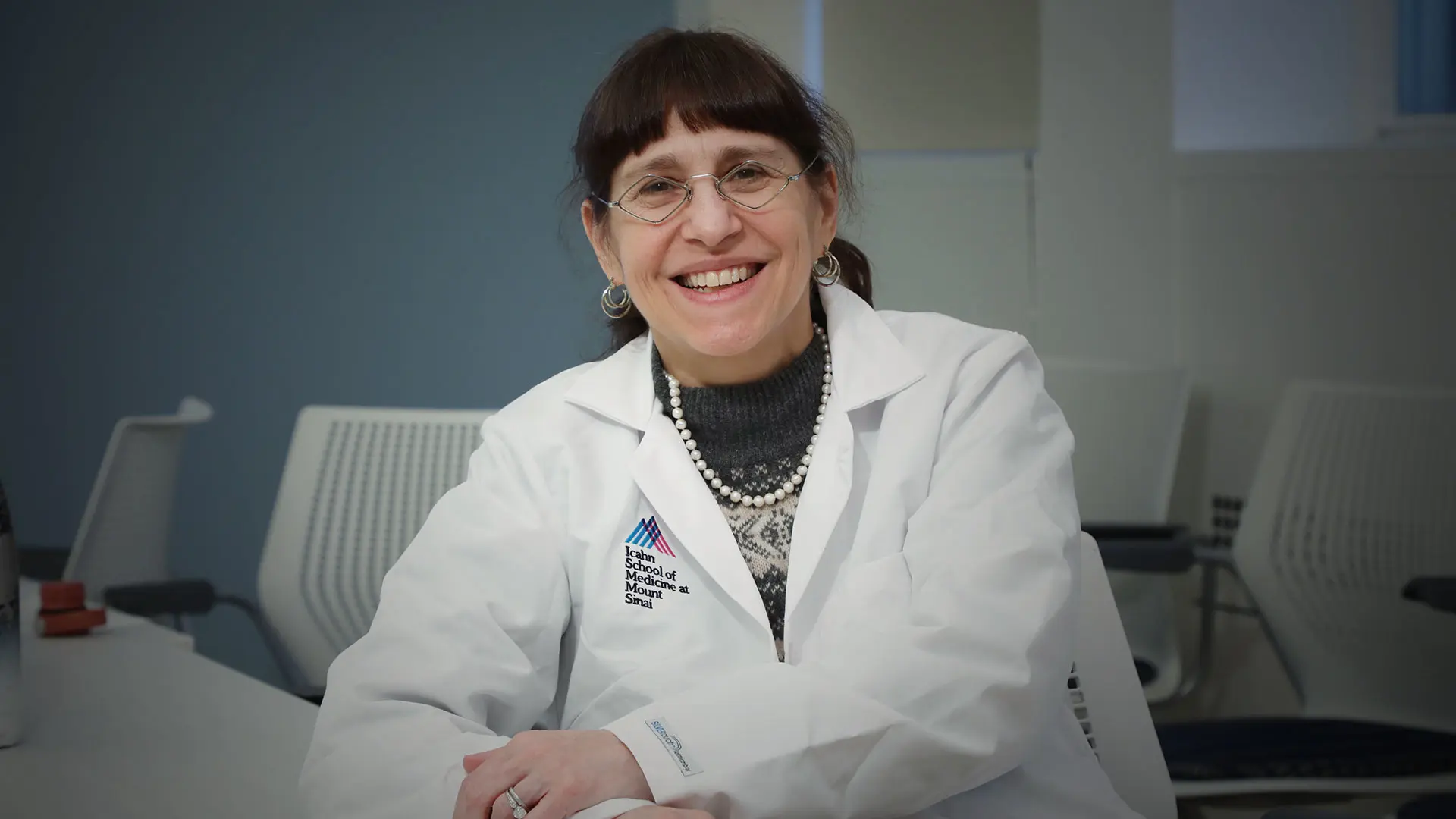
Carol J. Levy, MD
Professor of Medicine (Endocrinology, Diabetes and Bone Disease), and Obstetrics, Gynecology and Reproductive Science
Director of the Mount Sinai Diabetes Center
Acting Chief of Endocrinology, Diabetes and Bone Disease