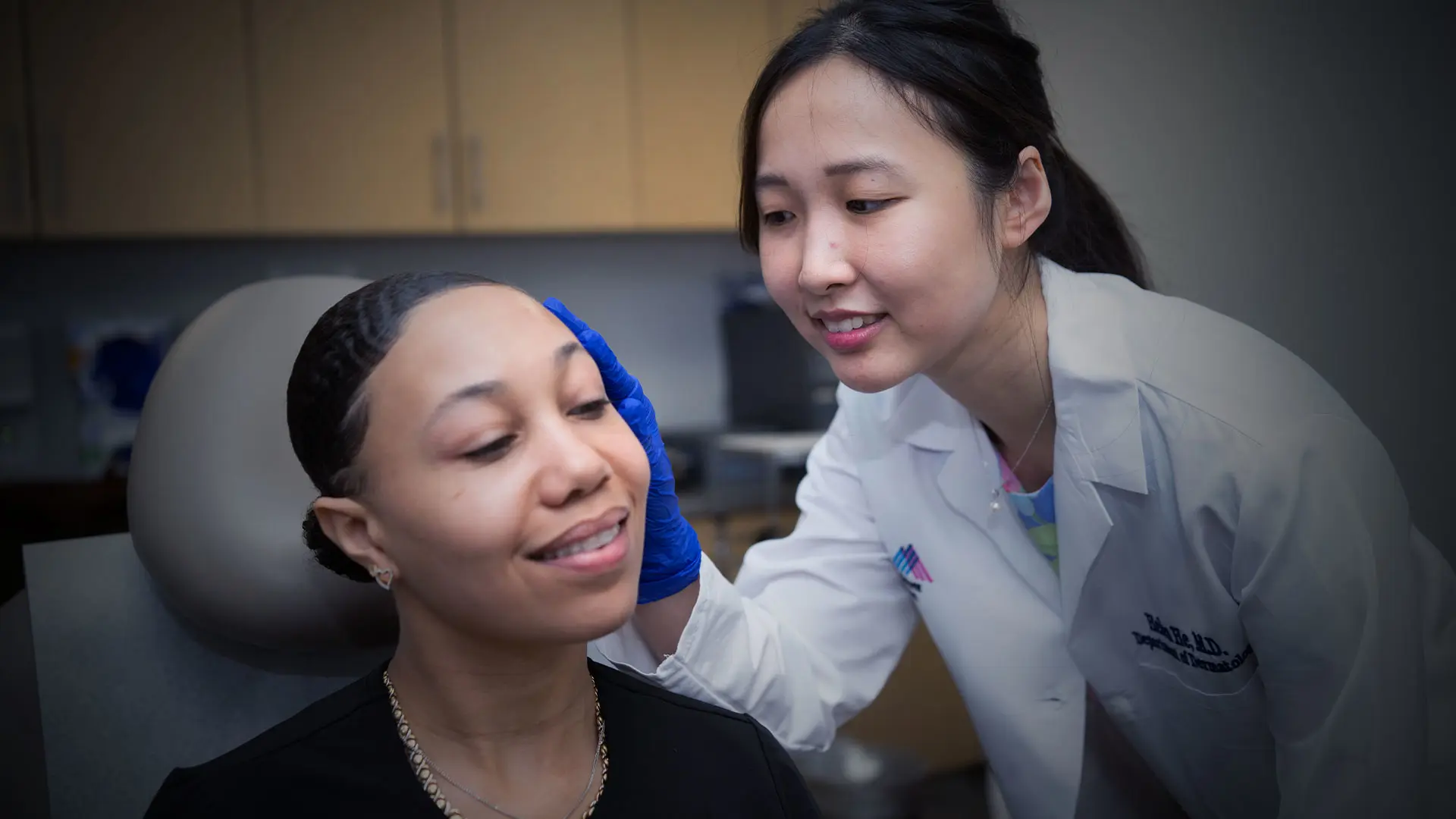
A philanthropic commitment of $5 million from Clinique established the Mount Sinai Clinique Healthy Skin Dermatology Center in 2024, which provided advanced equipment and recruited scientists and physicians to study skin aging and inflammatory conditions, such as eczema and contact dermatitis. The Center is co-directed by Emma Guttman Yassky, MD, PhD, Waldman Professor and System Chair of the Kimberly and Eric J. Waldman Department of Dermatology, and Helen He, MD, Assistant Professor of Dermatology, and Director of Lasers and Cosmetic Surgery. As a physician-scientist, Dr. He seeks to conduct dermatological research that improves patients’ lives by exploring the biological underpinnings of how skin ages.
What is the goal of the Center?
Our goal at the Center is to bridge research and clinical care so that every patient benefits from the latest scientific advances. Skin aging affects everyone, and by bringing together clinical expertise, groundbreaking technology, and translational research, we’re building a center that prioritizes long-term skin health and evidence-based rejuvenation.
What is inflammaging?
Inflammaging is a term describing chronic, low-grade inflammation that accelerates visible skin aging.
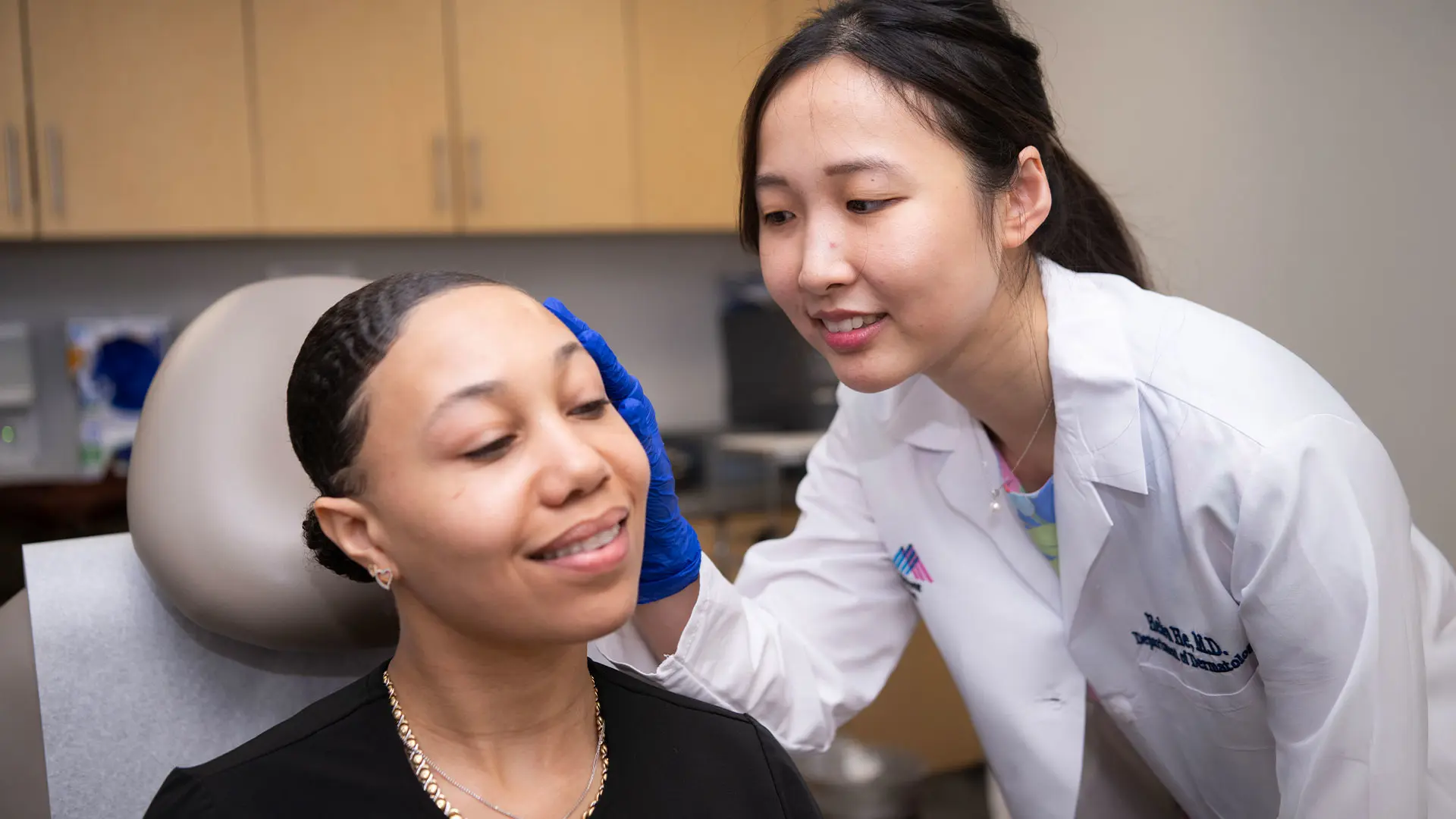
Helen He, MD, is studying skin aging and inflammaging at the molecular level.
What research techniques are you using to study skin aging and inflammaging?
I am excited about our growing capability to map the drivers of skin aging and inflammaging at the molecular level, using techniques like RNA-sequencing, proteomics, and tape strip sampling. By understanding how inflammation, barrier disruption, cellular senescence, and other changes are contributing to aging of the skin, we can move beyond simply treating surface changes and instead target the underlying biology of aging skin.
How will this affect quality of life for your patients?
By better understanding the molecular drivers of skin aging, we can aim to develop more precise, personalized treatment plans for promoting long-term skin health and longevity that are science-backed, targeted, and individualized.
Are there new lasers that the Center uniquely offers?
The Center offers a comprehensive suite of lasers and devices, with options for all skin types for various indications including pigmentation, vascular conditions, texture, scars, and rejuvenation. We offer treatments using state-of-the-art lasers and energy-based devices, such as Sofwave®, Ellacor®, and Miria.
What is the Visia® system and how are you using it?
Visia® is a facial skin analysis system that produces high-quality facial photographs and analyzes the results with the latest AI tools to document skin aging over time. We use the Visia system for quantitative skin analysis—measuring pigmentation, redness, pore size, texture, UV damage, and more. It is valuable both in guiding personalized treatment plans and in providing metrics for tracking improvement in clinical studies, including scoring systems that can be correlated to molecular data. It allows us to objectively document meaningful improvements that align with how the patient looks and feels.
As you look to the future, what challenges remain?
Skin aging is a highly diversified process, which will vary based on a multitude of individual characteristics such as race, gender, skin type, comorbidities, and more, requiring large-scale studies and large enrollment numbers to develop patient specific biomarkers. We also need more investment and funding in this space; skin aging has a major impact on well-being, yet research is historically underfunded. More work is needed before we can translate molecular biomarker studies into clinical practice.