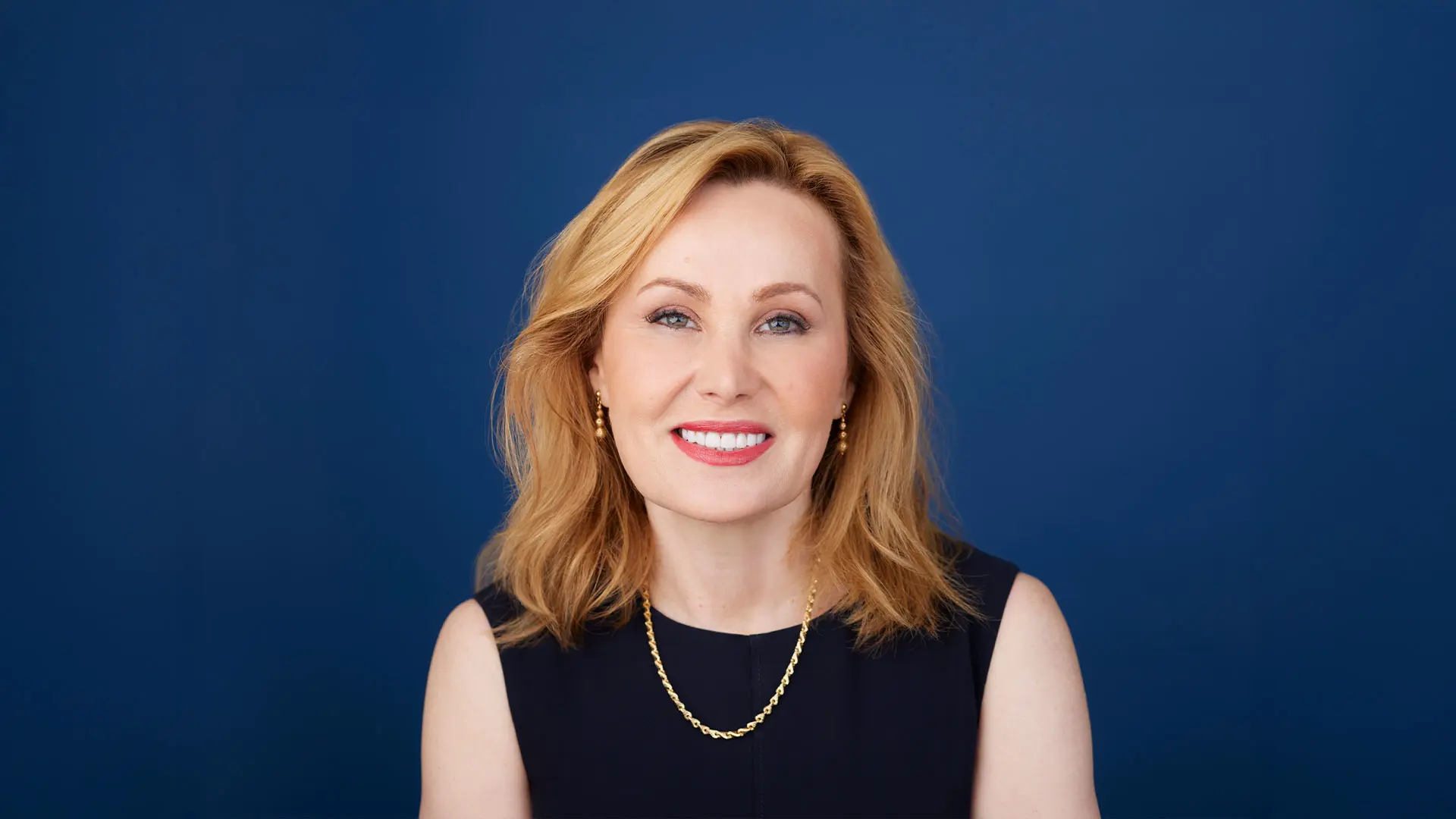
Emma Guttman-Yassky, MD, PhD, Waldman Professor and System Chair
The Kimberly and Eric J. Waldman Department of Dermatology
Director, Asness Family Center of Excellence in Eczema and Allergic Conditions
Director, Mount Sinai-Clinique Healthy Skin Dermatology Center
Director, Laboratory of Inflammatory Skin Diseases
Icahn School of Medicine at Mount Sinai
I am pleased to share with you this new report on the many achievements in 2025 of the Kimberly and Eric J. Waldman Department of Dermatology.
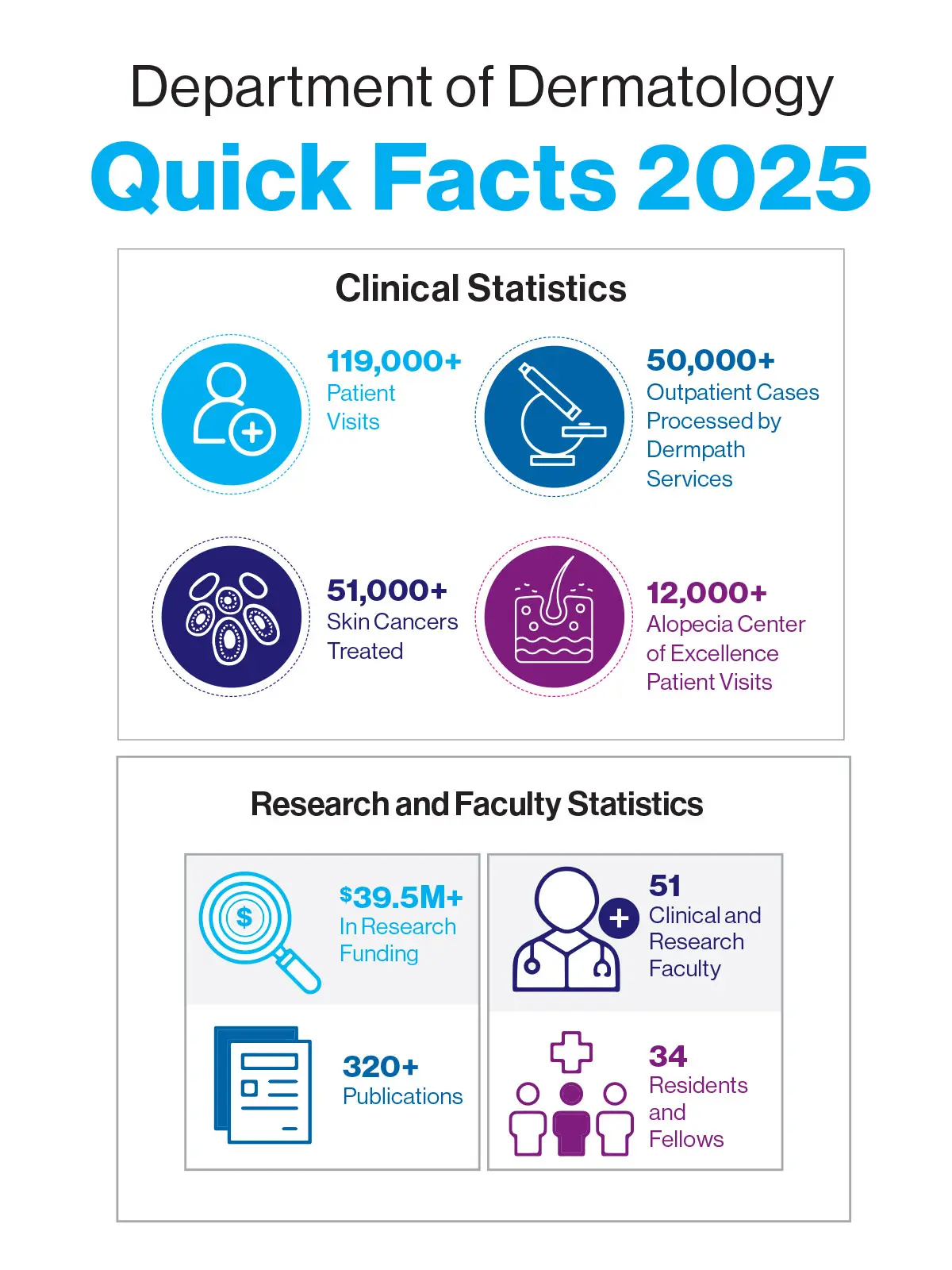
We delivered comprehensive and superior dermatological care with more than 119,000 patient visits and conducted groundbreaking research funded by $39.5 million in National Institutes of Health (NIH) research funding (cumulative through 2029); grants from pharmaceutical companies of $14.9 million; and foundation grants of $5.6 million. The funding fueled the expansion of our clinical trials along with lab staff and facilities, which supported many publications and patent applications. These efforts position the Department as a world leader in research on dermatologic diseases such as eczema/ atopic dermatitis, alopecia areata, scarring alopecia, psoriasis, vitiligo, hidradenitis suppurativa, and keloids, as well as skin cancers and other skin diseases.
We recruited top faculty talent in 2025 who will facilitate and expand our efforts in innovative research. Our recruits include:
Christine Akoh, MD, Assistant Professor of Dermatology, earned her medical degree from NYU Grossman School of Medicine, completed her intern year and dermatology residency at NYU, and served as chief resident in her final year. Dr. Akoh has a special interest in treating chronic inflammatory skin diseases in diverse patient populations and will collaborate with colleagues to conduct clinical research trials in the future.
Natalia Biscola, PhD, was promoted from Associate Scientist to Research Assistant Professor, specializing in neuroscience. She earned her PhD at São Paulo State University, in Brazil and completed postdoctoral training at UCLA and the Icahn School of Medicine at Mount Sinai. With a strong background in translational neuroscience and advanced imaging, she brings expertise in research and mentorship to foster collaborations bridging neuroscience and dermatology.
Nicholas Brownstone, MD, Assistant Professor of Dermatology, began his medical career as a plastic and reconstructive surgery resident at New York-Presbyterian Hospital, completing more than three years of surgical training. He completed his dermatology residency at Temple University Hospital in Philadelphia, where he served as chief resident in his final year. Dr. Brownstone also completed two dermatology research fellowships: one in psoriasis, phototherapy, and clinical research at the University of California, San Francisco and the other in melanoma/skin cancer at the Icahn School of Medicine. Dr. Brownstone has written multiple publications in high-impact journals and numerous textbook chapters and delivered presentations at national dermatology conferences.
Banu Farabi, MD, Assistant Professor of Dermatology, earned her medical degree and completed her dermatology residency at Ankara University School of Medicine in Turkey and went on to do her U.S. clinical training with an internal medicine internship and a dermatology residency at New York Medical College/Metropolitan Hospital Center, where she served as academic chief resident in her final year. Dr. Farabi’s interests include hidradenitis suppurativa in marginalized communities, stem cells in wound healing, promoting equitable access to dermatologic care, cutaneous oncology, and noninvasive skin imaging. She has presented her work at numerous national and international conferences, including the World Congress of Dermatology.
Michael Farhangian, MD, Assistant Professor of Dermatology, completed medical school at SUNY Downstate College of Medicine in Brooklyn. During medical school, he elected to take time off for research in dermatology at Wake Forest Baptist Health, where he also completed his residency as chief resident in his final year. After residency, he went on to serve as Assistant Professor at UCLA School of Medicine where he mentored medical students and residents training to become dermatologists, and was awarded Teacher of the Year in 2023.
Teresina Laragione, PhD, joined our Department as Associate Professor in June 2025, bringing more than two decades of research experience in autoimmune and inflammatory diseases. She completed her studies in Italy, earning a master’s degree in pharmaceutical chemistry from the University of Pisa, and her PhD in pharmacology at the Mario Negri Institute in Milan. Dr. Laragione has authored more than 50 peer-reviewed publications and has successfully led multidisciplinary teams and mentored trainees to support the next generation of physician-scientists.
The Kimberly and Eric J. Waldman Melanoma and Skin Cancer Center, under the leadership of its Director, Jesse M. Lewin, MD, FACMS, continues to offer a rare combination of technologies that allow the most advanced, state-of-the-art services in monitoring, diagnosing, and preventing skin cancer. At the Waldman Center, more than 51,000 skin cancers were treated in 2025, up from more than 30,000 treated in 2024. This includes over 2,700 Mohs surgeries, which offer patients a high cure rate on cosmetically sensitive areas. Our Mohs Micrographic Surgery unit is the only academic center in New York City and one of only a few globally to have implemented MART-1 staining for early melanoma, which offers enhanced visualization of melanoma cells and more precise margin assessment, completed the same day.
At the Waldman Center, we continue to utilize noninvasive technologies such as the Vectra® WB360 system with 3D Total Body Photography. One of only a few systems in the New York region, it captures high-resolution images and creates a 3D body map in a matter of minutes, identifying and tagging all the patient’s moles, which can be tracked over time.
This innovative tool catches skin cancers at the earliest possible stage while avoiding unnecessary skin biopsies. The Center is employing artificial intelligence to help explore multiple advanced technologies and novel techniques allowing for the early detection of and cures for skin cancers.
We launched a new, state-of-the-art facility, Mount Sinai Dermatology West Side, where we offer comprehensive dermatologic care to a broader patient community, with a whole array of general dermatological services including skin cancer diagnostics. On the same floor, our new Dermatopathology Services Lab will open in the first quarter of 2026. We expect to more than double patient volume in the new space. Additionally, we will expand the use of digital dermatopathology and AI research, with the guidance of Shane Meehan, MD.
Our philanthropic funding expanded in 2025 through the transformative $5 million gift from Clifford S. Asness, PhD, and Laurel Asness to advance research and clinical care for eczema and related allergic conditions. Mount Sinai renamed its Center of Excellence in Eczema to the Asness Family Center of Excellence in Eczema and Allergic Conditions, which is housed within our Department, in recognition of this generosity. The gift supports the goal of accelerating the development of new therapies for patients with eczema and associated allergic diseases such as asthma. I am proud to serve as the Director of the Asness Family Center.
Our Alopecia Center of Excellence is prospering, serving more than 12,000 patients in 2025. This first-of-its-kind center was made possible by a $5 million commitment from our donors, the Pure family, along with several other families. The Center integrates compassionate patient care, translational and basic research, and transformative new treatments developed through clinical trials for alopecia. Benjamin Ungar, MD, Director of the Center, aims to expand upon ongoing research and develop novel treatments.
With the philanthropic commitment of $5 million through a partnership with Clinique, the Mount Sinai-Clinique Healthy Skin Dermatology Center is thriving. Helen He, MD, and I are proud to co-direct the Center, aiming to deliver breakthrough advancements in dermatology by researching the biological underpinnings of skin aging, skin allergies, and inflammatory or eczematous skin conditions, including eczema (or atopic dermatitis).
We continue to work on research funded by our NIH grants, including the $6.6 million, five-year NIH grant (2024 through 2028) investigating dupilumab treatment in pediatric alopecia, and the $4 million, five-year NIH grant (2024 through 2028) evaluating the long-term safety, efficacy, and mechanisms of JAK inhibitors in patients with Down syndrome, an underserved population. Noteworthy, Patrick Brunner, MD, was awarded his first grant from the National Institute of Arthritis and Musculoskeletal and Skin Diseases to study T-cell plasticity mediating treatment resistance and side effects in atopic dermatitis with funding of $2.8 million over five years.
Under the direction of Brian S. Kim, MD, the Mark Lebwohl Center of Neuroinflammation and Sensation continues to grow funding from both federal and industry sources. The Center was made possible by $4.7 million of philanthropic dollars raised, which funds groundbreaking research in understanding the connections between skin immunity, inflammation, and neurosensation. The forward-looking investment by our generous donors and Mount Sinai was validated by the Allen Family Philanthropies, through the establishment of the Allen Discovery Center (ADC) for Neuroimmune Interactions at Mount Sinai. It is the first ADC in New York and only the fifth worldwide. Dr. Kim and the team, including Hongzhen Hu, PhD, and Michel Enamorado, PhD, along with Shruti Naik, PhD, are striving to meet their research targets.
Our Department has the largest dermatology residency program in the United States. We received the No. 6 ranking in research output and No. 11 in overall reputation in the United States on Doximity Residency Navigator. Additionally, we offer a higher number of subspecialties (Autoimmune, Skin of Color, Blistering Diseases, Pediatrics, Mohs Surgery, Dermatopathology, Skin Regeneration and Rejuvenation, Cutaneous Lymphoma, Rheumatology Dermatology, and Complex Medical Dermatology) than many premier programs.
Guiding the future of our Department is our Dermatology Advisory Board, with more than 40 members. (See the list of our board members on page 14.) The board’s unwavering support and expertise continue to help us provide better outcomes for our patients by expanding the boundaries of our research and clinical care.
Thank you for reviewing our annual report. We look forward to a successful and inspiring year ahead in 2026.
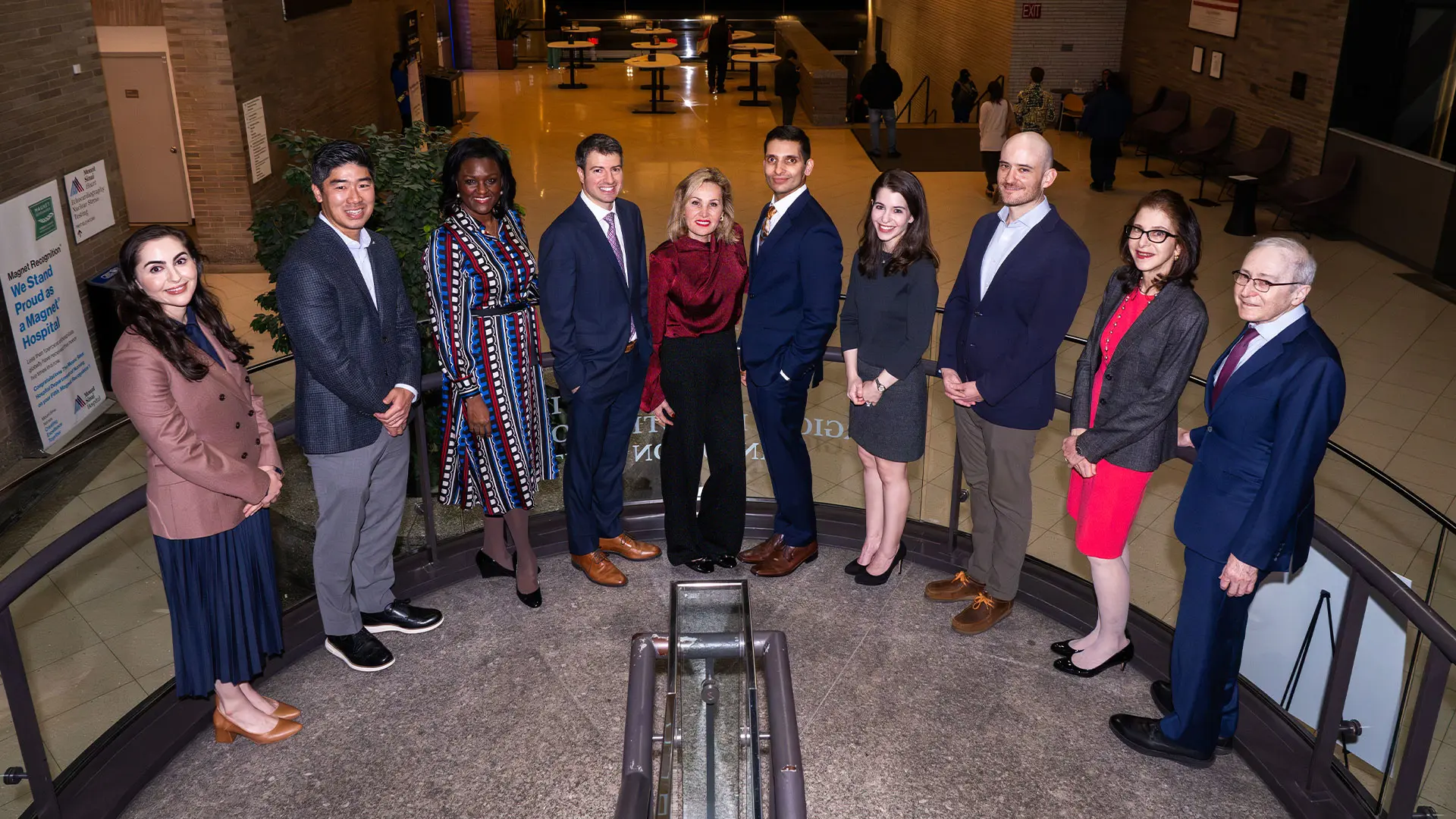
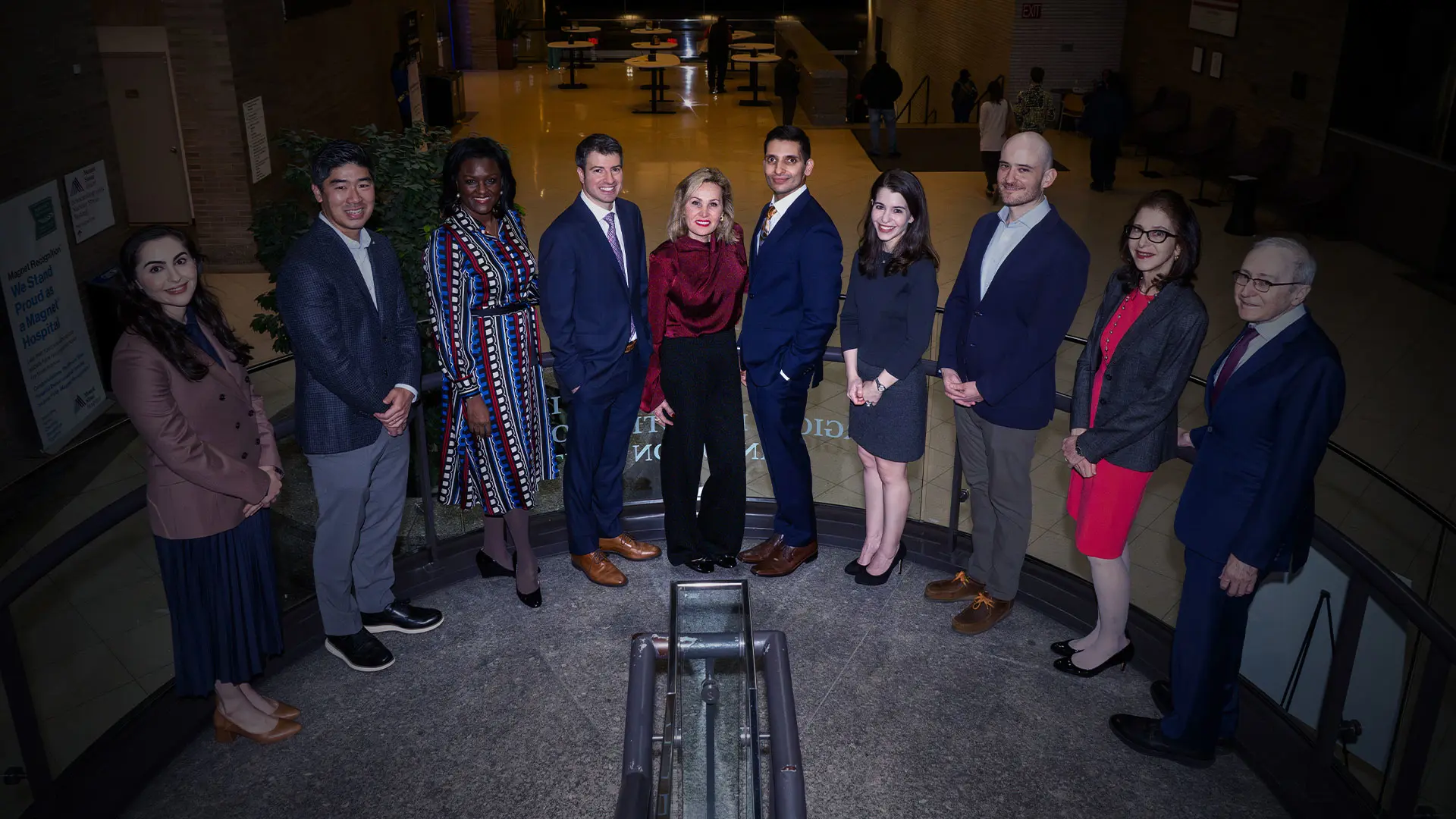
Our leadership team, from left: Nadine Kaskas, MD, Brian S. Kim, MD, Angela Lamb, MD, Jesse M. Lewin, MD, Emma Guttman, MD, PhD, Tomlee L. Abraham, Alexandra Golant, MD, Jonathan Ungar, MD, Marsha Gordon, MD, and Mark Lebwohl, MD.