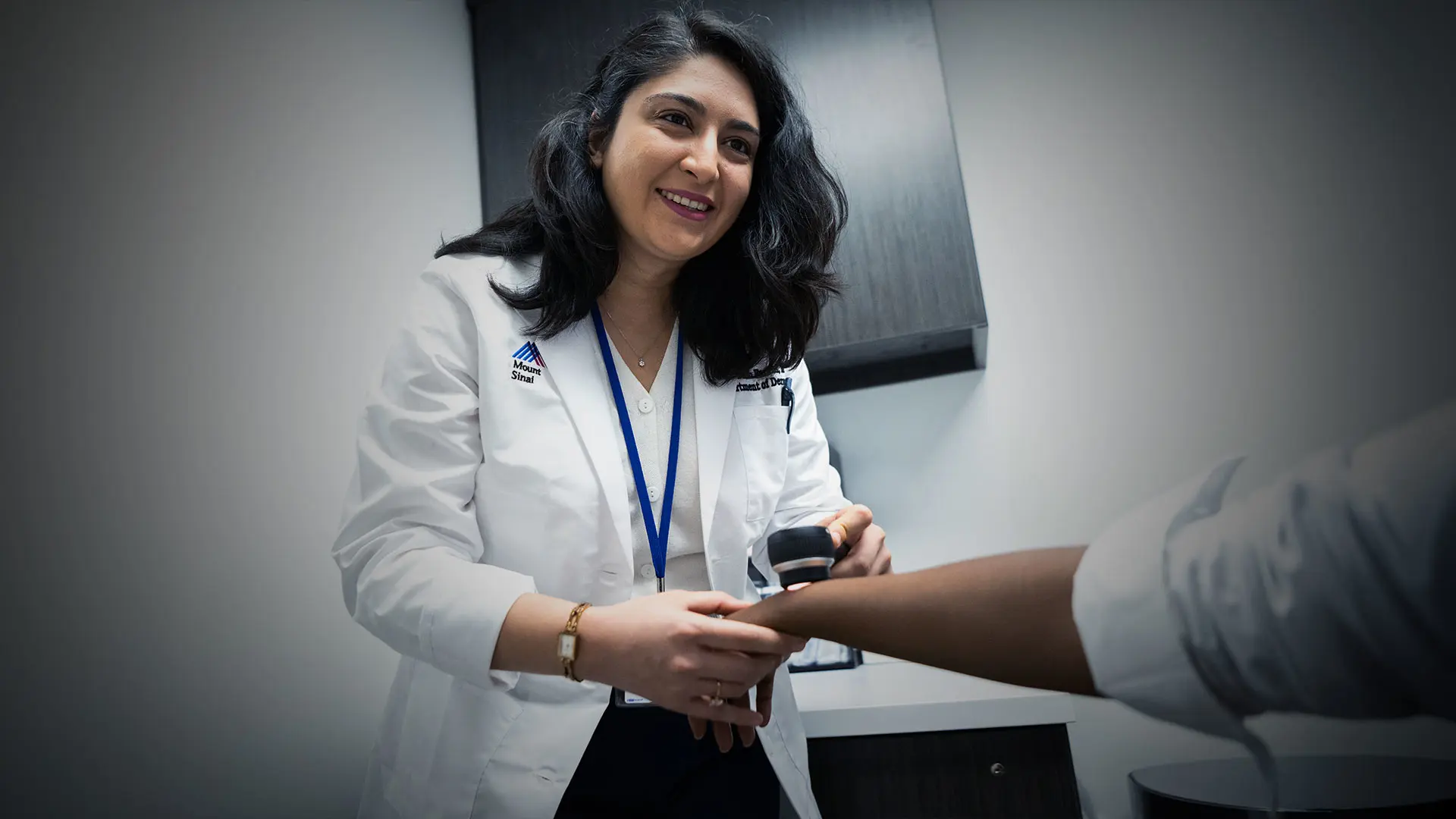
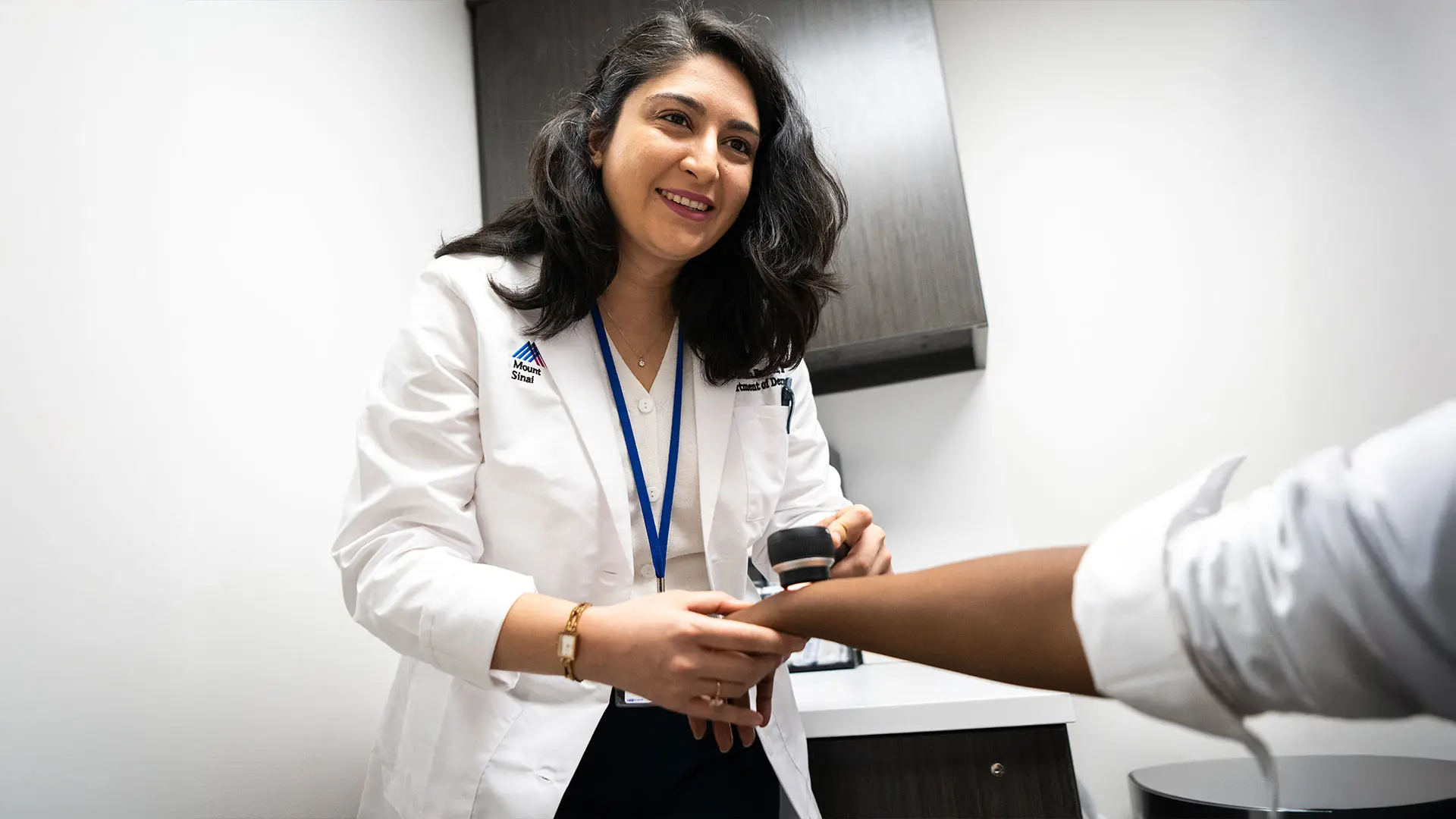
Banu Farabi, MD, is leading efforts to enhance the prognostic potential of noninvasive imaging technology such as the VECTRA ® WB360.
Advances in imaging technology are enabling earlier detection and diagnosis of skin cancers and, more crucially, earlier interventions. Banu Farabi, MD, is leading efforts at the Kimberly and Eric J. Waldman Melanoma and Skin Cancer Center at Mount Sinai to enhance the prognostic potential of these tools.
Working with a team of engineers, Dr. Farabi is integrating artificial intelligence (AI) into the Center’s VECTRA® WB360 system. The goal, she explains, is to improve the system’s ability to detect high-risk skin lesions on a macroscopic level.
“Right now, the system picks up everything from benign lesions to pigment marks,” says Dr. Farabi, Director of Skin Cancer Screening and Imaging at the Center, and Assistant Professor of Dermatology at the Icahn School of Medicine at Mount Sinai. “By training the algorithm to recognize and ignore benign lesions on a variety of skin tones, we believe the system will be more precise in detecting skin cancers,” she says.
Dr. Farabi plans to assess that accuracy through a retrospective study comparing identified melanomas from a cohort of patients who have undergone Vectra imaging against those from patients who have not undergone such imaging to identify differences in diagnosis, staging, and outcomes. The findings have the potential to significantly reduce the number of biopsies performed. Dr. Farabi is also exploring ways to use AI to improve lesion detection using reflective confocal microscopy. These efforts reflect the Center’s dedication to pushing the boundaries of what is possible in diagnosis and treatment, says Director Jesse Lewin, MD.
“People are looking to us for more sophisticated diagnostic techniques,” says Dr. Lewin. “The work we are doing integrating AI and machine learning into our imaging devices is meeting that demand. More importantly, it is augmenting our ability to detect skin cancer early and recognize patterns, which makes it possible for us to achieve better outcomes. That, as always, is our main goal.”