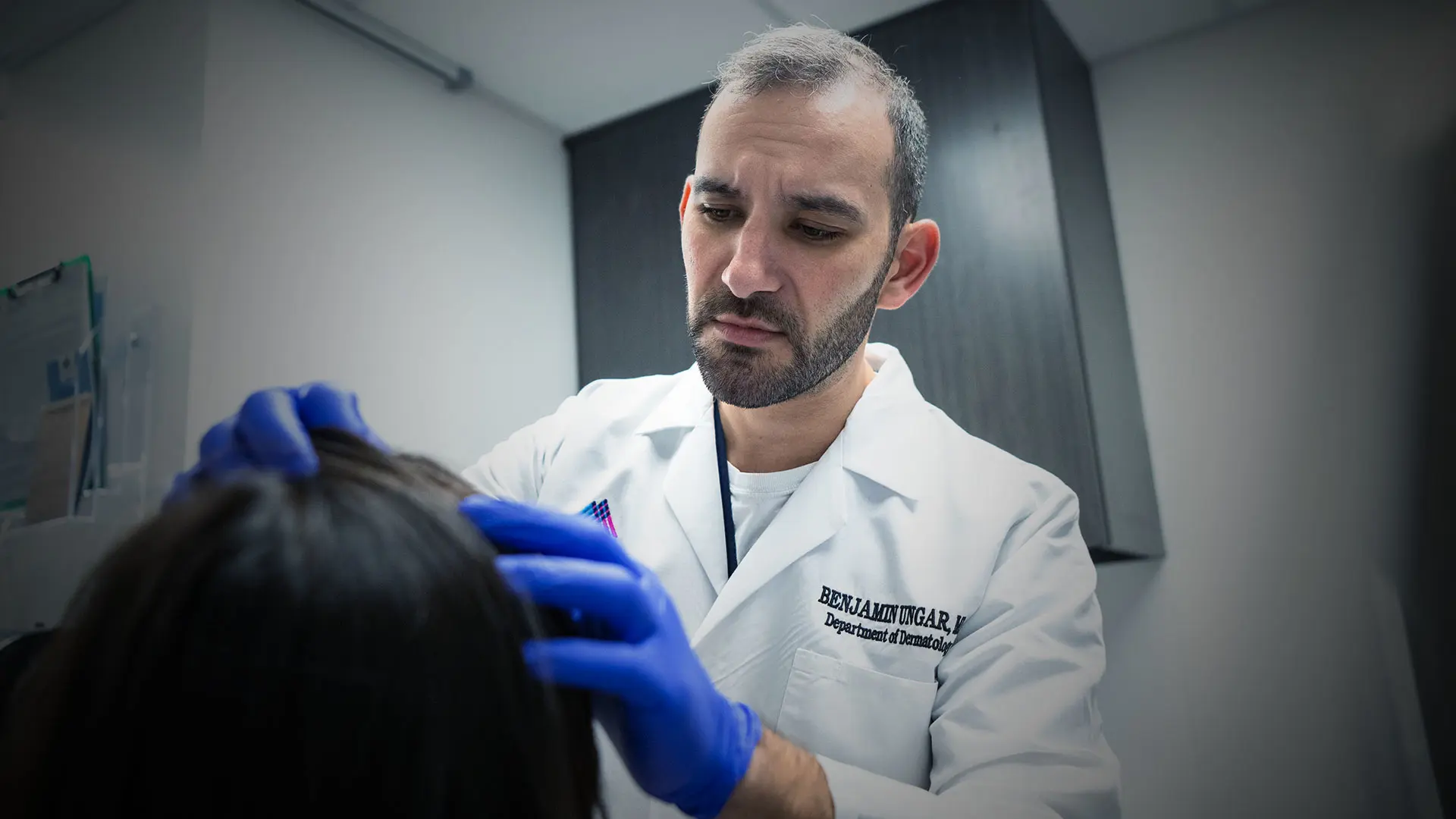
There are exciting things happening at Mount Sinai’s Alopecia Center of Excellence, particularly the search for a cure for alopecia areata (AA), an unpredictable and notoriously tough-to-treat autoimmune disorder that affects approximately 2 percent of people in their lifetime. The condition, which can be emotionally devastating, causes patchy hair loss on the scalp, face, and other areas of the body, and is most common in young adults and children. In addition to losing their hair, children with the condition often report bullying, and patients are at an increased risk for social isolation, anxiety, and depression.
Getting to the molecular causes of hair loss
No one understands patients’ anguish more than the physician-scientists at Mount Sinai’s Alopecia Center. But every year, they are gaining a clearer understanding of the root causes of the condition, which is bringing them closer to a cure. “Our research suggests that the OX40 molecular pathway, which promotes immune T-cell responses linked to flare-ups of atopic dermatitis (or eczema), also tends to be present in AA,” explains Emma Guttman-Yassky, MD, PhD, Waldman Professor and System Chair of the Kimberly and Eric J. Waldman Department of Dermatology. This discovery follows Dr. Guttman’s and her team’s identification of the cytokines IL-4 and IL-13, which play a critical role in the inflammation response in atopic dermatitis, as well as in the immune response involved in alopecia areata.
These findings have paved the way for safer and more effective treatments. “When it comes to treating AA, right now, JAK (Janus kinase) inhibitors are the only treatments approved by the Food and Drug Administration,” says Dr. Guttman. JAK inhibitors work by blocking the activity of Janus kinase enzymes and tamping down inflammation, and they are effective in treating a range of inflammatory skin conditions, including atopic dermatitis. “But they also have safety baggage, so it’s not possible to give them to patients for life,” explains Dr. Guttman, who is also the Director of the Asness Family Center of Excellence in Eczema and Allergic Conditions and the Laboratory of Inflammatory Skin Diseases.
Now, largely thanks to the work of Dr. Guttman and her team, there are other treatment options on the horizon. “We are especially excited about our research that suggests another, safer drug, known as dupilumab, currently used to treat atopic dermatitis, may also hold promise for treating AA,” says Dr. Guttman. Dupilumab is already approved for and widely used to treat eczema, and has a good safety profile, including for children as young as six months old.
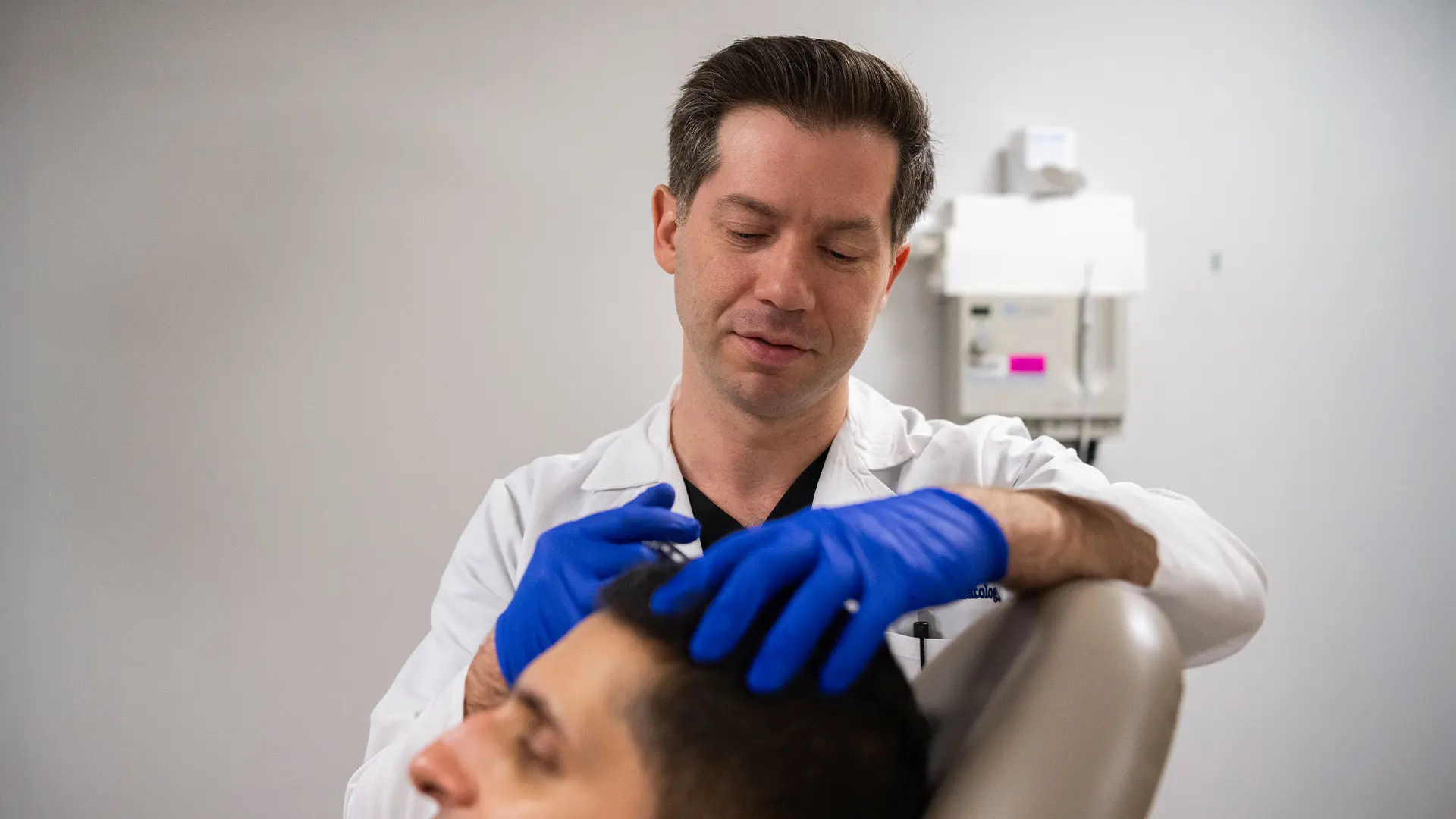
Brian Abittan, MD, strives to provide solutions to hair loss that meet the vast needs of a varied patient population.
Major clinical trials at the Alopecia Center offer hope for patients
Currently, the Alopecia Center team has two major studies in progress. The first, for adults, is a placebo-controlled study on the effectiveness of dupilumab for patients with alopecia areata. But it’s the second, which also involves treating AA patients with dupilumab, that is particularly groundbreaking. That’s because the trial participants are children, ranging in age from 6 to 18, which is often an underserved population.
“Children have unique medical and psychosocial needs, require specialized counseling, and have far fewer treatment options than adults,” says Justine Fenner, MD, a pediatric dermatologist and Assistant Professor of Dermatology at the Kimberly and Eric J. Waldman Department of Dermatology. “There is a real need for doctors who are willing to treat alopecia more aggressively and to expand our therapeutic toolbox.”
So far, at the Mount Sinai clinical trials site, 40 children have been enrolled, with a total goal of 76 participants, according to Benjamin Ungar, MD, Director of the Alopecia Center of Excellence. That is huge progress, especially considering that children are among the most challenging to include in trials. “There are a lot more hurdles to get over to ensure that we always keep their best interests in mind, and do everything in the safest possible way,” says Dr. Ungar.
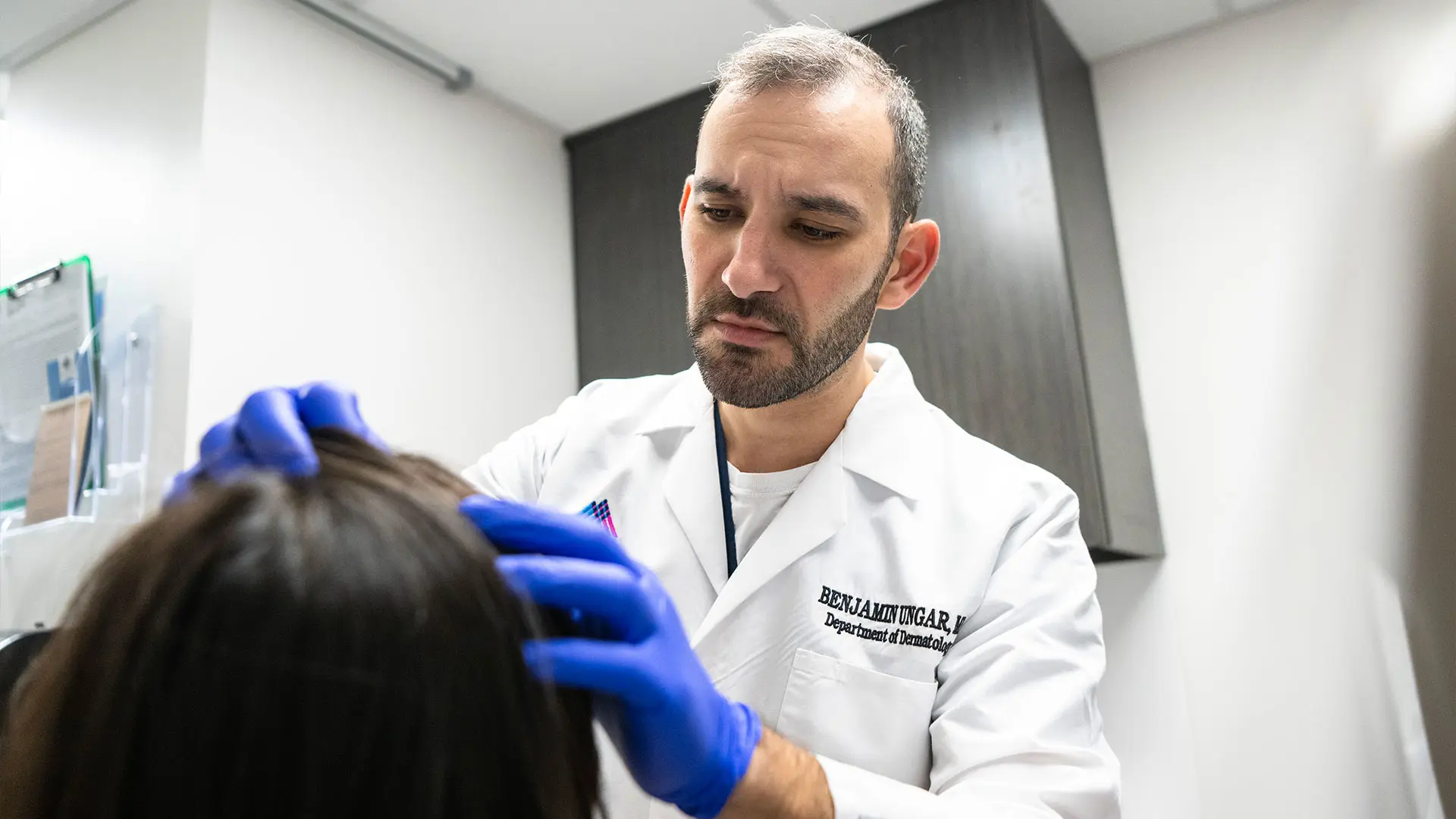
Benjamin Ungar, MD, is making progress towards a better understanding of alopecia areata’s underlying immunology and having a significant impact on the quality of patients’ lives.
The team is also studying the efficacy of two JAK inhibitors—ritlecitinib and upadacitinib—in pediatric and adolescent patients. “I’ve been using both of these in my practice and have seen remarkable results,” Dr. Fenner says.
A key goal of all these studies is to gain a better understanding of AA’s underlying immunology. “Specifically, we hope to better understand how the treatments affect the inflammatory processes driving the condition,” explains Dr. Ungar, “which will allow us to develop more treatments in the future.”
Another factor that makes this kind of rigorous work challenging is the length of the trials—the adult study will continue for nearly two years. “It’s not only because hair takes a long time to grow but because of the nature of alopecia areata,” says Dr. Ungar. “Even the fastest treatments take months to normalize the underlying disease process so hair can return.”
The effort is worth it. “One thing we hope people will come to appreciate is that skin conditions including alopecia areata are not about vanity— they have a significant impact on the quality of patients’ lives,” says Dr. Ungar. Alopecia areata doesn’t simply look like “normal” hair loss— people lose their eyebrows, or lose their hair in patches, or lose their hair completely, he explains.
“I’ve had patients with other very serious medical conditions, and they’ve told me that their number one priority is their hair,” Dr. Ungar says. Indeed, AA patients often report significantly more psychosocial challenges and experienced more stress because of their hair loss.
The Alopecia Center of Excellence strives to provide solutions that meet the vast needs of a varied patient population—to improve their hair loss, emotional health, and the quality of their lives. “Most hair centers provide expertise in only one area, either focusing on medical treatments or regenerative treatments; others do only hair transplantation, and cannot evaluate the specific type of hair loss to make sure the procedure is done appropriately, if at all,” says Brian Abbitan, MD, Director of Skin and Hair Rejuvenation, and Hair Transplantation at the Kimberly and Eric J. Waldman Department of Dermatology. “We provide comprehensive care for all of these at Mount Sinai, including the most updated methods.” One example is follicular unit extraction (FUE), which allows for minimal scarring and quick recovery; another is platelet-rich plasma (PRP), which stimulates natural hair growth using growth factors from the patient’s own blood and maintains that growth by slowing down further loss.
At the Alopecia Center, whatever the needs of Mount Sinai’s dermatology patients, the goals are the same, says Dr. Guttman: “We want to continue to identify important molecules and design studies ourselves or convince companies to do studies globally, all in the interest of giving our patients more treatment options.”