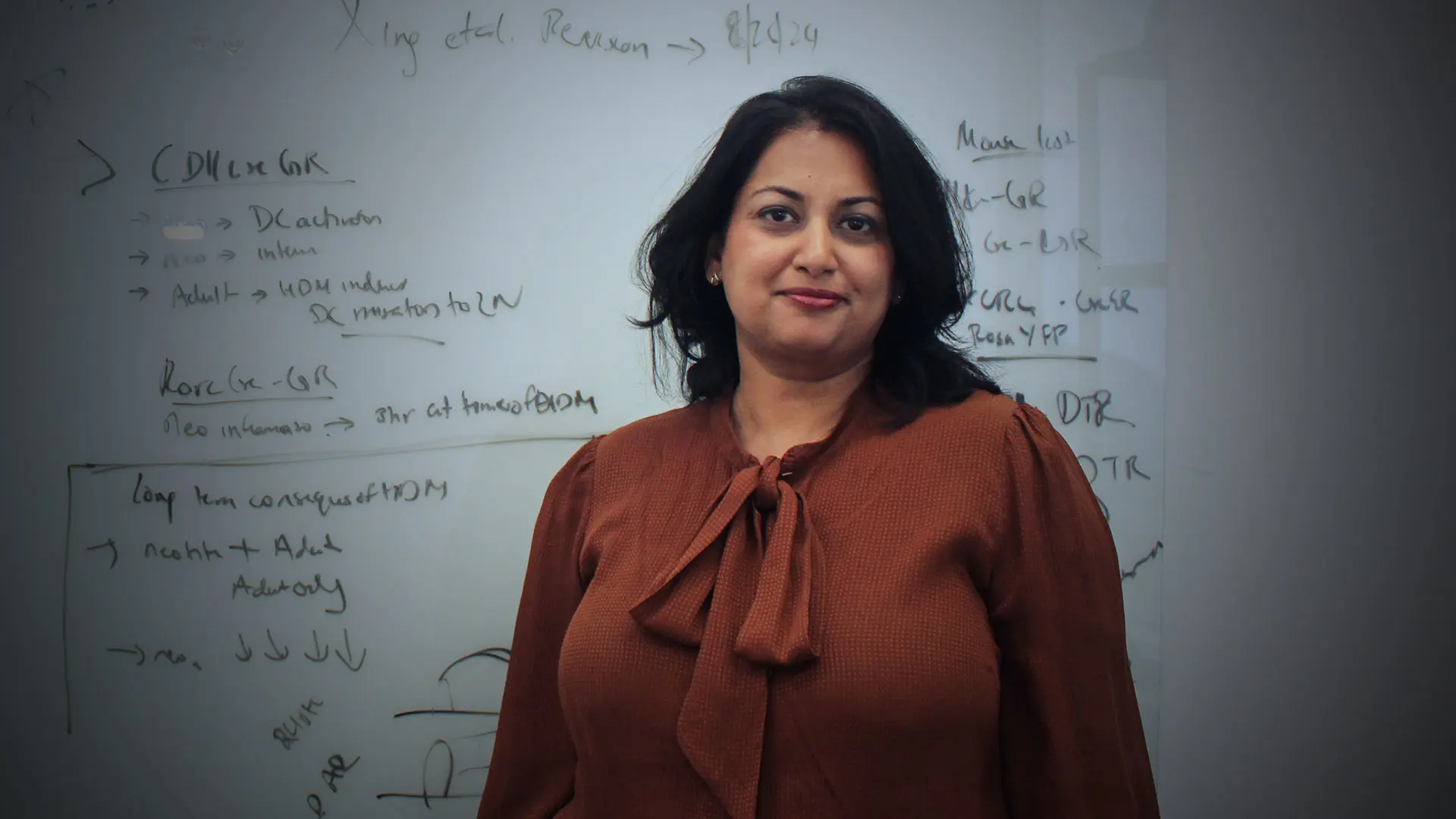
Research studies funded by the National Institutes of Health (NIH) and led by Emma Guttman-Yassky, MD, PhD, are underway, including the $6.6 million, five-year NIH grant (2024 through 2028) investigating dupilumab treatment in pediatric alopecia areata (AA) patients.
“This exciting clinical trial aims to expand our mechanistic understanding of AA and shed light on the regulatory immune circuits in the pathogenesis of AA, particularly in children and adolescents,” says Dr. Guttman. “If successful, it will enable the use and further development of targeted therapeutics that can be safe for long-term use.”
Additionally, a five-year NIH R61/R33 grant (2024 through 2028) for more than $4 million is funding a first-of-its-kind clinical trial studying alopecia areata and atopic dermatitis in people with Down syndrome, an underserved population. Dr. Guttman, Waldman Professor and System Chair of the Kimberly and Eric J. Waldman Department of Dermatology, together with Dusan Bogunovic, PhD, Professor of Pediatric Immunology at Columbia University, was awarded this grant to evaluate the long-term safety, efficacy, and mechanisms of JAK inhibitors in these patients.
Noteworthy in 2025, Patrick Brunner, MD, Associate Professor of Dermatology and Director of the Cutaneous Lymphoma Clinic, was awarded his first R01 grant from the National Institute of Arthritis and Musculoskeletal and Skin Diseases (NIAMS), a part of the NIH, for “T-cell plasticity mediating treatment resistance and side effects in atopic dermatitis” with funding of $2.8 million over five years.
Under the direction of Brian S. Kim, MD, the Mark Lebwohl Center of Neuroinflammation and Sensation is making progress with increased research funding from both federal and industry sources and conducting groundbreaking research.
“With a multidisciplinary team of immunologists, neuroscientists, and clinicians, the Lebwohl Center and the Kim Lab have unique expertise in innate immunity, neuroimmunology, and behavioral modeling of chronic itch. We are actively designing translational, clinical research studies, and interventional clinical trials to better understand cutaneous immunity, inflammation, and itch,” says Dr. Kim, Vice Chair of Research in the Kimberly and Eric J. Waldman Department of Dermatology at the Icahn School of Medicine.
Increasing the scope of research at the Hu Lab, Hongzhen Hu, PhD, MS, Scientific Director of the Lebwohl Center and Professor of Dermatology, and Neuroscience, received NIH grants totaling $1.1 million in 2025. The Hu Lab, focuses on understanding the initiation of sensory experiences, such as pain and itch, at the barrier surfaces of the skin and visceral organs.
Michel Enamorado, PhD, Assistant Professor of Dermatology, leads the Enamorado Lab, focusing on understanding the neuroimmune regulation of tissue injury and repair, with the goal of transforming the way we understand and treat chronic inflammatory disease.
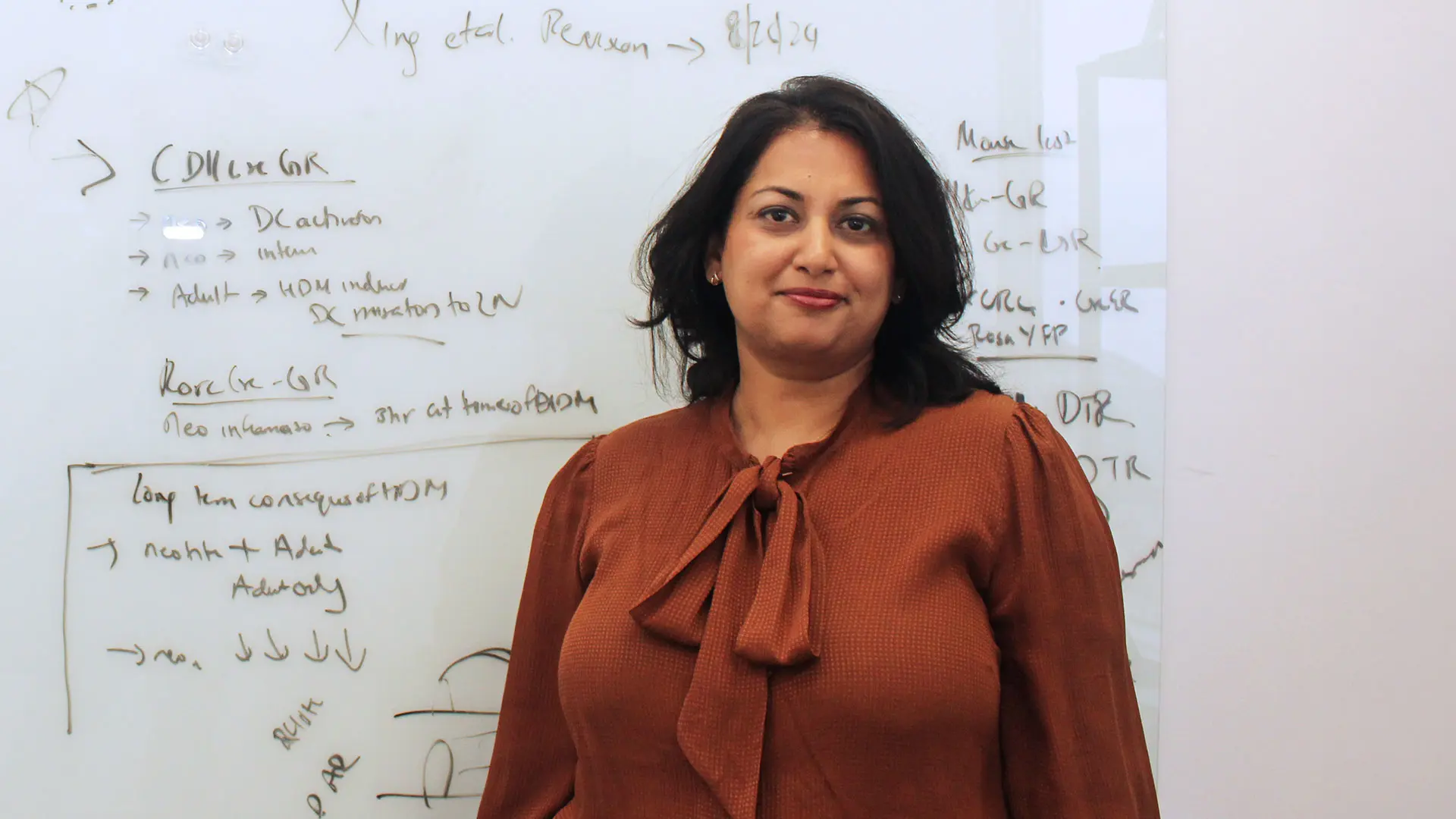
Shruti Naik, PhD, is working on the next generation of curative therapies for inflammatory skin diseases.
Shruti Naik, PhD, Associate Professor of Dermatology, and Immunology and Immunotherapy, received $2.9 million in NIH funding and more than $750,000 in foundation grants in 2025. Dr. Naik received the Leadership Scholar Award from the Accelerating Medicines Partnership® Autoimmune and Immune-Mediated Diseases Leadership Scholars Program consortium. Dr. Naik’s proposal, “Leveraging Multi-Omics to Decode Cell-Specific Psoriatic Predisposition and Relapse,” uses groundbreaking technologies to understand why patients with psoriasis and atopic dermatitis relapse and carefully map disease memory that’s hidden beneath the skin’s surface. Her game-changing studies will lay the foundation for the next generation of curative therapies for inflammatory skin diseases.