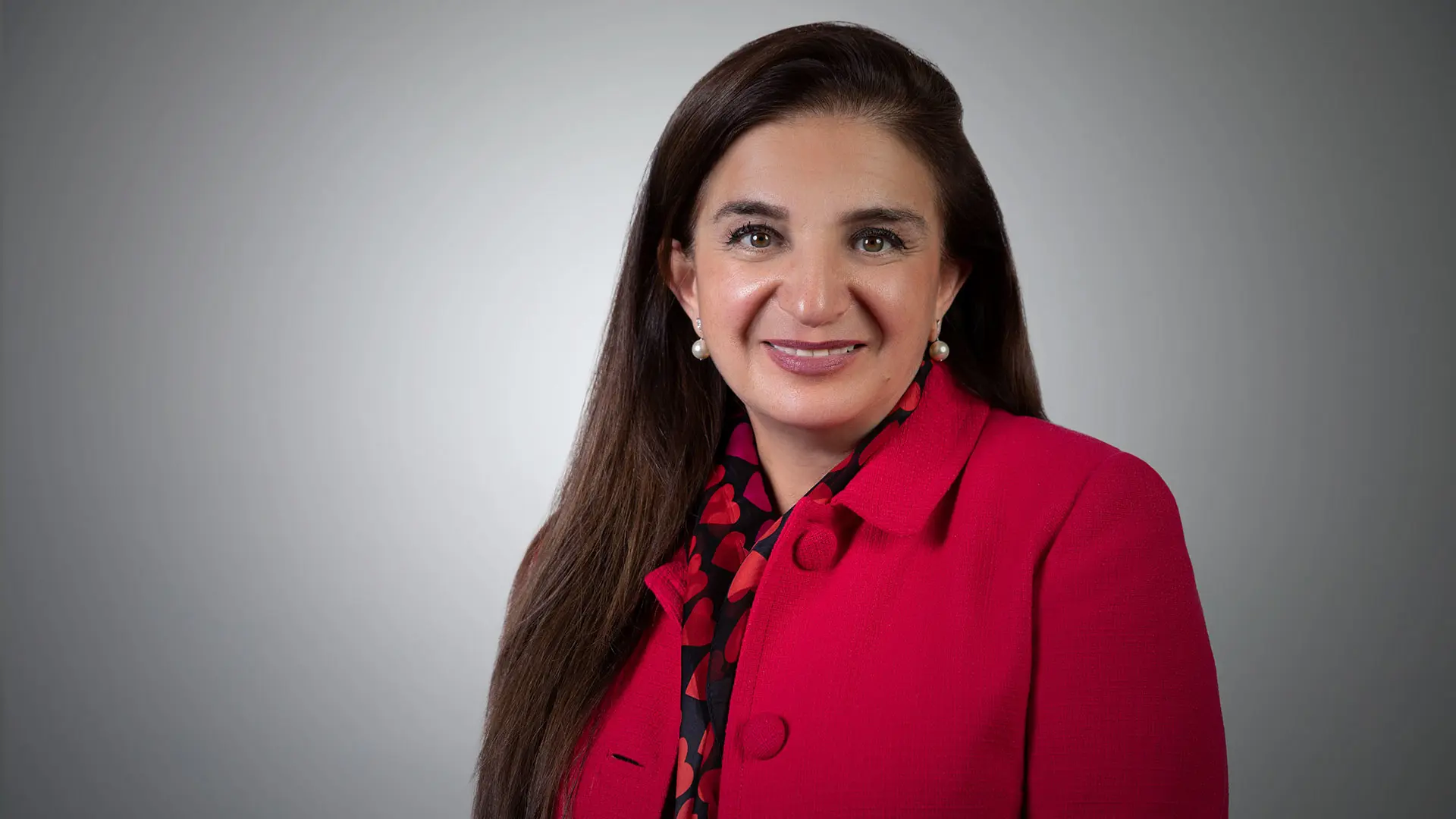
The American College of Cardiology (ACC) has named Roxana Mehran, MD, FACC, as its 2026 president. Dr. Mehran is Professor of Medicine (Cardiology), and Population Health Science and Policy, and Director of Interventional Cardiovascular Research and Clinical Trials at the Icahn School of Medicine at Mount Sinai. Dr. Mehran will begin her term in April 2026, following seven years serving on the ACC’s Board of Trustees and as its Vice President in 2025.
“It is an honor to fill this role. The presidency is not about any one person, but about representing and serving the more than 70,000 cardiovascular physicians and providers,” says Dr. Mehran, the founding Director of the Women’s Heart and Vascular Center at Mount Sinai Fuster Heart Hospital. “I feel privileged to help the ACC achieve its mission of transforming cardiovascular care for all.”
It is a pivotal time for cardiology in the United States and around the world, Dr. Mehran says. For decades, cardiovascular disease rates have been declining. However, this progress has now plateaued, and cardiovascular disease remains the leading cause of death worldwide. Meanwhile, rates of obesity, type 2 diabetes, and maternal mortality continue to increase in the United States, while life expectancy is declining.
“Our field has a daunting but critical task ahead of us to reduce the global burden of cardiovascular morbidity and mortality by preventing disease and making sure everyone has access to treatments,” says Dr. Mehran, a highly cited investigator. In 2025 alone, she and her team published more than 100 peer-reviewed papers.
As president of the ACC, Dr. Mehran intends to focus on making the organization an indispensable resource and trusted source of knowledge for cardiovascular professionals while advancing cardiovascular health for populations around the world. To achieve those aims, Dr. Mehran plans to continue fostering partnerships between the ACC and other national and international societies and organizations, such as the American Heart Association and the European Society of Cardiology. “If we’re going to move the mountain on cardiovascular health, we need to work together,” she says.
“Our field has a daunting but critical task ahead of us to reduce cardiovascular morbidity and mortality by preventing disease and making sure everyone has access to treatments.”
Roxana Mehran, MD, FACC
Dr. Mehran hopes her experience as a physician-scientist will expand the ACC’s ability to support cardiovascular researchers who are innovating the field. “As one of the few physician-scientists who has had the honor of serving as ACC president, I can draw from my point of view at the bedside and also at the bench side. Making those connections is so important for continuing to support the discoveries that enhance patient care,” she says.
Dr. Mehran is optimistic that technological advances, such as artificial intelligence (AI) and machine learning, may alleviate some of the administrative burden on cardiologists—giving them more time for essential patient care. “When you are filling out forms and calling insurance companies, you aren’t spending that time with patients. It’s so important to put our stethoscopes on patients’ chests, talk with them, and really listen to their needs so we can deliver the care they need,” she says.
Advancing equity is another critical goal for the field and a strategic pillar for the ACC. “I remain concerned about the implementation of science at the bedside,” she says. “Who gets the best therapies when there is a clinical trial or a new drug or device? How are we removing barriers so that everyone can access these advances, regardless of who they are or where they live?”
Equitable care has long been part of the ethos at the Mount Sinai Health System, Dr. Mehran says, and it also guides her clinical work and research. She has a particular interest in women’s cardiovascular health. In addition to leading the Women’s Heart and Vascular Center, she is leading The Lancet Women and Cardiovascular Disease Commission, which aims to reduce the global burden of cardiovascular death in women by 2030. Despite advances, there is much more work to be done, she says. “Over the past five decades, women of childbearing age have been excluded from nearly every clinical study. That’s decades of a woman’s life for which we have zero evidence,” she says. “Women have a peculiar biology, and the pathophysiology of cardiovascular disease is very different in women than in men. We need to reboot the system.”
Realizing the Potential for Cardiology
As president of the ACC, Dr. Mehran follows in the footsteps of Mount Sinai cardiologist Simon Dack, MD, FASS, who served as president from 1956 to 1957 and was the founding editor of the Journal of the American College of Cardiology. “As 2026 president, I am here to support the work of the giants, like Dr. Dack, who came before me,” she says.
Dr. Mehran has made her own invaluable contributions to the field. She has served as principal investigator for numerous global studies, developed standardized definitions and risk scores for bleeding complications, in-stent restenosis, and acute kidney injury, participated in the development of clinical guidelines, and authored more than 2,000 manuscripts.
The influential papers published by her team in 2025 included:
Safety and Efficacy of Obicetrapib in Patients at High Cardiovascular Risk, published in The New England Journal of Medicine
Residual Cholesterol and Inflammatory Risk in Statin-Treated Patients Undergoing Percutaneous Coronary Intervention, published in the European Heart Journal
Preserving and Promoting Clinical Trial Representativeness: A Review of Existing Strategies and the Path Forward, published in JAMA Cardiology
Abluminus DES+ sirolimus-eluting stent versus everolimus-eluting stent in patients with diabetes and coronary artery disease (ABILITY Diabetes Global): results from a multicenter, randomized controlled trial, published in The Lancet
Looking ahead, Dr. Mehran is eager to apply her expertise to the mission of the ACC and help the field of cardiology realize its potential. “We have some of the best technology and innovations available, yet there are many who are underdiagnosed, undertreated, and underappreciated,” she says. “The time for making a difference is now.”