The morning of March 8, 2025, Anelechi Anyanwu, MD, Vice Chair of Cardiovascular Surgery for the Mount Sinai Health System, was scheduled to lead Mount Sinai’s second-ever triple transplant: heart, liver, and kidney. But he was worried. His patient’s medical condition was rapidly deteriorating. “I didn’t think he was a candidate for surgery anymore,” Dr. Anyanwu says. “His liver was failing at a very progressive rate.”
He called his counterpart, Sander Florman, MD, the Charles Miller, MD, Professor of Surgery, and Director of the Recanati/Miller Transplantation Institute at Mount Sinai, and told him he thought they might need to cancel the organ procurement.
Dr. Florman, who was scheduled to perform the liver and kidney transplants, went to check on the patient. Five minutes later, he called Dr. Anyanwu back. “He said, ‘Look, we’ve transplanted patients like this before. We can do it.’ So, we cancelled the cancellation,” Dr. Anyanwu says.
The 20-hour surgery was a success. And the moment of teamwork in deciding the way forward is one Dr. Anyanwu says he will always remember. “We were so close to not doing the transplant, and if we hadn’t, that patient probably wouldn’t have survived,” he says. “It is not straightforward making these decisions,” he adds, recognizing the ethical dilemmas posed and the uncertainty of outcomes.
It was just one moment of many when Dr. Anyanwu and Dr. Florman worked seamlessly together to ensure that the heart-liver-kidney triple organ transplant went smoothly. The two had performed double transplants together for many years. But it was only the second time that they led a triple transplant together, with the first having occurred just two months before. And they both say they couldn’t have done it without the other. “His success is mine, and his failure would be mine,” Dr. Florman says. “I could sleep well knowing Dr. Anyanwu was there, and he could do the same with me.”
But they know it takes much more than their own surgical skills. They could not perform these miracles in the operating room without their highly skilled teams and without the support of the entire Mount Sinai organization, which over many years has honed outstanding expertise in medicine and science.
Heart-liver-kidney transplants are extremely rare—only 58 have been done nationwide, according to the United Network for Organ Sharing, the government agency that oversees transplantation. For perspective, there were more than 48,000 transplants in the United States last year.
Mount Sinai is well prepared to perform these complicated procedures. “The depth of our experience is our secret sauce,” Dr. Florman says. “The ability to manage a patient during surgery who’s having a heart transplant in the face of liver and kidney failure is a whole different league. You’re in an operating room for more than 20 hours with multiple surgeons, anesthesiologists, and nurses, all working together. It’s the ultimate team sport.”
The battle to help transplant patients survive spans the months before and months after surgery, as teams provide critical care, then rush to procure the organs, and then provide the specialized care patients need in the weeks afterward to ensure they can leave the hospital.
“Doctors get so much credit, but none of this happens without every member of the team,” Dr. Florman says. “For example, there’s a veritable army of nurses: in that operating room, perfusionists to man the pumps, circulating nurses who get the equipment, scrub nurses who pass us the instruments.”
Dr. Anyanwu notes that the entire transplant process is run by nurses and nurse practitioners who serve as transplant coordinators. “These coordinators run the show,” he says. “You can't do it without them.” And throughout it all, the medical teams never forget that none of it would happen without that one person who donates all three organs. “This happens only through the gift of life that a family in the worst of times agrees to donate organs to try to save somebody else’s life,” Dr. Florman says.
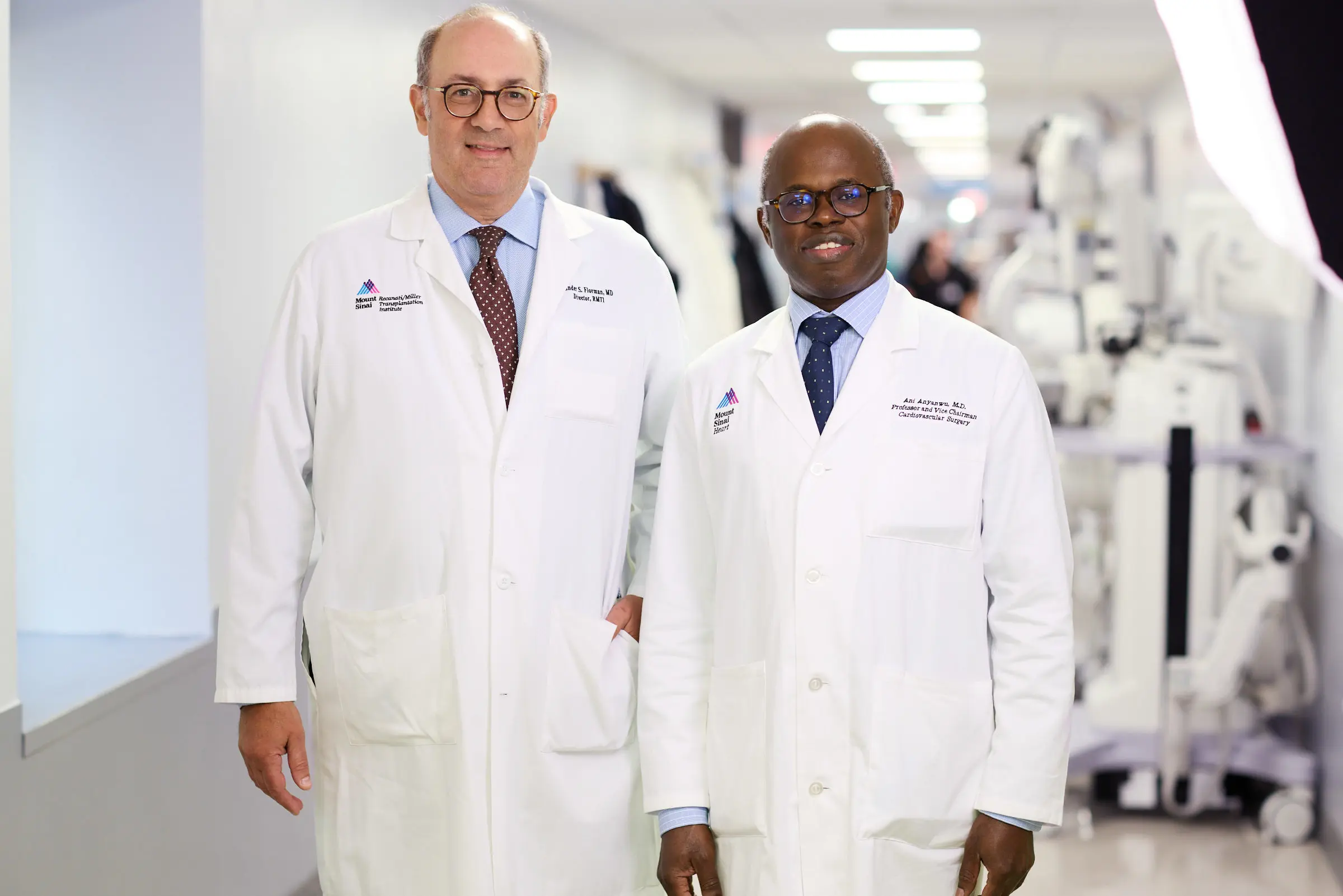
Sander Florman, MD, left, Charles Miller, MD, Professor of Surgery and Director of the Recanati/Miller Transplantation Institute at Mount Sinai, and Anelechi Anyanwu, MD, Vice Chair of Cardiovascular Surgery for the Mount Sinai Health System
The Road to a Triple Transplant
It is rare to find a patient who meets the criteria and is still healthy enough to survive surgery. This was especially true with Mount Sinai’s first triple transplant, which included a repeat heart transplant. The patient, Mack Godbee, 64, suffered a cardiac arrest outside his home in August 2024, and his daughter was able to give him CPR and save his life. However, his condition continued to deteriorate, and he was admitted to The Mount Sinai Hospital in December.
Mr. Godbee had previously undergone a heart transplant at The Mount Sinai Hospital in 2002 for complications of sarcoidosis. After two healthy decades with the transplant, he developed chronic rejection of the transplanted heart. His kidney and liver function also began to deteriorate, a common complication of long-standing heart disease and anti-rejection medication.
“Anytime someone suffers a cardiac arrest, it’s just a sign of things to come,” says Noah Moss, MD, an advanced heart failure and transplant cardiologist at Mount Sinai who has cared for Mr. Godbee for nearly a decade. After the incident over the summer, a defibrillator was inserted. “But his heart was getting progressively weaker,” says Dr. Moss, Assistant Professor of Medicine (Cardiology) at the Icahn School of Medicine.
Mr. Godbee’s condition became severe enough for him to be put on the list for a new heart transplant. “When I saw him in December, I was very worried about his condition,” Dr. Moss says, noting that Mr. Godbee was very short of breath and had worsening kidney function. Imaging also revealed a cirrhotic liver, which indicated significant liver dysfunction.
“The fact that he’d had a previous transplant brought up ethical issues as to whether we should then be giving him another three organs,” recalls Dr. Anyanwu. That decision was ultimately made by three different medical committees: one to deliberate about a heart transplant, a second for kidney, and a third for liver. All the teams then met to decide whether to proceed with the triple transplant. “It’s a monumental decision,” Dr. Anyanwu says. “When you give three organs to one person, you’re potentially depriving three others of a lifesaving organ.”
“You’re looking for any and every reason why you can’t do a triple transplant,” adds Dr. Florman. “These people are so sick, that you must have the ability to see through the forest to the other side to make it possible.”
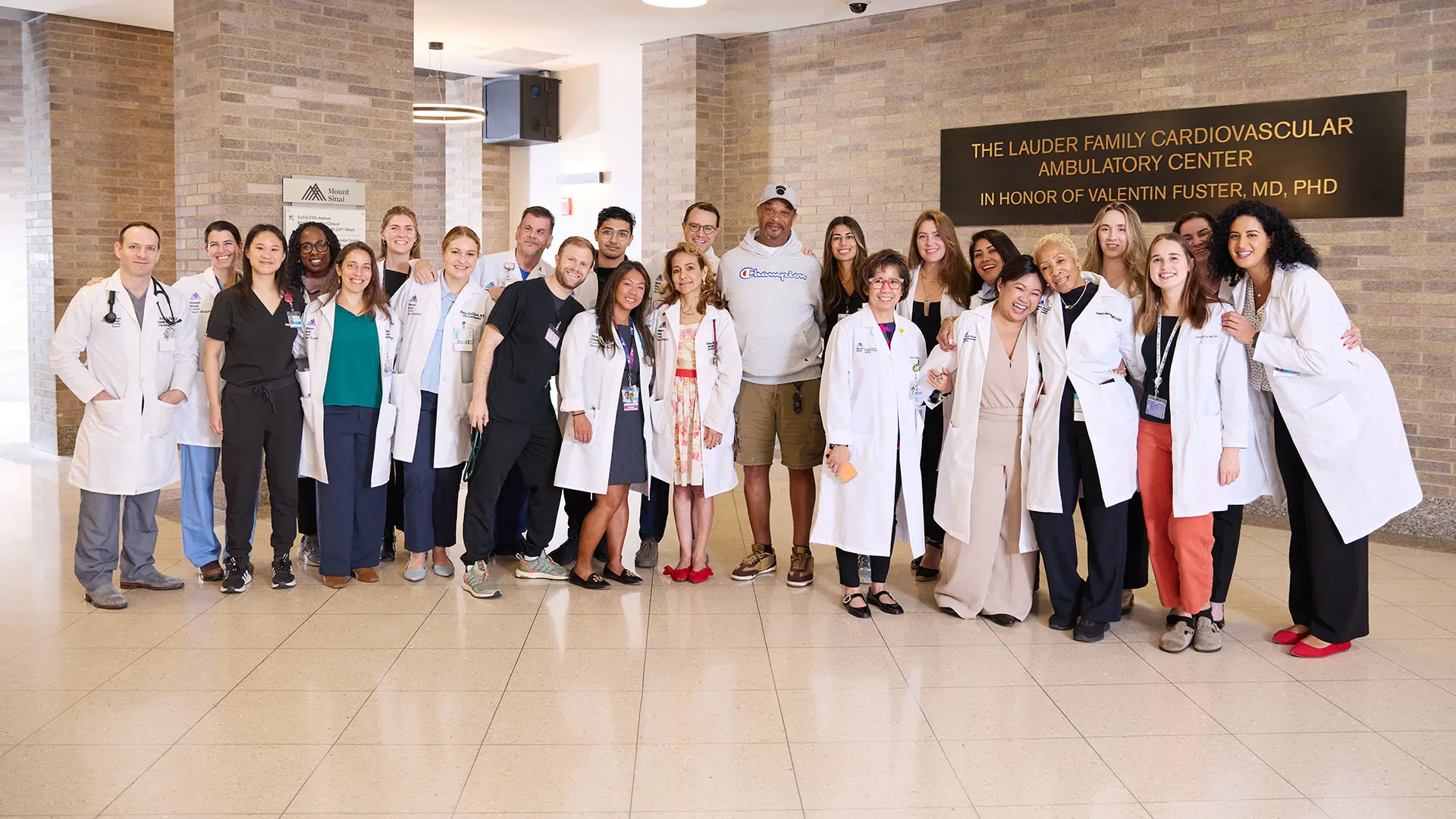
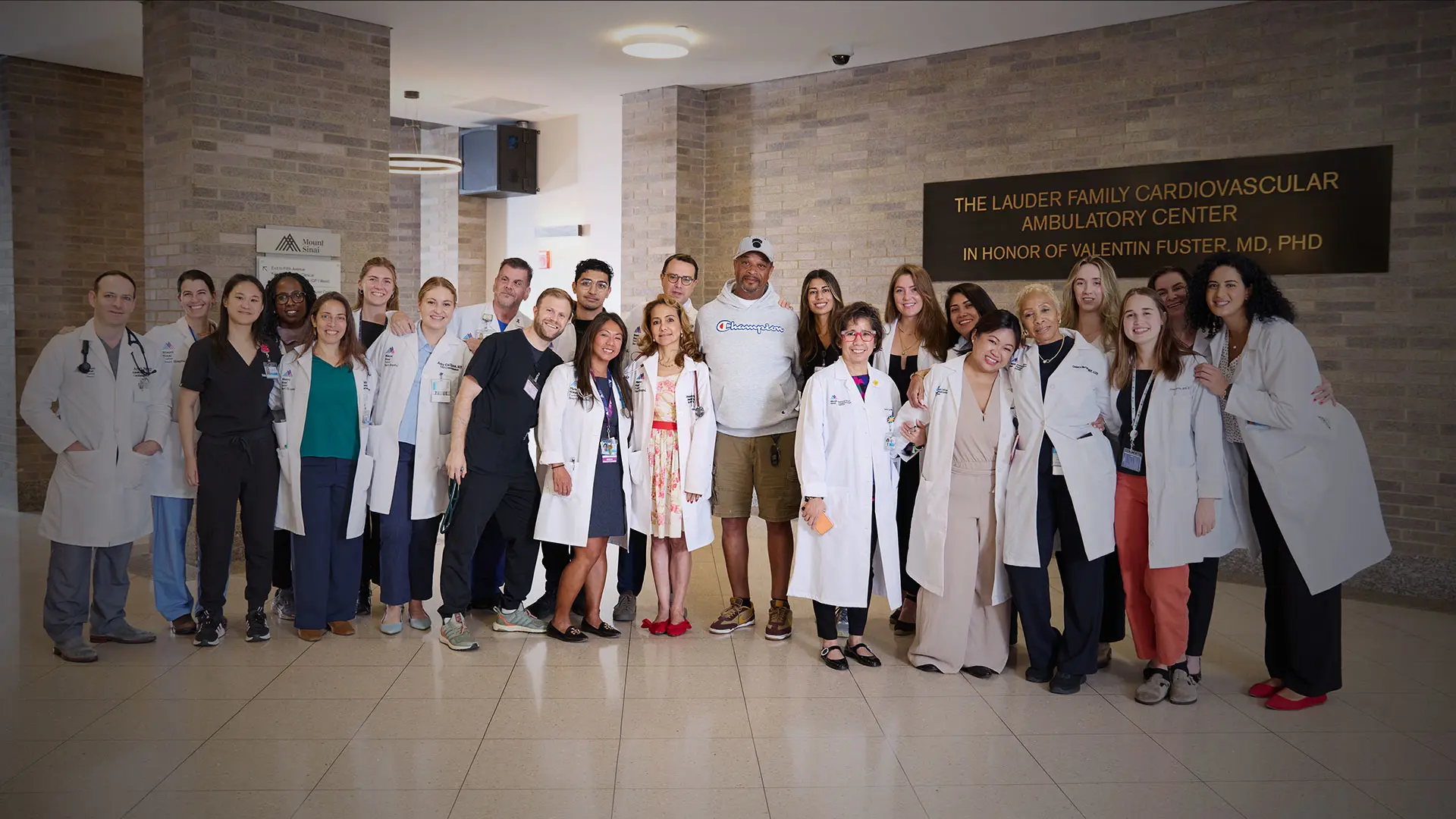
Triple transplant patient Mack Godbee, center, with members of the liver and heart teams who cared for him and joined him after he returned for a follow-up visit to The Mount Sinai Hospital. By his side is Noah Moss, MD, an advanced heart failure and transplant cardiologist, who has cared for Mr. Godbee for nearly a decade.
Once each decision was made, the Mount Sinai team moved swiftly. “Patients who require a triple organ transplant tend to get transplanted relatively quickly, because of how sick they are,” Dr. Florman says. In Mr. Godbee’s case, for example, he was kept alive with two temporary pumps located on each side of his heart. As soon as a donor for all three organs became available, a team was flown out to retrieve them.
On Friday, January 10, at 11:41 am, Dr. Anyanwu began the heart transplant. Dr. Anyanwu opened Mr. Godbee’s chest and replaced the heart, an operation that alone takes about eight hours. When Dr. Anyanwu and his team finished, the abdominal surgical team took over, including anesthesiologists and nursing staff.
“Part of the trepidation for me, coming into the OR second, is whether the patient is still stable enough to get through the liver and kidney transplants,” Dr. Florman says. To take pressure off the newly implanted heart, he used a technique called veno-venous bypass, which redirected blood flow from the inferior vena cava.
Once the new liver was in place and attached to blood vessels, Dr. Florman began the kidney transplant. He attached the liver to the bile ducts to drain toxins and fluids from the liver, then the kidney to the ureter to allow urine flow. Once the liver and kidney transplants were completed, Dr. Anyanwu returned to close the chest. The triple transplant was completed the following Saturday morning at 7:11 am.
A second triple transplant
The team repeated the procedure two months later with a second patient: a 45-year-old man whose organs were severely damaged due to severe cardiomyopathy, a disease that weakens the heart muscle and leads to heart failure.
Both triple transplant patients were discharged after about a month. For the first two to three months after their surgeries, they were seen by Mount Sinai heart, liver, and kidney specialists weekly. They underwent heart biopsies, to make sure the organ hadn’t been rejected, and had follow-up blood tests to check liver and kidney function.
As soon as he returned home, Mr. Godbee was optimistic that he was doing better. “I would have to go up two flights of stairs at night, and while that was hard, that was something I couldn’t even do before the transplant,” he says.
Dr. Anyanwu remembers Mr. Godbee eagerly seeking approval to get back to work because he was doing so well. It’s moments like these, Dr. Anyanwu says, that cause him to reflect on the importance of these triple transplants.
“When you see patients get their lives back,” he says, “it gives value and purpose to what we do every day.” It also tempers the more bittersweet moments. “For every triple-organ success story, there’s a family still grieving the loss of their loved one who donated all three organs,” he says. “There are also all those other patients waiting for organs who just don’t make it. It’s easy as a surgeon to look back and question the decisions we make. But the positives help us cope with the occasional negatives.”